
A blog about Dabke
-

The Tabl Baladi: The Complete Guide to the Drum of Dabke
Few sounds announce a Dabke as unmistakably as the first heavy strike of a large drum. Before the line accelerates, before the leader begins to improvise, and sometimes even before the dancers have joined hands, the drum establishes the pulse that everyone can hear and feel. In Lebanese, Palestinian, Syrian, Jordanian, and wider Levantine celebrations,…
-

Zahlé, Lebanon: The Story of the City of Wine, Poetry, and the Berdawni
How a settlement between mountain and valley became one of Lebanon’s great market towns, a home of wine and poetry, and a city whose identity still lives around the table. There are Lebanese cities you understand through their monuments. Zahlé is understood through movement. Water moving down from Sannine through the Berdawni. Merchants once moving…
-
Dabke Lawha | دبكة اللوحة
Dabke Al-Lawha: Origin, Structure, and Cultural Role – Research by Zorba Academy Dabke Al-Lawha is recognized as one of the eight fundamental types of traditional Syrian dabke, a classification documented by the Homsi poet and researcher Wajih Wehbe al-Khoury in his studies on Syrian folk dance traditions. This form of dabke is particularly associated with…
-
Dabke Aleppo Technical Styles | دبكة حلب
Dabke Styles of Aleppo (Al-Shahba): Rhythm, Structure, and Sufi Influence The technical styles of Dabke in Aleppo (Al-Shahba) are known for their balance, refinement, and rhythmic diversity. Unlike many rural Dabke traditions that emphasize power and stamping, Aleppine styles focus on controlled footwork patterns, elegant transitions, and musical precision. Many researchers note that several Aleppo…
-
Rameh Medlej (Abu Arif): The Blind Rababa Poet Who Became the Voice of Baalbek
The Poet Whose Voice Saw What His Eyes Could Not Long before social media turned poetry into short clips, the villages of the northern Beqaa gathered around voices. A poet did not need a stage filled with lights. He needed a strong memory, a commanding voice, a quick answer, and the ability to turn the…
-

South Lebanon History: From Tyre and Sidon to Nabatieh, Jabal Amil, and the Border Villages
Heritage Lebanon — learndabke.co/heritage Most people say South Lebanon as if it is one place. But the more honest question is: Which South? The South of Tyre is not the South of Nabatieh. The South of Sidon’s old souks is not the South of Bint Jbeil’s border villages. The South of Jabal Amil’s scholars is…
-
Dabke Sab’awiya | دبكة سبعاوية
Dabke Sab’awiya: The Seven-Strike Palestinian Dabke Dabke Sab’awiya (دبكة سبعاوية) is a traditional Palestinian folk dance that belongs to the Shamaliyya (Northern) family of Dabke styles. The name Sab’awiya comes from the Arabic word “Sab’a” (seven), referring to the dance’s structure of seven rhythmic strikes or counts that define its movement pattern. This style represents…
-
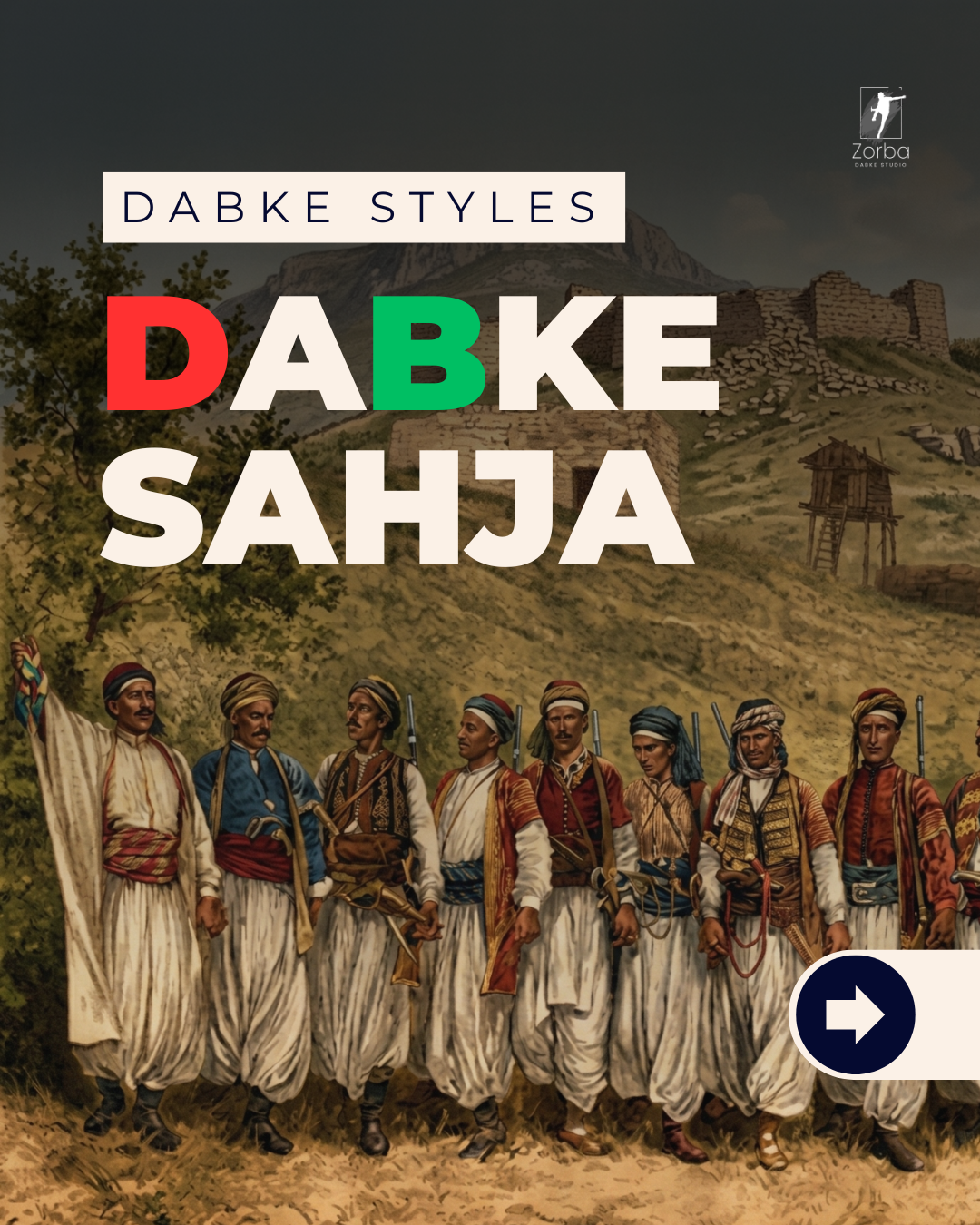
Dabke Sahja | دبكة السحجة
Dabke Al-Sahja: The Rhythmic Clapping Tradition of Levantine Dabke Origins and Cultural Presence Dabke Al-Sahja (دبكة السحجة) is a traditional collective folk performance found across Jordan, Palestine, the Horan region of southern Syria, and the Baalbek area of Lebanon. It represents a unique form of Levantine dance in which poetry, rhythm, clapping, and coordinated body…
-

Dabke Al-Hashi | دبكة الحاشي\المحوشي
Dabke Al-Hashi (Al-Mahoushi) Origin and Cultural Context Dabke Al-Hashi, also known as Al-Mahoushi, is a traditional Levantine folk performance closely connected to the Bedouin dance traditions of Ad-Dahhiya (Ad-Dahha) and Al-Jofiyeh. These performances are widely known across the Levant and the northern Arabian Peninsula, particularly within tribal celebrations and weddings. Rather than being a standard…
-

Dabke Shamaliyya | دبكة شمالية
Al-Shamaliyya Dabke – The Most Widespread Dabke Style of the Levant Dabke Al-Shamaliyya (Northern Dabke) is widely considered the most famous and widely practiced Dabke style across the Levant, including Lebanon, Syria, Palestine, and Jordan. Because of its energetic rhythm and recognizable structure, it has become the style most commonly associated with Dabke in weddings,…
Got any questions?