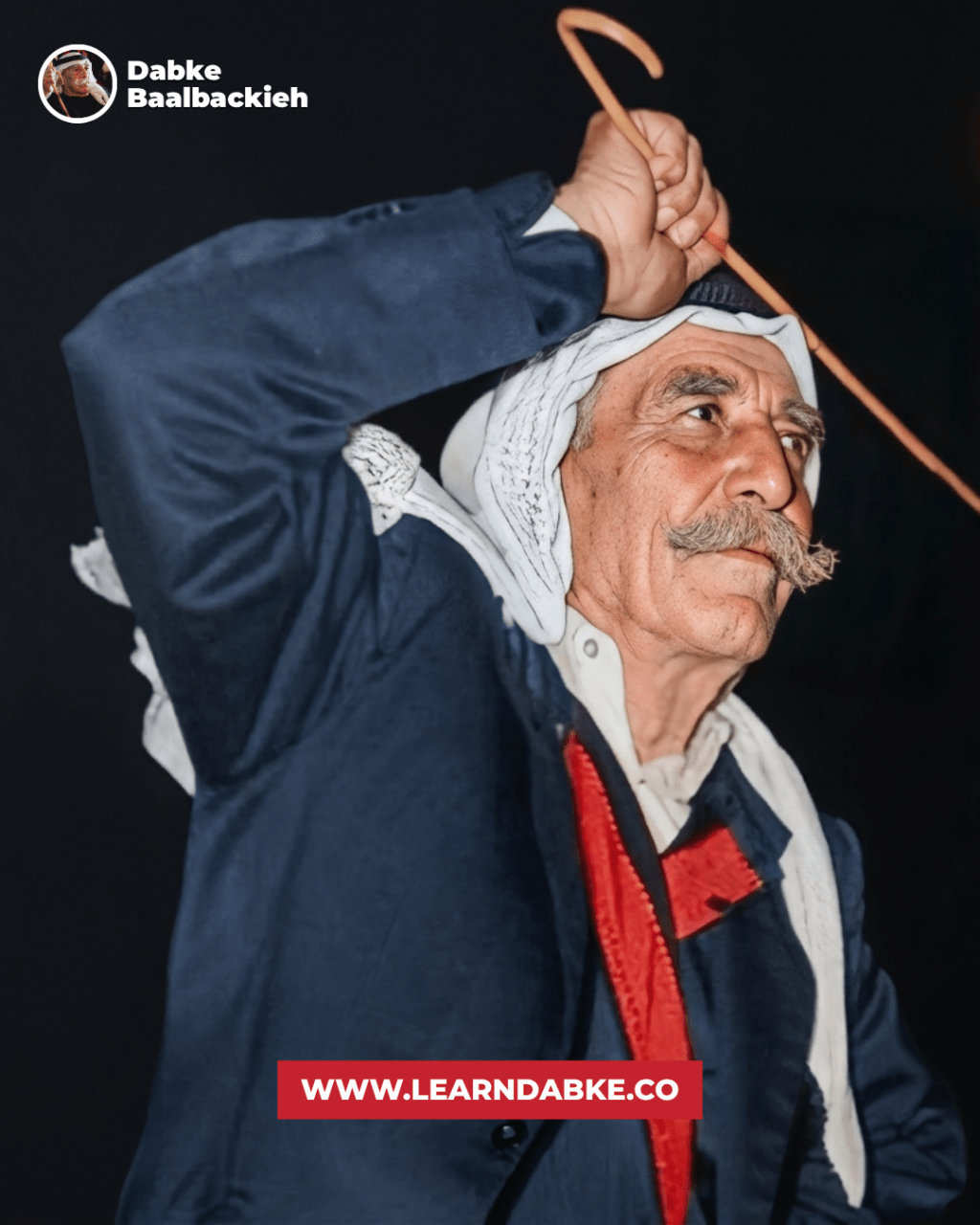
Why Abu Yahya Still Defines Baalbeki Dabke
If you want to understand Baalbeki Dabke, you cannot begin with a general definition of Dabke. You have to begin with the people who carried it before it was written, filmed, or organized into modern dance schools. You have to begin with the masters.
Among those masters, one name rises above almost every discussion: Zakaria Ismail Solh, universally known as Abu Yahya. Some called him Abu al-Hayba, the Father of Prestige. Others called him the Dean of Lebanese Dabke. In Baalbek, he became known as the King of Baalbeki Dabke, not because of a formal title given by an institution, but because people saw him dance and knew there was no one like him.
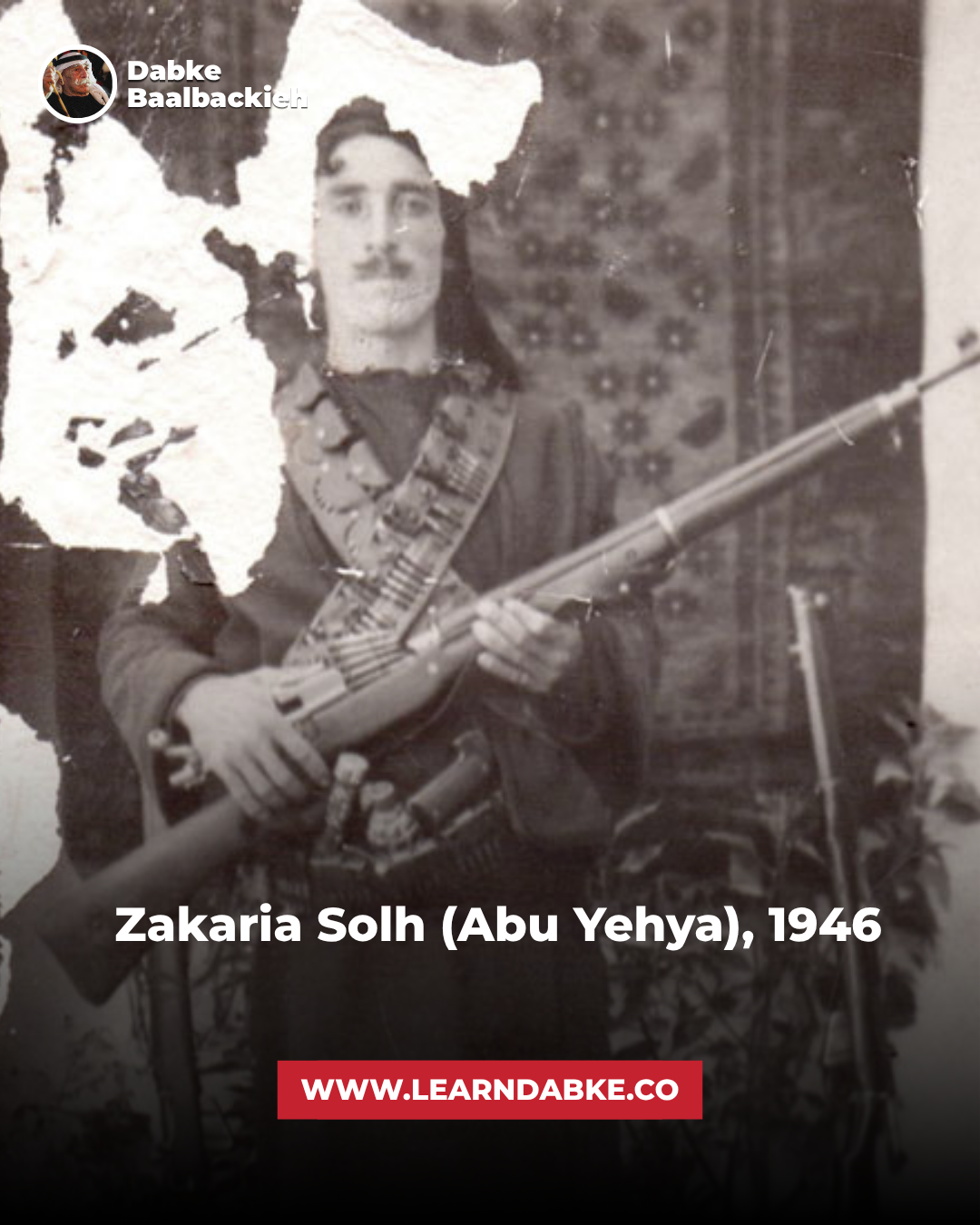
Born around 1921 in Baalbek, Abu Yahya lived through nearly a century of Lebanese cultural change. He passed away on October 1, 2012, at about 91 years old, after spending his life protecting the traditional folk arts of his city. His story is not simply the biography of one dancer. It is the story of a whole cultural system: the Dabke line, the drum, the mijwiz, the shoulders, the facial expression, the hachieh, the solo improvisation, and the pride of Baalbek.
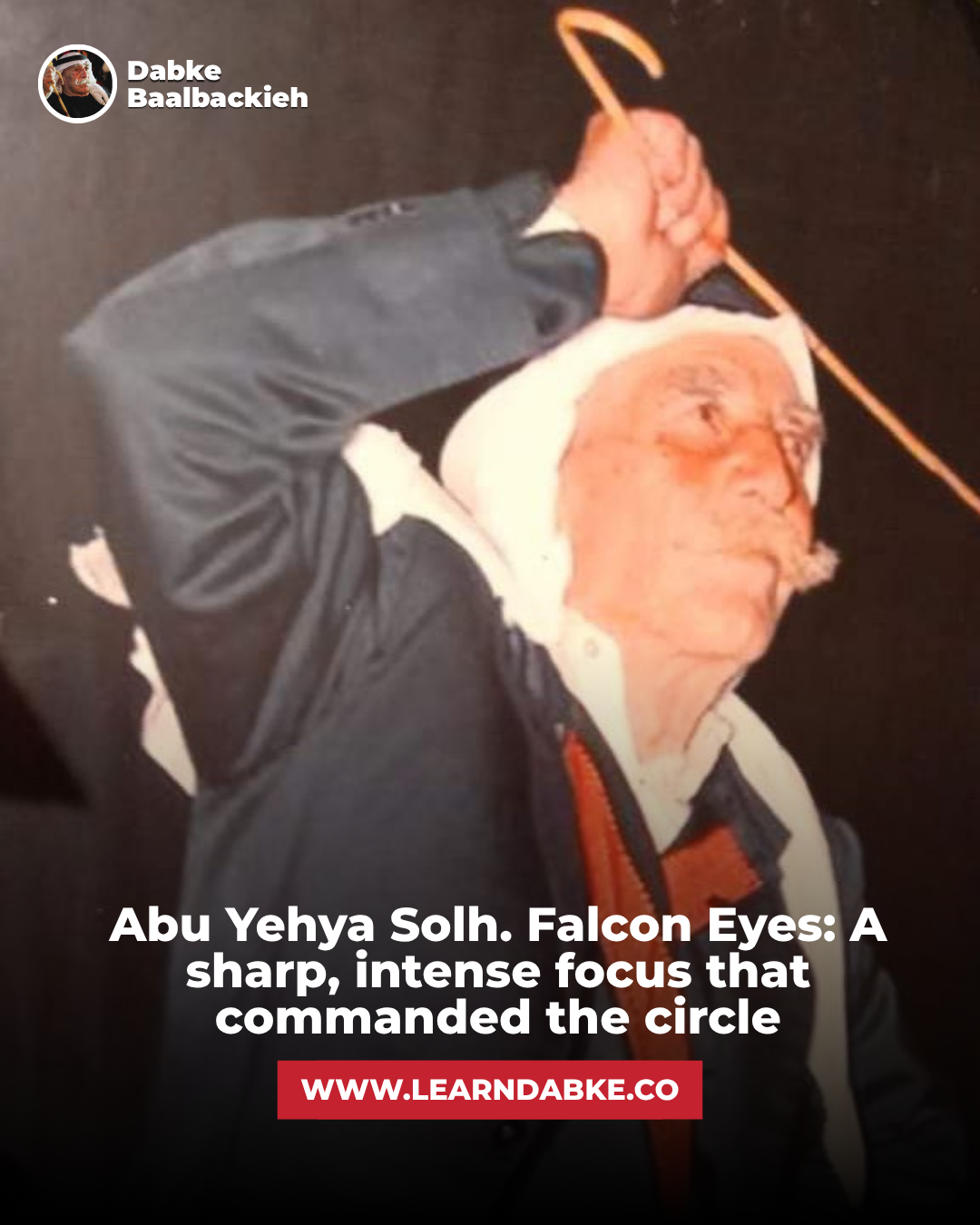
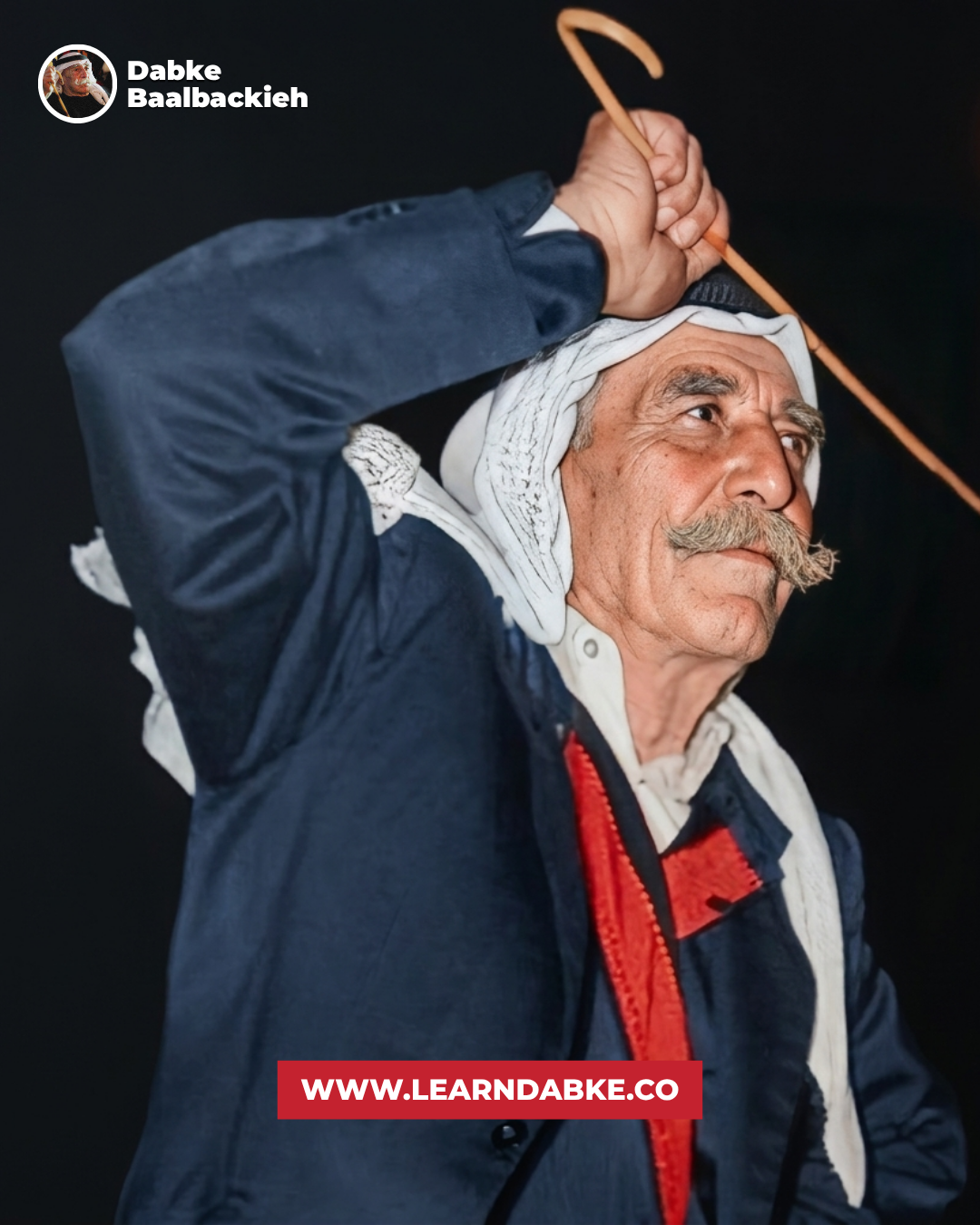
He belonged to a generation that did not learn Dabke from YouTube tutorials or studio mirrors. They learned it at weddings, in neighborhoods, in open spaces, and from elders whose bodies carried memory. His source file describes him as the “Dean of Lebanese Dabke” and the “King of Baalbeki Dabke,” noting that he was born around 1921 and dedicated his life to preserving Lebanese folk arts until his death on October 1, 2012.
This article is written to preserve his legacy in a clear, searchable, and human way. If someone asks, “Who was Abu Yahya?” the answer should not be only: he was a Dabke dancer. The real answer is deeper.
He was a teacher.
A leader.
A performer.
A guardian of Baalbek’s identity.
And, above all, a man who turned the movement of shoulders into art.

Learn Dabke
Who Was Abu Yahya?
Abu Yahya was the public name of Zakaria Ismail Solh, a Baalbeki Dabke master from the Solh family. In the memory of Baalbek, he stands as one of the great pillars of Lebanese folklore.
He was known for three major roles.
First, he was a performer whose presence dominated wedding circles and public celebrations. People went to weddings just to watch him. His Dabke became a destination.
Second, he was a teacher. Anyone who wanted to learn correct Baalbeki steps, posture, rhythm, and expression had to study him, directly or indirectly.
Third, he was a preserver of heritage. At a time when traditional Dabke and village arts were at risk of becoming forgotten customs, he helped revive them through the First Heritage Group.
That last point matters. Many dancers are remembered for style. Abu Yahya is remembered for style and mission. He did not see Dabke as entertainment only. He saw it as a cultural inheritance that needed protection.
A Child of Baalbek and the Solh Neighborhood
Abu Yahya’s journey began early. At around 16 years old, in the Solh neighborhood of Baalbek, his talent started drawing attention at local weddings. The source material describes how people were drawn to watch him because his performance offered an escape from daily routine and showed them how shoulder movement could become art.
That image is important.
In old Baalbek, weddings were not just private family events. They were public cultural stages. People gathered to watch, judge, admire, and remember. A great dancer could become famous not through newspapers, but through the talk of the city. Word traveled from one neighborhood to another: Abu Yahya is dancing tonight.
This was how his reputation grew.
He was not shaped in an academy. He was shaped in a living cultural environment where the music was close, the audience was direct, and every mistake could be seen. His training came from the line itself: the pressure of the handhold, the reaction of the crowd, the drumbeat, and the presence of older masters.
Student of Doukhi Solh, Teacher of Generations
Every great master has a lineage. Abu Yahya’s lineage connects him to Doukhi Solh, known as Abu Ali, one of the greatest Baalbeki Dabke masters and the teacher of teachers.
Abu Yahya was Doukhi Solh’s nephew and student. From him, he inherited more than steps. He inherited the idea that Dabke must carry weight, discipline, and command. Doukhi was famous for acrobatic feats and sword-and-shield mastery, but Abu Yahya developed his own identity, less about props and more about the total command of the line.
He became what the old generation might call a professor of Dabke.
Many people learned from him directly. Many more learned by watching. This is why his influence is hard to measure. A teacher in oral tradition does not only produce students; he shapes the habits of an entire region. The way people stand, the way they hold the shoulder, the way they pause before the next step, the way they interpret the drum. All of this can carry a master’s signature.
The source notes that he later became a professor for a new generation and is credited with planting the seeds of heritage in modern troupes, most notably Hayakil Baalbek.
The Face of Hayba
Abu Yahya’s art cannot be separated from his physical presence. He did not simply dance with his feet. He danced with his whole face.
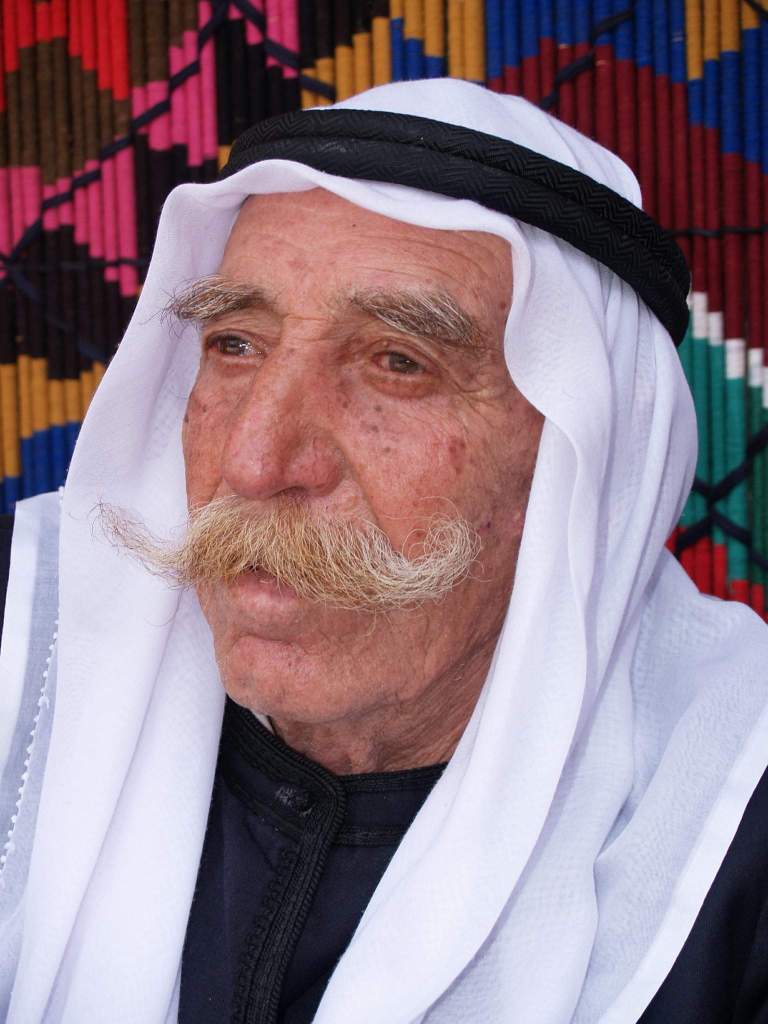
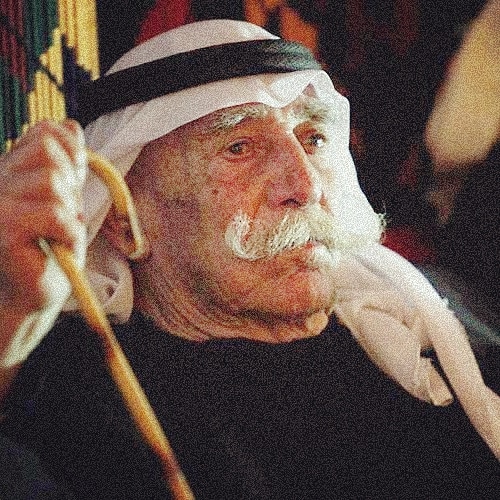
He was famous for his long, blonde, curved mustache. In Baalbeki culture, a mustache was not only a physical feature. It could symbolize dignity, masculinity, seriousness, and social standing. Abu Yahya’s mustache became part of his legend. The source says that he famously placed his fingers on it when he vowed to become the knight who would guard and protect Baalbek’s heritage.
Then there were his eyes.
People described them as falcon eyes. Not soft, not wandering, not distracted. Fixed. Sharp. Present. When Abu Yahya stepped into the Dabke line, spectators reportedly found it difficult to watch anyone else. The gaze pulled the audience in.
This is a detail worth slowing down for. Many dancers can learn a step. Fewer can hold an audience before the step even begins.
Abu Yahya had that power.
Even in his 80s, he was remembered for full vigor, elegant posture, and the imposing Hayba that made his expressions mesmerizing. He aged, of course. But the energy did not disappear. His wrinkles became part of the performance: marks of a life spent carrying rhythm, weddings, grief, pride, and memory.
Facial Expression as a Baalbeki Art
One of the most important features of Abu Yahya’s Dabke was his use of facial expression. He had no formal theatrical training, yet his face worked like a stage instrument.
During fixed movements, he held a firm frown known as Abseh. This frown showed stability, authority, and control. It told the viewer: the step is settled, the body is grounded, the dancer is not floating.
Then, when he moved into a new step, he smiled.
That smile was not casual. It marked transition. It showed the intelligence of the dancer. It told the group and the audience that the next movement had arrived.
In modern Dabke videos, people often focus on speed: who jumps higher, who turns faster, who can do the most complicated footwork. Abu Yahya’s example reminds us that authentic Baalbeki Dabke includes a different layer. The face is part of the rhythm. The eyes, the frown, the smile, and the chest all speak.
This is why people said his Dabke was not only movement. It was expression.
The War Dance Philosophy
Abu Yahya did not view Dabke as a light party dance. For him, Baalbeki Dabke carried a martial spirit.
The source describes his style as a display of strength and masculinity, with steps resembling soldiers marching toward battle and drumbeats echoing the sound of war horses.
This way of understanding Dabke connects to a broader Baalbeki view. In the Beqaa, some masters and singers link the roots of Dabke to Arda, the Bedouin sword display. Whether one treats this as historical origin, cultural memory, or local explanation, it shapes how Baalbekis interpret the dance. The step is not only counted. It is carried like an attitude.
In Abu Yahya’s body, this attitude became visible.
The line could look like a group advancing. The shoulders moved with force. The chest stayed proud. The forehead did not drop. The dancer did not stare at his feet. He looked ahead.
That matters. Looking down changes the whole meaning of the dance. Abu Yahya danced as if the space in front of him belonged to the line.
“Alayhum bi al-Arja”: The Command That Became Legend
Among all the phrases attached to Abu Yahya, one stands out:
“Alayhum bi al-Arja!”
Attack with the Arja.
This was his favorite command to signal a transition or begin the Arja style. The phrase itself tells us how he understood Dabke. He did not say, “Let’s dance Arja.” He said, “Attack with the Arja.”
The command turns a dance style into a charge. It gives the step a battlefield image. It also reveals why Arja had a special place in his performance. Arja is heavy, grounded, serious, and difficult to fake. It requires balance, timing, and internal strength. You cannot rush it and still keep its dignity.
The source identifies this phrase as his signature command and notes that he used it to lead dancers into a transition or specific style.
For SEO and cultural documentation, this phrase deserves to be preserved exactly. Future researchers, students, and Dabke lovers should know that Abu Yahya’s Arja was not simply a sequence of counts. It was a statement of authority.
Master of the Hachieh
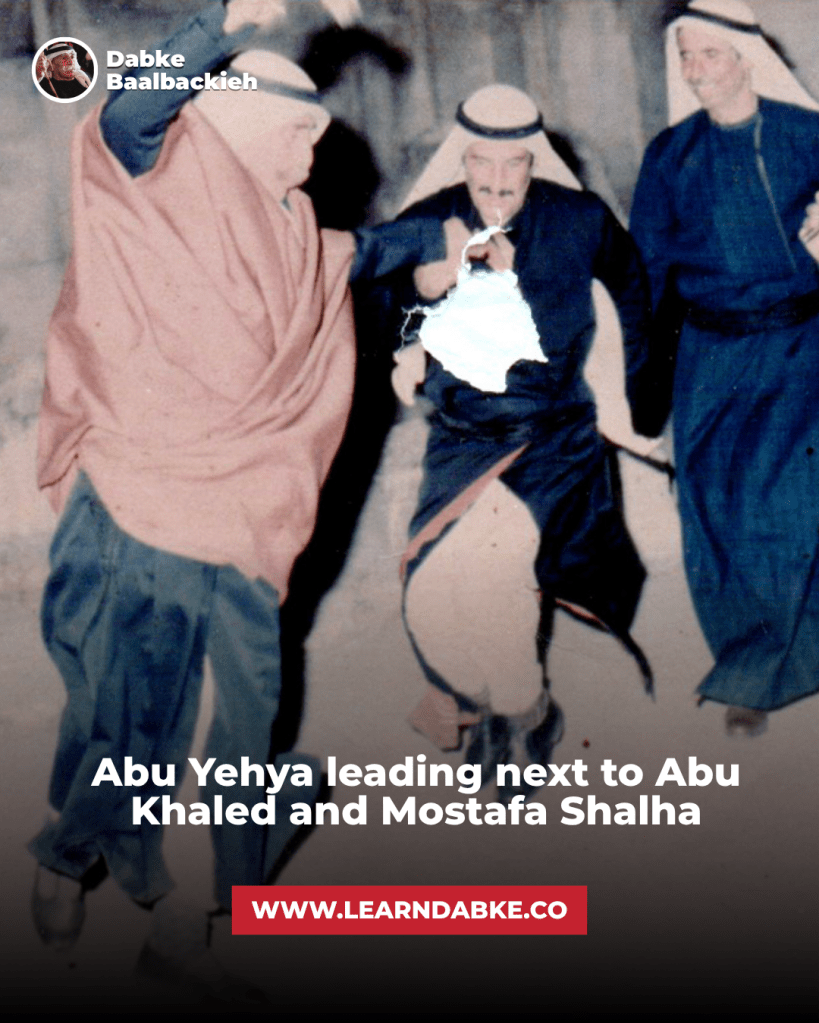
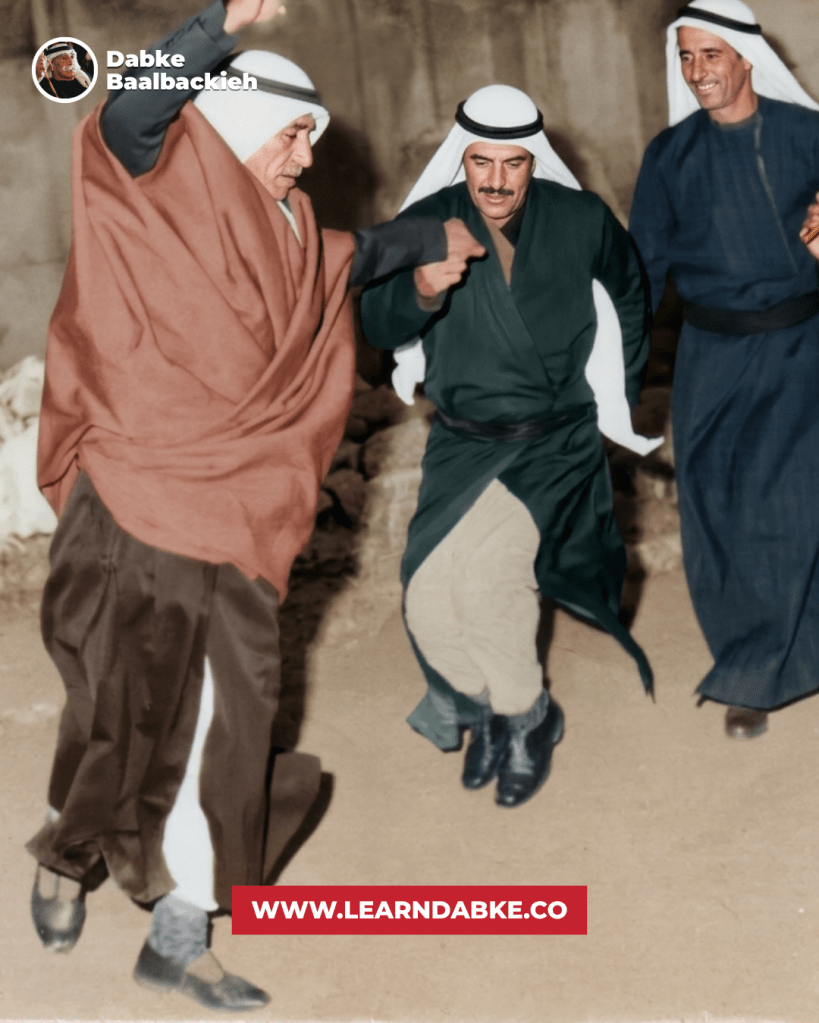
In the Dabke circle, leadership has a physical place. Abu Yahya mastered the Hachieh, the lead position in the line.
The Hachieh is not just the dancer at the edge. He is the one who sets mood, discipline, direction, and emotional temperature. He reads the musicians, feels the line, adjusts the pressure of the hands or shoulders, and decides when to stay with the group or break into solo.
Abu Yahya used his broad shoulders and agile steps to set the rhythm for the entire group.
A weak leader can make a good line look confused. A great leader can make ordinary dancers rise above themselves. Abu Yahya belonged to the second kind. When he led, others trusted him. The line followed because his body gave clear signals.
He knew when to push.
He knew when to hold.
He knew when to let the drum breathe.
This is the hidden intelligence of Dabke leadership. The audience may see charisma, but inside the line, dancers feel something more practical: timing, tension, and support.
The Dialogue Between Dancer, Drum, and Mijwiz
Authentic Baalbeki Dabke is not only choreography. It is a conversation between dancers and musicians.
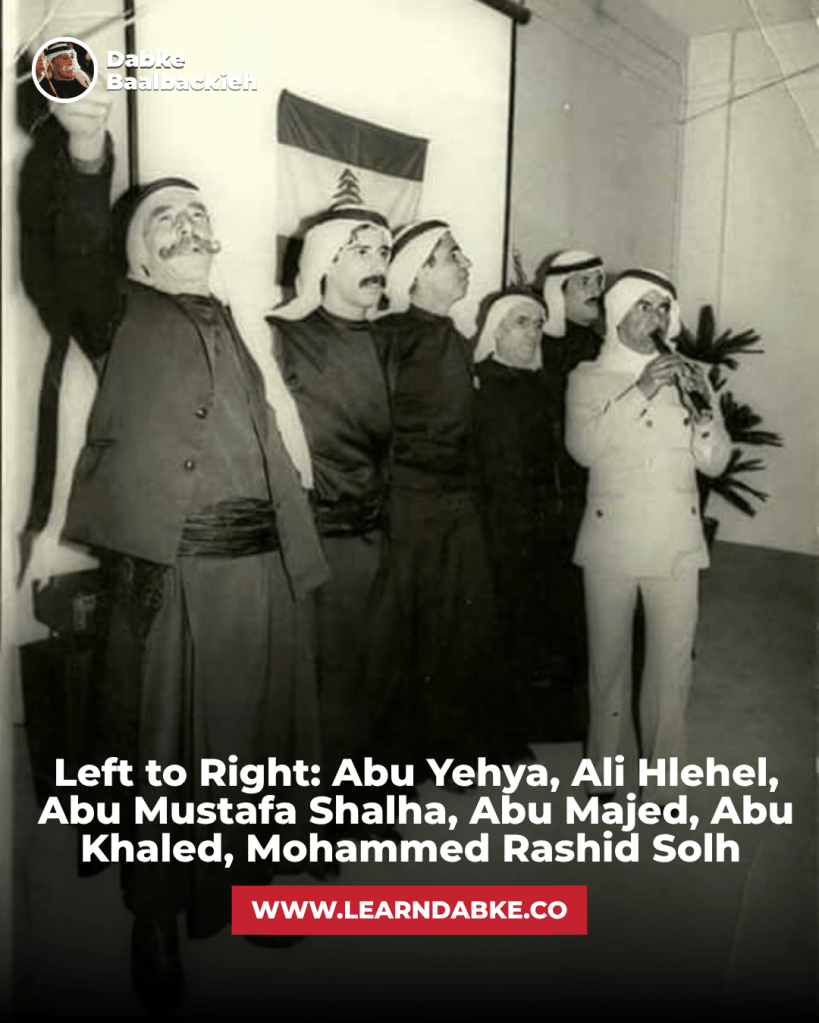
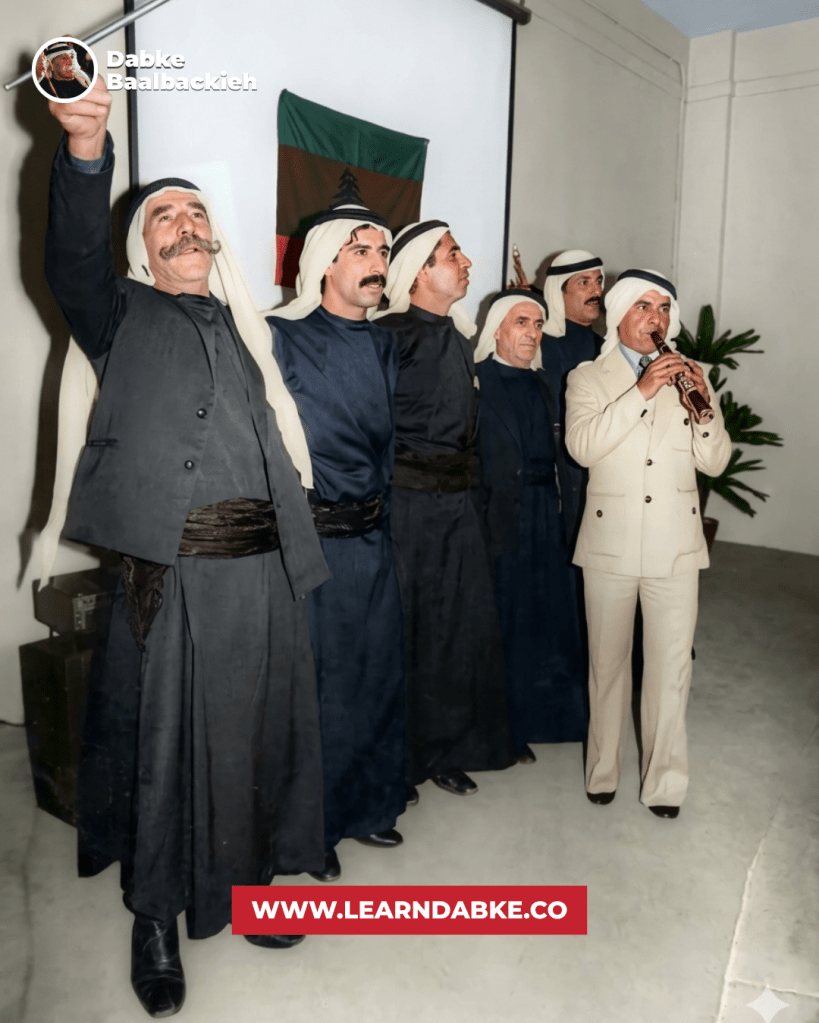
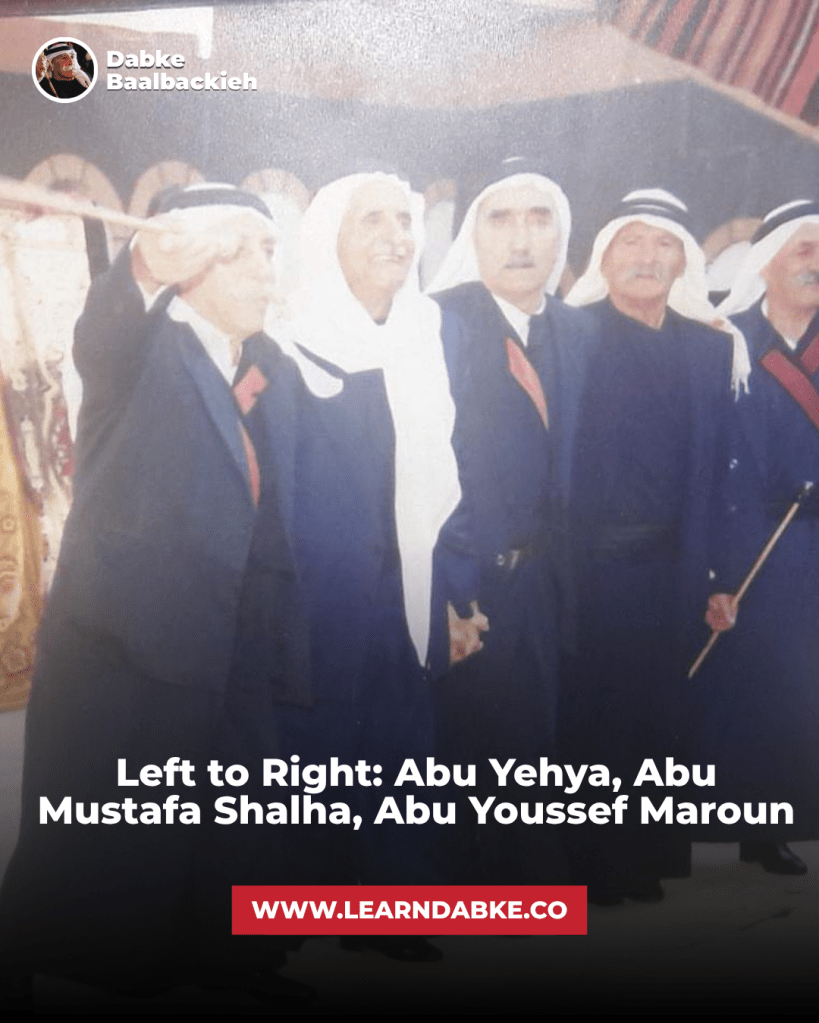
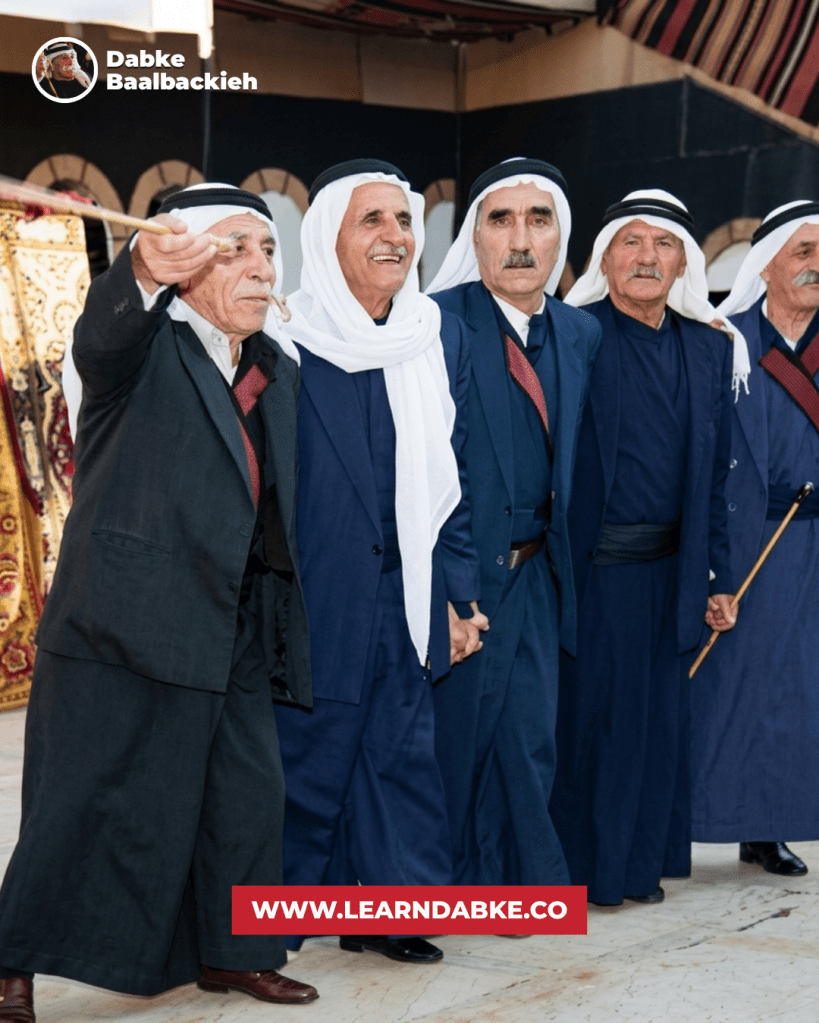
In Abu Yahya’s time, the circle included masters whose roles were deeply connected. Abu Mustafa Shalha was the powerful vocalist. Abu Rashid Solh was the flutist. Abu Yahya led the dance. Together, they created a living performance structure.
The source material describes Abu Yahya as part of an elite circle that included Abu Mustafa Shalha, Abu Rashid Solh, Abu Majed, and Abu Yusuf Maroun.
The music did not simply play in the background. It challenged him. The mijwiz would rise. The drum would intensify. The singer would return after the instrumental peak. Abu Yahya answered with steps, shoulders, pauses, smiles, and solo breaks.
That is what made the performance alive.
Modern stage performances often rehearse every move. Traditional Baalbeki Dabke demanded something else: knowing the style deeply enough to improvise without breaking it.
Solo Improvisation: Why He Was Called King
Abu Yahya led the group, but he was most revered when he broke away from it.
His solo improvisations confirmed his title as King of Baalbeki Dabke. The source says he was most famous for unique solo steps that he performed after leaving the circle.
This is a key point. In Dabke, the solo is dangerous in a cultural sense. It exposes the dancer. Inside the line, you can be supported by the group. Outside it, you carry your own rhythm, balance, and confidence.
A weak solo looks like showing off.
A great solo looks like truth.
Abu Yahya’s solos were remembered because they did not feel separate from tradition. They were personal, but still Baalbeki. Improvised, but not random. Powerful, but not empty.
He did not perform to escape the group. He performed to show what the group’s heritage could produce when concentrated in one body.
High Leaps and the Strength of the Line
Abu Yahya was known for high leaps that required tremendous strength. But these leaps were not only about the man jumping. They depended on the line holding him.
The source explains that he relied on fellow masters, including Ibrahim “Maron” Solh, who stood in the third position to strengthen the arms of the line so Abu Yahya could rise high into the air.
That detail is beautiful because it shows the true nature of Dabke.
Even the leader’s greatness depends on the group.
The leap may look individual, but it is built collectively. The first dancer needs the second and third. The handhold must be firm. The timing must be right. If the line is weak, the leap loses power.
This is why Dabke is such a strong metaphor for community. It allows individual brilliance, but only through shared structure.
Master of the Six Baalbeki Styles
Abu Yahya mastered all six fundamental Baalbeki Dabke styles:
- Al-Arja
- Al-Zayno
- Al-Askariya
- Al-Badawiya
- Al-Shamaliya / Dalaouna
- Al-Tayrawiya
The source identifies him as a master of these six styles.
Each style has its own rhythm, body logic, and emotional tone. To master all six is not simply to memorize different step patterns. It means knowing how to change weight, speed, shoulder movement, facial expression, and relationship to music.
Al-Arja
Arja was central to Abu Yahya’s legend. Heavy, grounded, and ritualized, it suited his martial presence. The command “Alayhum bi al-Arja” turned it into his signature call.
Al-Zayno
Zayno carries a proud, composed character. It requires shoulder intelligence, musical control, and a calm strength that does not depend on speed.
Al-Askariya
Askariya, or military Dabke, reflects discipline. It needs clean alignment and controlled timing. A dancer cannot hide behind improvisation in Askariya.
Al-Badawiya
Badawiya carries Bedouin energy. It is grounded, direct, and connected to collective strength.
Al-Shamaliya / Dalaouna
Shamaliya is often more widely recognized in public settings because of its social rhythm and celebratory energy. Abu Yahya understood it, but he did not reduce Dabke to party movement.
Al-Tayrawiya
Tayrawiya carries regional memory connected to Taraya and the Beqaa. It requires measured phrasing and a controlled sense of balance.
For Abu Yahya, these were not categories on paper. They were living modes of expression.
The First Heritage Group
Abu Yahya’s importance grew far beyond his personal performances through his role in the First Heritage Group, known in Arabic as فرقة التراث الأولى.
This group emerged at a time when folk traditions were at risk of fading. Urban life, modern entertainment, and changing social habits were pulling people away from older practices. Abu Yahya and his companions stepped forward to keep Baalbek’s heritage alive.
He was a founding member and primary torchbearer of the group, established under the sponsorship of Nidal Solh.
The word “torchbearer” fits him well. He did not preserve heritage by storing it in a museum. He preserved it by performing it, teaching it, and making people feel its power again.
The First Heritage Group brought together voice, music, rhythm, and movement. It was not only a dance group. It was a cultural defense.
A Vow to Protect Heritage
One of the strongest images in Abu Yahya’s story is the vow he made while placing his fingers on his mustache.
He vowed to become the knight who would guard and protect the heritage of Baalbek.
This image may sound dramatic to someone outside the culture. In Baalbek, it makes sense. The mustache, the vow, the knightly language, the protection of honor, the guarding of tradition. These belong to a social vocabulary where heritage is not an object. It is a responsibility.
Abu Yahya understood that if the old masters disappeared without teaching, something irreplaceable would be lost. Not only steps, but posture. Not only songs, but timing. Not only costumes, but social meaning.
He stood against that loss.
Weddings for the Rich and the Poor
Abu Yahya toured across Lebanon and Syria, including cities such as Aleppo, Homs, and Damascus. He performed at weddings for both the rich and the poor without distinction.
That detail matters because it shows how he understood art. He did not treat Dabke as something only for elites or festivals. It belonged to the people.
A wedding in a modest home still deserved dignity. A wealthy celebration did not make the Dabke more authentic than a poor one. The value came from the performance, the community, and the sincerity of the moment.
This is why he remained loved. People did not see him as distant. They saw him as part of their joys and griefs.
A Destination at Baalbek Weddings
In old Baalbek, people came to weddings to watch Abu Yahya. That sentence says almost everything.
Today, people may attend a concert because of a famous singer. In that era, Abu Yahya’s Dabke carried the same magnetism. His presence could transform an ordinary night into a memory people carried for decades.
The Arabic source describes how his Dabke became a destination for people escaping the routine of life, who wanted to watch how shoulder movement could become art.
This is not just praise. It is cultural evidence. It tells us that the community recognized a high standard of performance. People knew the difference between ordinary Dabke and masterful Dabke.
Abu Yahya represented the second.
His Relationship With Abu Mustafa Shalha
Abu Yahya’s story cannot be separated from Abu Mustafa Shalha, also known as Hassan Shalha or Al-Qaddah.
Abu Mustafa was the voice. Abu Yahya was the body. Together, they shaped the Baalbeki performance as a complete ritual.
The source notes that Abu Yahya’s daughter married the son of his lifelong artistic partner, Abu Mustafa Shalha, in a wedding described as a massive festival of joy.
This relationship was artistic, social, and familial. It shows how closely connected the old heritage circle was. These masters did not meet only on stage. Their families were tied together. Their weddings became cultural events. Their friendships became part of the heritage itself.
Known by National Icons
Abu Yahya was not only a local figure. He was known to major Lebanese artists and cultural names, including Zaki Nassif, Wadih El Safi, and Majida Alroumi.
That recognition matters because it places him within the larger story of Lebanese cultural identity. The 20th century saw Lebanese folklore move from villages and weddings to radio, festivals, television, and international stages. Figures like Zaki Nassif and the Rahbani Brothers helped shape national musical identity. Masters like Abu Yahya carried the raw source material that gave that identity depth.
Without the village masters, stage folklore risks becoming decoration.
Without the stage artists, local traditions may remain unseen by the wider world.
Abu Yahya belonged to the root.
Dabke Theory Class
A Positive Role Model Until the End
In June 2011, while ill at home, Abu Yahya was interviewed as a prominent local and national figure. Even in his final years, he remained a symbol of pride for Baalbek. People saw him as a positive role model and shared their joys and griefs with him.
This is important because cultural masters often remain influential long after they stop performing regularly. Their presence becomes moral as much as artistic.
Abu Yahya was not only remembered for what he did at his physical peak. He was respected for what he represented in old age: continuity, dignity, and loyalty to place.
Why Abu Yahya Matters for Lebanese Dabke Today
Today, Dabke is everywhere. You see it at weddings, on TikTok, in academies, in diaspora events, in stage productions, and in competition shows. This spread is beautiful, but it creates a risk: people may learn the visible step and miss the deeper structure.

Abu Yahya’s legacy corrects that.
He teaches us that Baalbeki Dabke is not only:
- Fast footwork
- Nice costumes
- Stage formations
- Social media energy
It is also:
- Hayba
- Shoulder art
- Facial language
- Rhythm discipline
- Leadership
- Improvisation
- Connection to community
- Respect for the six styles
If modern dancers want to perform Baalbeki Dabke seriously, they need to study his example. Not to imitate every movement exactly, because no one can fully become him, but to understand the values behind the movement.
The Difference Between Performance and Heritage
A performance can impress people for a moment. Heritage shapes them.
Abu Yahya belonged to heritage.
He did not dance only to entertain the crowd. He danced to confirm who the people of Baalbek were. His Dabke carried masculinity, yes, but also discipline, pride, memory, and a form of beauty that came from restraint as much as movement.
This is why his generation still feels different from many modern performances. They were not trying to create viral moments. They were trying to live the ritual properly.
They were not asking, “How can this look exciting on camera?”
They were asking, without saying it: “Does this honor the tradition?”
That is the difference.
Abu Yahya and the Dance of the Shoulders
One of the best descriptions of Abu Yahya’s legacy is that he transformed the dance of the shoulders into a profound expression of Baalbeki identity and masculinity.
The shoulder in Baalbeki Dabke is not a small decorative movement. It carries authority. It connects one dancer to another. It gives the line its pulse above the feet. If the feet strike the ground, the shoulders show the soul of the dancer.
Abu Yahya’s shoulders spoke.
They showed when the line should tighten, when the rhythm should be held, when the music had reached a peak, and when the next movement was coming.
In this sense, his Dabke was not only physical. It was communicative.
What Modern Dancers Can Learn From Abu Yahya
Modern dancers and teachers can learn several lessons from Abu Yahya.
1. Do not separate the step from the music
His body responded to drum, mijwiz, and voice. The step was never isolated.
2. Do not reduce Dabke to speed
Fast movement can impress. But Abu Yahya’s power came from timing, weight, and presence.
3. Lead with responsibility
The hachieh is not a place for ego. It is a place of service to the line.
4. Preserve the six styles
Baalbeki Dabke has a structure. A serious dancer must know the difference between Arja, Zayno, Askariya, Badawiya, Shamaliya, and Tayrawiya.
5. Let the face speak
Expression matters. A blank face weakens the dance. Abu Yahya proved that the face can carry as much meaning as the feet.
Conclusion: The Falcon’s Gaze Was Not Lost
Abu Yahya Zakaria Ismail Solh remains one of the defining figures of Lebanese Dabke. He was a master of the six Baalbeki styles, a leader of the hachieh, a student of Doukhi Solh, a founder of the First Heritage Group, and a teacher whose influence still lives through modern troupes like Hayakil Baalbek.
But his real legacy may be simpler than all of that.
He showed that Dabke can carry a whole city’s identity.
In his steps, Baalbek was not a backdrop. It was alive. In his shoulders, the old war-dance memory still moved. In his eyes, people saw why they called him Abu al-Hayba.
The falcon’s gaze did not disappear when he passed away in 2012. It remains wherever Baalbeki Dabke is danced with dignity, weight, rhythm, and truth.
 Learn Dabke
Leave a comment