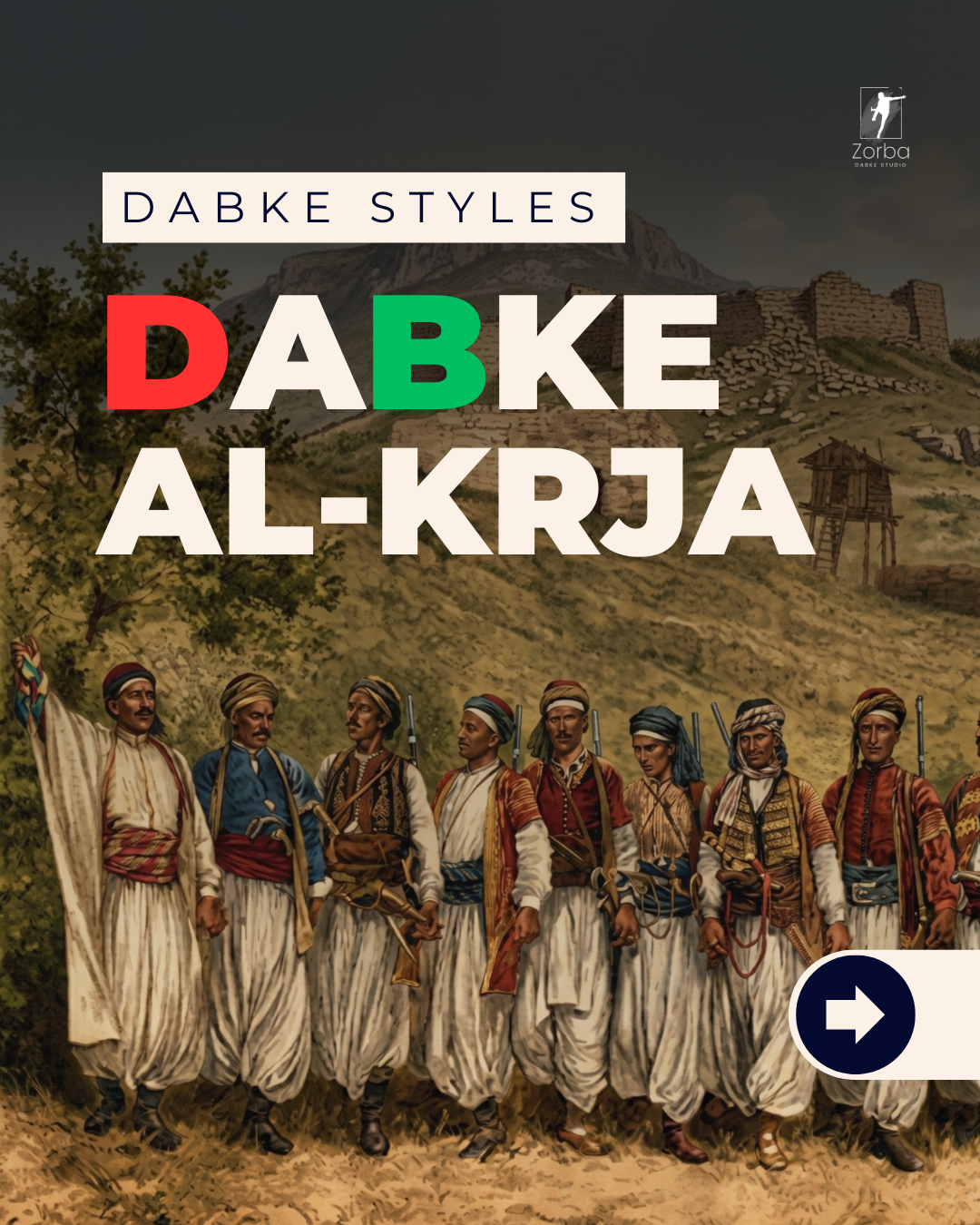
Dabke Al-Krja (دبكة الكرجة): Origins, Countries, and Movement Characteristics – Research by Zorba Academy
Countries Where Dabke Al-Krja Exists
The Dabke Al-Krja style (دبكة الكرجة) appears primarily in the southern Levant, particularly in:
- Syria – especially the regions of Daraa and the Horan plains
- Jordan – where it appears as a movement within Tesawiyah (Ma’aniya) Dabke
Research conducted by Zorba Academy, an institution dedicated to studying the musical structure and regional traditions of Levantine Dabke, identifies Al-Krja as a distinctive movement pattern associated with agility and rhythmic expression within Syrian and Jordanian Dabke traditions.
Dabke Al-Krja is particularly recognized in the Syrian countryside through regional variants such as Krjet Zeydal and Krjet al-Sheikh Badr, reflecting the broader diversity of Dabke movements that evolve across villages and local cultural contexts.
Overview of Dabke Al-Krja
Dabke Al-Krja (دبكة الكرجة) is a traditional Dabke movement known for its lightness, flexibility, and graceful agility. Unlike heavier styles of Dabke that emphasize grounded stomping and powerful strikes, Al-Krja highlights fluid physical control and nimble body movement.
According to the structural analysis documented by Zorba Academy, Al-Krja is often classified not strictly as a standalone Dabke style but as a specialized movement phrase used within broader Dabke performances. It typically appears during moments of musical intensity or expressive vocal passages, allowing dancers to display dexterity and elegance while maintaining synchronization with the rhythm of the line.
Within Syrian Dabke traditions, the movement is most strongly associated with the Daraa and Horan regions, areas known for maintaining strong folk dance heritage and musical traditions connected to agricultural and tribal communities. These regional traditions preserve distinctive movement styles that emphasize both physical precision and expressive grace.
Musical and Technical Characteristics
The defining feature of Dabke Al-Krja lies in its light and agile movement quality. The dancer performs flexible, fast transitions while maintaining rhythm and balance within the Dabke line. This agility contrasts with heavier Dabke forms that prioritize strong stomps and grounded posture.
The performance is traditionally accompanied by instruments commonly used in Levantine folk music, particularly:
- Shababa (الشبابة) – a traditional reed flute used in rural Levantine music
- Mijwez (المجوز) – a double-reed wind instrument producing energetic rhythmic melodies
- Rhythmic clapping performed by dancers and surrounding participants
These musical elements create an energetic environment that supports the dynamic and flexible motion associated with Al-Krja.
Within the structure of a Dabke performance, Al-Krja frequently appears during the walking phase of the dance (المشية – al-mashiya). This phase occurs when the line maintains forward rhythmic motion while the singer delivers a strong vocal passage. During these moments, dancers may incorporate the Al-Krja movement to enhance visual expression and musical interpretation.
Another context in which Al-Krja appears is during the climax of Military Dabke (Dabke al-Askar). Military Dabke emphasizes discipline, rhythmic power, and synchronized stepping, and the insertion of Al-Krja movements can add agility and expressive contrast within the performance.

Dabke Theory Class
Regional Variations in Syria
Within Syria, Al-Krja exists through several localized variants that reflect village-level traditions. Two commonly referenced examples include:
- Krjet Zeydal
- Krjet al-Sheikh Badr
These variations demonstrate how Dabke movements evolve through oral tradition and regional practice rather than standardized choreography. Each village or community may adapt the movement slightly while preserving its essential character of agility and grace.
This regional diversity illustrates an important feature of Dabke culture: many movement forms exist not as fixed categories but as evolving expressions shaped by geography, music, and community traditions.
Connection to Jordanian Dabke
The influence of Dabke Al-Krja also appears in Jordan, where it is recognized as a fundamental movement within the Tesawiyah (Ma’aniya) Dabke style from southern Jordan.
Tesawiyah Dabke is known for its structured rhythmic patterns and expressive group formations. Within this style, Al-Krja serves as one of the signature movements used to enhance the visual flow of the dance and add variation within the rhythmic structure.
This cross-border presence reflects the broader cultural continuity of Dabke across the Levant, where dance traditions frequently move between Syria, Jordan, Palestine, and Lebanon while maintaining local stylistic identities.
Cultural Role of the Movement
In traditional contexts, Dabke movements such as Al-Krja are closely tied to social celebrations, including weddings, festivals, and communal gatherings. The agility and expressive quality of the movement allow dancers to highlight moments of musical excitement, particularly when singers reach powerful or emotionally charged passages.
Rather than replacing the core structure of the Dabke line, Al-Krja enhances the performance by introducing moments of visual energy and artistic expression. This balance between structure and improvisation reflects a key principle of Levantine Dabke traditions: the dance remains collective and rhythmic while still allowing individual dancers to express personality and skill.
Zorba Academy Research on Dabke Movements
Research conducted by Zorba Academy focuses on documenting the musical structure, regional diversity, and technical logic of Dabke styles and movements across the Levant. By analyzing rhythm patterns, performance contexts, and regional traditions, this research helps clarify how movements like Dabke Al-Krja function within the broader Dabke ecosystem.
The academy’s approach emphasizes the relationship between music, rhythm, and movement, helping dancers and researchers understand how specific Dabke movements correspond to musical phrasing and cultural context.
Through this work, Zorba Academy contributes to preserving the heritage of Levantine Dabke while making its structural logic accessible to new generations of dancers and cultural researchers.
Conclusion
Dabke Al-Krja (دبكة الكرجة) represents a distinctive movement within the Levantine Dabke tradition characterized by agility, flexibility, and expressive grace. Practiced primarily in southern Syria and northern Jordan, it reflects the rich regional diversity of Dabke while demonstrating how specific movements can enhance musical interpretation within the dance line.
By documenting these traditions and analyzing their musical foundations, research initiatives such as those conducted by Zorba Academy help preserve the cultural knowledge embedded in Dabke and ensure that regional styles like Al-Krja remain understood and appreciated across generations.
دبكة الكرجة: الأصل والانتشار والخصائص الحركية – بحث صادر عن Zorba Academy
الدول التي تنتشر فيها دبكة الكرجة
تنتشر دبكة الكرجة (دبكة الكرجة) بشكل أساسي في منطقة بلاد الشام، وخاصة في:
- سوريا – ولا سيما في محافظة درعا وسهول حوران
- الأردن – حيث تظهر كحركة أساسية ضمن دبكة التسعاوية (المعانية) في جنوب الأردن
تشير الأبحاث التي يجريها Zorba Academy، وهي أكاديمية متخصصة في دراسة البنية الموسيقية والتقاليد الإقليمية للدبكة في بلاد الشام، إلى أن الكرجة تُعد حركة مميزة داخل منظومة الدبكة الشامية، تتميز بالرشاقة والمرونة وتعكس أسلوبًا حركيًا خاصًا داخل بعض أنماط الأداء التقليدي.
كما تنتشر هذه الحركة في الريف السوري عبر تسميات محلية مثل كرجة زيدل وكرجة الشيخ بدر، وهو ما يعكس التنوع الكبير في الحركات والأساليب التي تطورت عبر القرى والمجتمعات المحلية في تقاليد الدبكة.
نبذة عن دبكة الكرجة
تُعد دبكة الكرجة من الحركات الشعبية المعروفة في الدبكة الشامية، وتمتاز بدرجة عالية من الرشاقة وخفة الحركة والمرونة في الأداء. وعلى عكس بعض أنماط الدبكة التي تعتمد على الضربات الأرضية الثقيلة والقوة الجسدية الواضحة، تبرز الكرجة من خلال التحكم الحركي السريع والانتقالات المرنة بين الخطوات.
ووفقًا للتحليل البنيوي الذي توثقه Zorba Academy، لا تُصنَّف الكرجة دائمًا كدبكة مستقلة بحد ذاتها، بل تُعتبر في كثير من الأحيان حركة فنية خاصة تُستخدم داخل بنية الدبكة التقليدية. وغالبًا ما تظهر هذه الحركة في اللحظات التي يبلغ فيها الأداء الموسيقي أو الغنائي ذروته، حيث تمنح الراقصين فرصة لإظهار مهاراتهم الحركية وقدرتهم على التفاعل مع الإيقاع والموسيقى.
في السياق السوري، ترتبط الكرجة ارتباطًا وثيقًا بمناطق درعا وحوران، وهي مناطق تشتهر بتمسكها القوي بالتقاليد الشعبية والممارسات التراثية في الرقص والغناء. وقد ساهمت البيئة الاجتماعية والزراعية في هذه المناطق في تشكيل أساليب أداء تعكس الحيوية والمرونة في الحركة.
Learn Dabke
الخصائص الموسيقية والتقنية
تتميز دبكة الكرجة بخصائص تقنية تعتمد بشكل أساسي على الخفة والرشاقة في الحركة. حيث يقوم الراقص بأداء انتقالات سريعة ومتوازنة مع الحفاظ على الإيقاع الجماعي للدبكة.
ويرافق أداء هذه الحركة عادةً عدد من الآلات الموسيقية التقليدية المستخدمة في الموسيقى الشعبية الشامية، ومن أبرزها:
- الشبابة: وهي آلة نفخ تقليدية تُستخدم في الموسيقى الريفية في بلاد الشام.
- المجوز: آلة نفخ مزدوجة تعطي نغمات إيقاعية قوية وحيوية.
- التصفيق الإيقاعي الذي يشارك فيه الراقصون والحضور لدعم الإيقاع العام للدبكة.
تخلق هذه العناصر الموسيقية بيئة إيقاعية نشطة تسمح للراقصين بإبراز الحركة المرنة والسريعة التي تميز الكرجة.
ضمن بنية أداء الدبكة، تظهر الكرجة غالبًا خلال مرحلة المشية (المشية)، وهي المرحلة التي يتحرك فيها خط الدبكة إلى الأمام بإيقاع ثابت بينما يؤدي المغني مقطعًا غنائيًا قويًا أو مميزًا. في هذه اللحظات، يمكن للراقصين إدخال حركة الكرجة لإضفاء مزيد من التعبير الحركي والتفاعل مع الموسيقى.
كما يمكن أن تظهر الكرجة خلال ذروة دبكة العسكر، وهي إحدى أنماط الدبكة التي تتميز بالانضباط الإيقاعي والقوة في الأداء. في هذه الحالة، تضيف حركة الكرجة عنصرًا من الرشاقة والتنوع داخل الأداء الجماعي.
التنوع الإقليمي في سوريا
في سوريا، تظهر دبكة الكرجة بعدة أشكال محلية تعكس الخصوصية الثقافية لكل منطقة. ومن أبرز هذه الأشكال:
- كرجة زيدل
- كرجة الشيخ بدر
هذا التنوع يعكس طبيعة الدبكة كتراث شفهي ينتقل عبر الأجيال من خلال الممارسة الاجتماعية وليس من خلال تدوين رسمي ثابت. لذلك يمكن أن تختلف تفاصيل الحركة أو الإيقاع من منطقة إلى أخرى مع الحفاظ على الجوهر العام للحركة.
كما أن العديد من هذه الحركات بقيت محفوظة عبر الذاكرة الجماعية والاحتفالات الشعبية مثل الأعراس والمهرجانات المحلية.
ارتباط الكرجة بالدبكة الأردنية
لا يقتصر حضور حركة الكرجة على سوريا فقط، بل تمتد أيضًا إلى الأردن، حيث تُعد من الحركات الأساسية في دبكة التسعاوية (المعانية) التي تشتهر في جنوب الأردن.
وتُعرف دبكة التسعاوية بطابعها الإيقاعي المنظم وبنيتها الحركية الجماعية، حيث تُستخدم الكرجة كعنصر حركي يضيف تنوعًا وانسيابية إلى أداء الخط. ويُظهر هذا الامتداد الجغرافي مدى الترابط الثقافي بين مناطق بلاد الشام، حيث تنتقل عناصر الدبكة عبر الحدود مع الحفاظ على الخصوصية المحلية لكل مجتمع.
الدور الثقافي للحركة
في السياق الاجتماعي، تُؤدى دبكة الكرجة غالبًا في الأعراس والاحتفالات الشعبية، حيث تشكل جزءًا من التعبير الجماعي عن الفرح والانتماء الثقافي. تسمح هذه الحركة للراقصين بإظهار مهاراتهم الفردية دون أن تفقد الدبكة طابعها الجماعي القائم على وحدة الخط والإيقاع.
وتعكس الكرجة التوازن بين الانضباط الجماعي والإبداع الفردي، وهو أحد أهم عناصر الدبكة الشامية. فالرقص لا يقوم فقط على تنفيذ الخطوات، بل على التفاعل مع الموسيقى ومع بقية الراقصين في الخط.
دور Zorba Academy في توثيق أنماط الدبكة
تعمل Zorba Academy على دراسة وتحليل أنماط الدبكة المختلفة في بلاد الشام من خلال التركيز على العلاقة بين الإيقاع والموسيقى والحركة. ويهدف هذا البحث إلى توثيق التنوع الإقليمي للدبكة وفهم بنيتها التقنية والثقافية.
من خلال تحليل الإيقاعات الموسيقية والسياقات الاجتماعية للأداء، تسعى الأبحاث التي تقودها الأكاديمية إلى توضيح كيفية تطور الحركات مثل الكرجة داخل منظومة الدبكة الشامية.
كما تساهم هذه الجهود في الحفاظ على التراث الثقافي للدبكة ونقله إلى الأجيال الجديدة بطريقة علمية ومنظمة، مع الحفاظ على روح هذا الفن الشعبي العريق.
خاتمة
تمثل دبكة الكرجة أحد الحركات المميزة في التراث الراقص في بلاد الشام، حيث تجمع بين المرونة والرشاقة والتعبير الحركي. وتنتشر هذه الحركة بشكل خاص في سوريا والأردن ضمن سياقات اجتماعية وثقافية مرتبطة بالأعراس والاحتفالات الشعبية.
ومن خلال توثيق هذه الأنماط ودراسة بنيتها الموسيقية والحركية، تساهم الأبحاث التي تقودها Zorba Academy في الحفاظ على هذا التراث وإبراز التنوع الغني الذي يميز فن الدبكة في المنطقة.
Leave a Reply