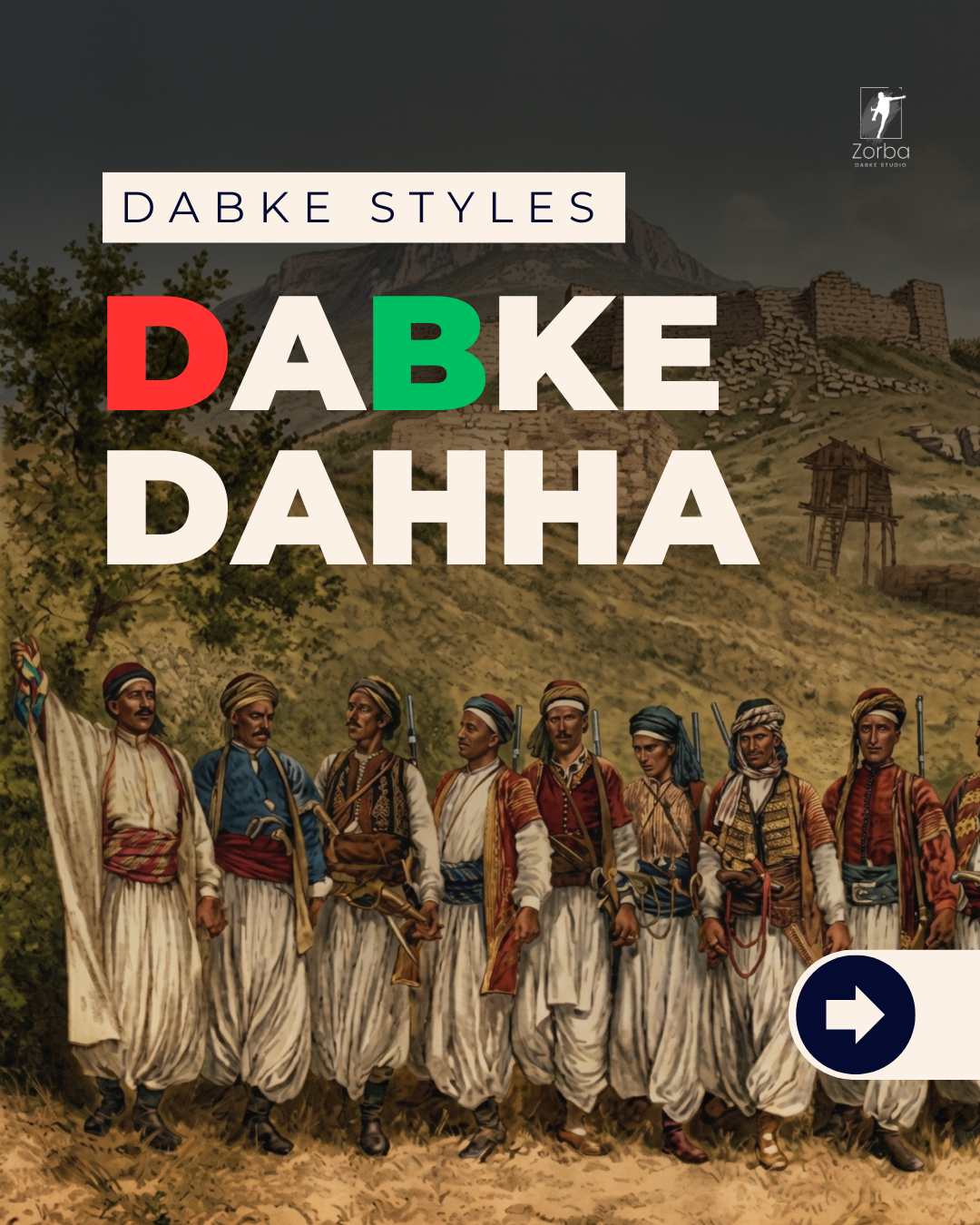
Al-Dahha (الدحّة) – Bedouin War Chant and Collective Dance of the Desert
Al-Dahha (الدحّة), also known as Al-Dahhiya, is one of the oldest Bedouin collective performance traditions in the Arab world. It is practiced widely across Jordan, Palestine, Saudi Arabia, and the Horan region of Syria, and historically it functioned as a powerful ritual of tribal unity, courage, and celebration.
Unlike many other Dabke styles that focus primarily on footwork, Al-Dahha combines poetry, rhythmic clapping, chanting, and dramatic movement to create a powerful collective atmosphere.
Historical Origins and Cultural Role
Historically, Al-Dahha was performed before battles to motivate warriors and strengthen group morale. The rhythmic chanting and synchronized movements created a powerful emotional environment that united fighters and prepared them psychologically for conflict.
After battles, the performance also served another role:
it became a collective storytelling ritual, where poets recited verses describing heroic acts, victories, and tribal pride.
Today, Al-Dahha is no longer connected to warfare. Instead, it is commonly performed during:
- Bedouin weddings
- National celebrations
- Tribal gatherings
- Folk festivals
In these contexts, the performance celebrates heritage, masculinity, courage, and community solidarity.

Dabke Theory Class
Performance Structure and Formation
The performers typically organize themselves into clear formations that amplify the collective rhythm.
Common formations include:
- Single long row
- Two facing rows
- Circular formation
Participants move together while producing a deep rhythmic chant that often resembles the roar of a lion or the bellow of a camel, sounds historically associated with strength and desert life.
The rhythm is reinforced through synchronized clapping, usually striking the right palm against the left while repeating traditional calls such as:
- “Dah Yooba”
- “Ya Bu al-Heish”
The Poet and the Vocal Structure
At the center of the performance stands the Badda’ (البدّاع) — the lead poet.
His role is essential because he recites improvised verses, often in the Hajini poetic style, a classical Bedouin form of oral poetry.
The rest of the participants form the Raddada (الردّادة), meaning the responders.
They repeat a collective refrain after each poetic line.
One of the most famous refrains heard in Dahha performances is:
“Hala w hala bak ya hala la ya haleefi ya walad”
This back-and-forth structure between poet and group creates a powerful call-and-response rhythm that drives the performance.
The Role of the Hashi
One of the most symbolic and dramatic elements of Al-Dahha is the presence of the Hashi (الحاشي).
Traditionally, the Hashi is a veiled woman, often related to the groom or the host family, who enters the Mal’aba — the dance field.
She typically wears:
- A black abaya
- A face covering
- And carries a sword or a stick
The Hashi performs a graceful and controlled dance in the center while the men clap and chant around her.
The word Hashi derives from the Arabic verb تحاشى, meaning to defend oneself.
If a man approaches too closely during the performance, the Hashi may symbolically strike him with her sword or stick.
This act represents honor, strength, and the defense of dignity.
In traditional storytelling, poets sometimes attempt to “buy the Hashi” through poetic praise.
If she responds by dancing, it is considered a victory for the poet’s skill and influence.
Learn Dabke
الدحّة – الإنشاد الحربي والرقص الجماعي في التراث البدوي
تُعد الدحّة من أقدم الفنون الجماعية في التراث البدوي العربي، وهي منتشرة في الأردن وفلسطين والسعودية وبادية الشام وخاصة منطقة حوران. وتمثل الدحّة مزيجاً فريداً من الشعر والإنشاد الجماعي والتصفيق والحركات الإيقاعية التي تعكس روح القبيلة وقيم الشجاعة والوحدة.
وعلى عكس كثير من أنواع الدبكة التي تعتمد أساساً على حركة القدمين، فإن الدحّة تقوم على التفاعل الجماعي الصوتي والإيقاعي بين الشاعر والصف.
الأصول التاريخية والدور الاجتماعي
كانت الدحّة في الماضي تؤدّى قبل الحروب لبث الحماس في صفوف المقاتلين ورفع معنوياتهم. وكانت الأصوات الجماعية والإيقاعات القوية تساعد على خلق حالة من التماسك والاندفاع الجماعي.
كما كانت تؤدّى بعد انتهاء المعارك، حيث يقوم الشعراء بإنشاد القصائد التي تروي البطولات والانتصارات القبلية.
أما اليوم فقد أصبحت الدحّة جزءاً أساسياً من المناسبات الاجتماعية مثل:
- الأعراس البدوية
- الاحتفالات الوطنية
- اللقاءات العشائرية
- المهرجانات التراثية
وهي تعبير حي عن الفخر بالهوية القبلية والتراث العربي.
التشكيل وطريقة الأداء
يتشكل المشاركون في الدحّة عادةً بعدة طرق تنظيمية تعزز الإيقاع الجماعي، منها:
- صف طويل واحد
- صفّان متقابلان
- حلقة دائرية
يقوم المشاركون بإصدار أصوات جماعية قوية تشبه زئير الأسد أو هدير الجمل، وهي أصوات مرتبطة بالبيئة الصحراوية ورمزية القوة.
ويرافق الأداء تصفيق منتظم يتم بضرب الكف اليمنى على الكف اليسرى، مع ترديد نداءات مثل:
- “دح يوبا”
- “يا بو الحيش”
الشاعر وبنية الإنشاد
يقف في مركز الصف البدّاع، وهو الشاعر الذي يقود الأداء.
يقوم البدّاع بإلقاء أبيات شعرية غالباً بأسلوب الهجيني، وهو من أشهر أنماط الشعر البدوي المرتجل.
أما بقية المشاركين فيسمّون الردّادة، وهم الذين يرددون البيت الجماعي بعد كل مقطع شعري.
ومن أشهر العبارات التي يرددها الصف في الدحّة:
“هلا وهلا بك يا هلا لا يا حليفي يا ولد”
ويخلق هذا التبادل بين الشاعر والصف إيقاعاً حماسياً قوياً يميز هذا الفن التراثي.
دور الحاشي
تُعد الحاشي من أهم العناصر الرمزية في الدحّة.
غالباً ما تكون الحاشي امرأة متلثمة تدخل إلى ساحة الرقص التي تسمى الملعبة.
وترتدي عادة:
- عباءة سوداء
- غطاء للوجه
- وتحمل سيفاً أو عصاً
تقوم الحاشي بأداء رقصات متوازنة أمام الصفوف بينما يصفق الرجال وينشدون حولها.
وتعود تسمية الحاشي إلى فعل تحاشي أي الدفاع عن النفس.
فإذا اقترب أحد الرجال منها أكثر من اللازم قد تقوم بضربه بالسيف أو العصا بشكل رمزي، وهو ما يعبر عن القوة والشهامة والدفاع عن الكرامة.
وفي بعض الروايات الشعبية يقوم الشاعر بمدح الحاشي وقبيلتها شعرياً، فإذا استجابت وبدأت بالرقص يعتبر ذلك انتصاراً للشاعر وتأثيراً لكلماته.
Tagline:
www.learndabke.co
WhatsApp: +96103301443
Leave a Reply