Our Dabke Masters embody the spirit of heritage, skillfully passing down the art of Dabke to preserve its legacy for generations
The Masters Who Preserved Baalbek Dabke
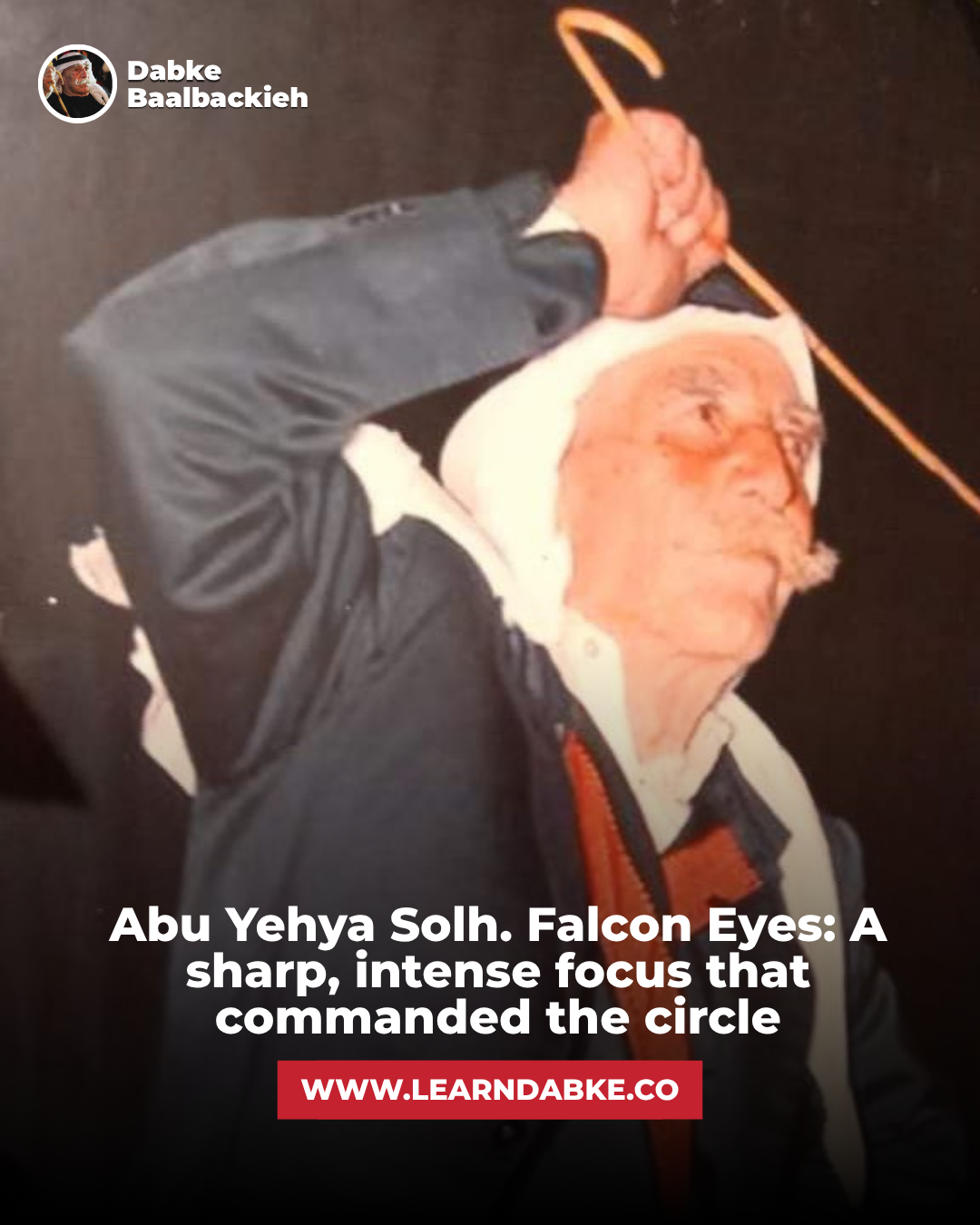
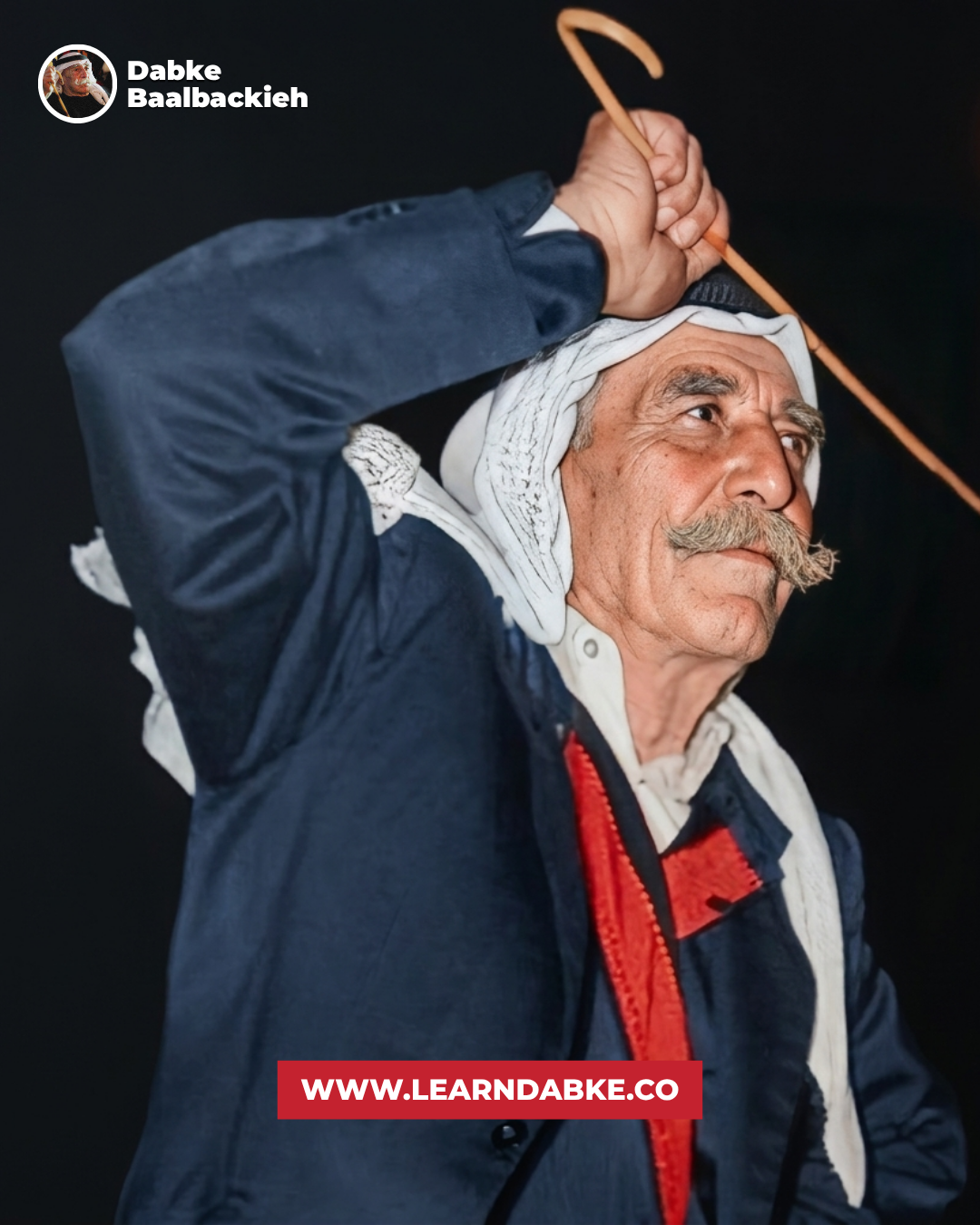
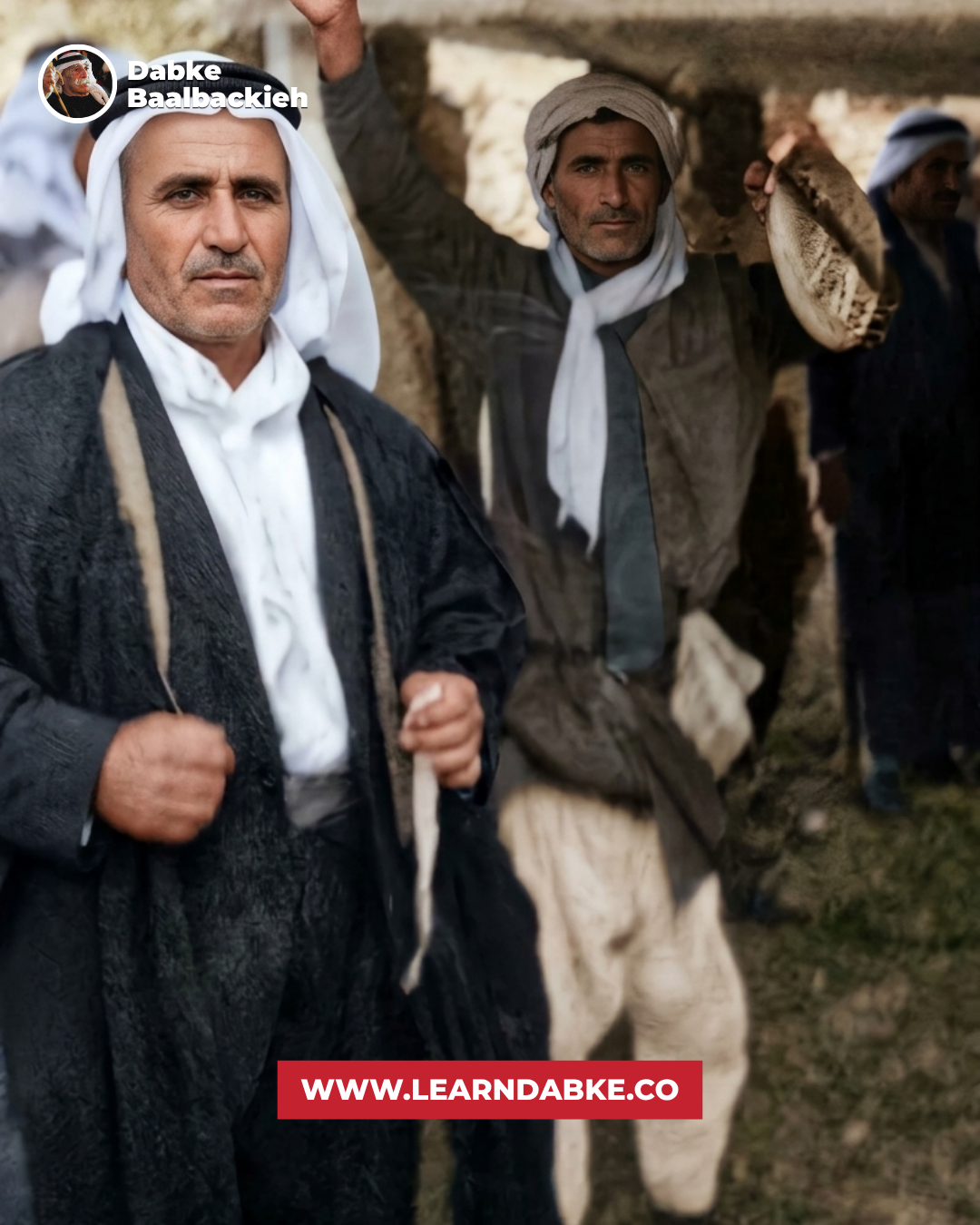
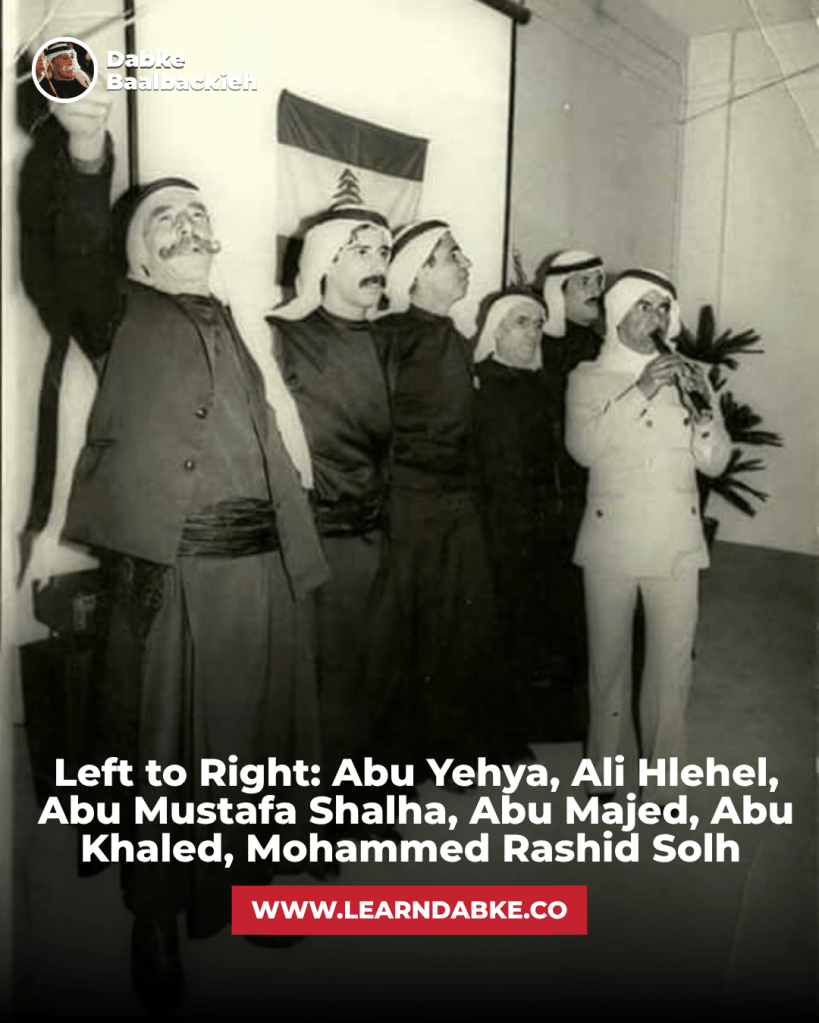
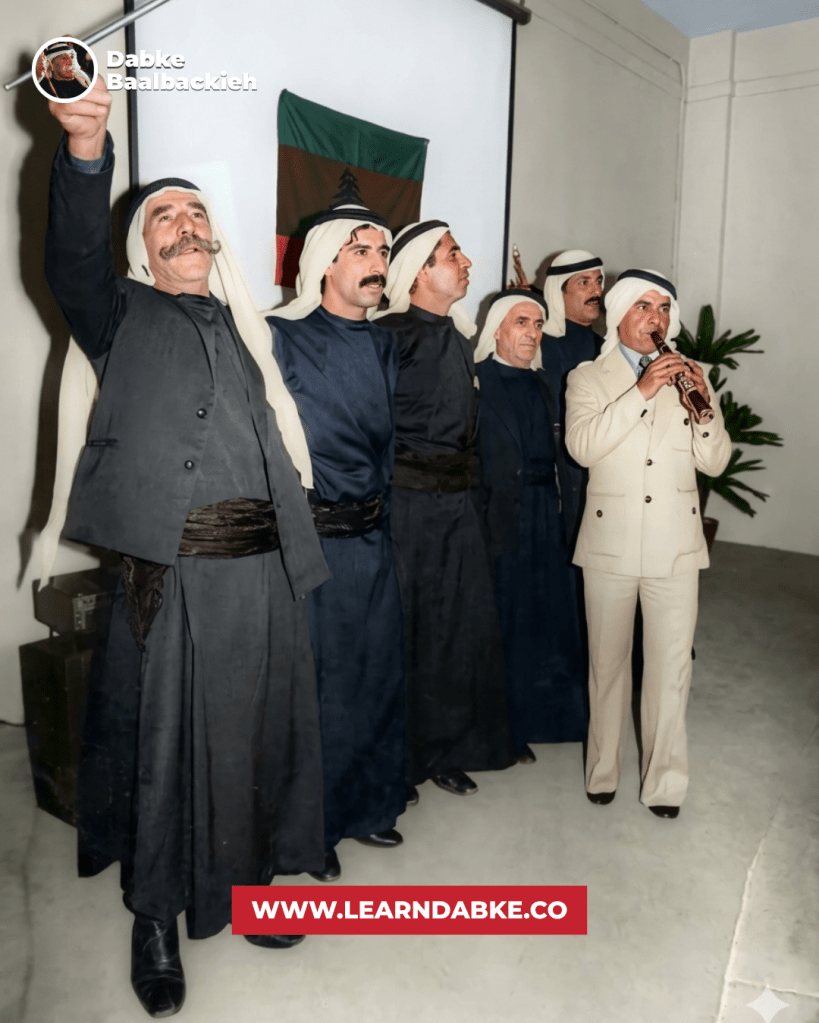
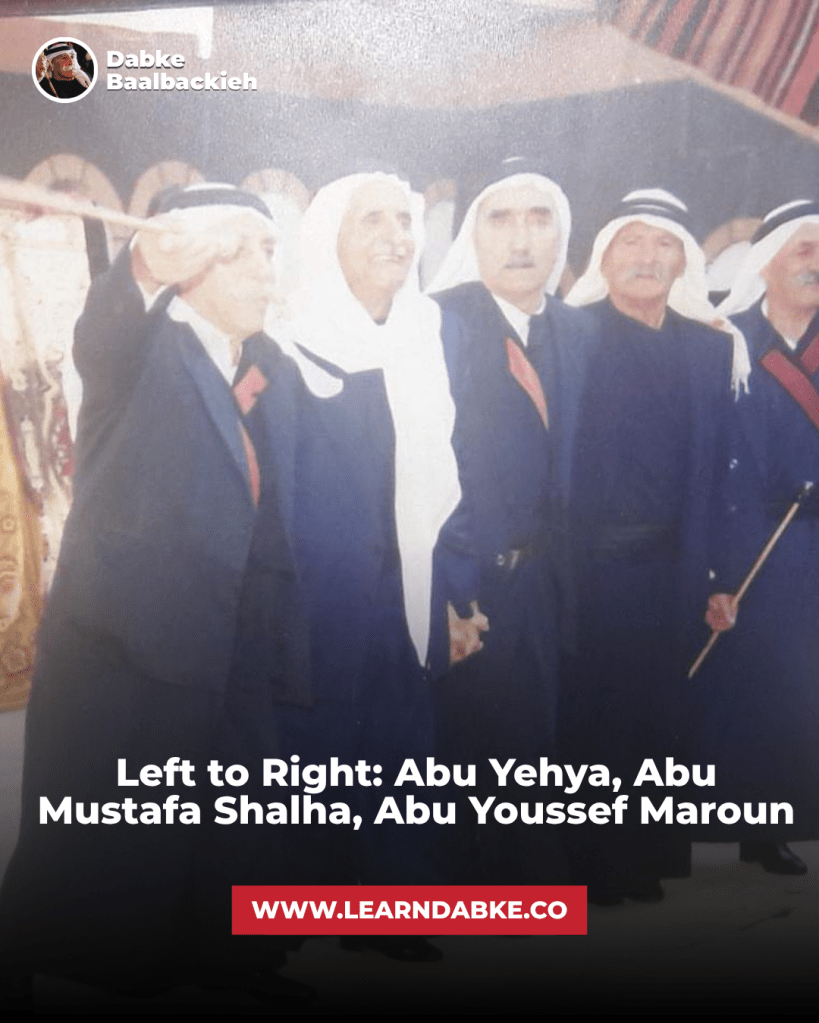
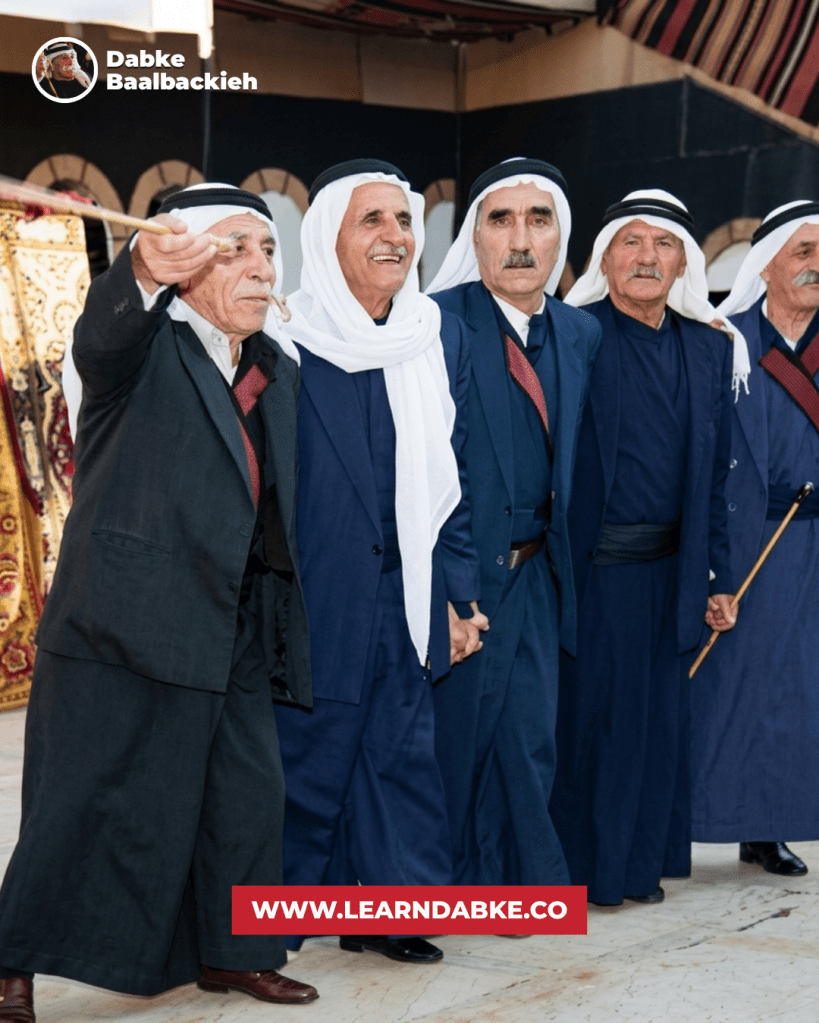
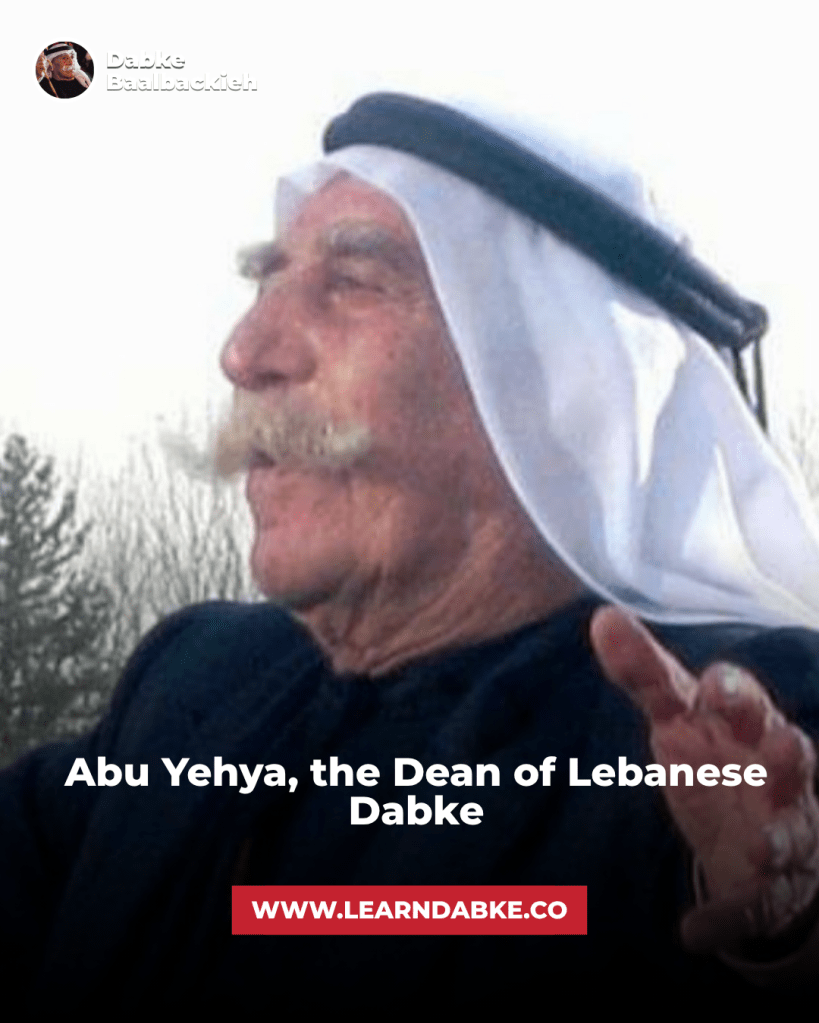
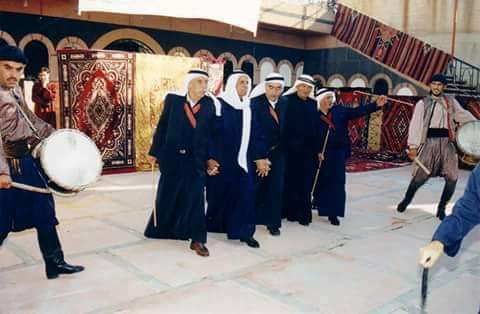
The preservation and transmission of traditional Baalbeki Dabke would not have been possible without the dedication of a generation of legendary masters who carried the dance from village celebrations to cultural heritage. Among the most respected figures isZakaria Ismail Solh (Abu Yehya), widely known as the Dean of Lebanese Dabke. His style was characterized by strong, masculine movements, firm posture, and the intense gaze often described as the “falcon eyes” of Baalbek dancers. Abu Yehya played a crucial role in shaping the discipline and dignity associated with the Baalbek style of Dabke.
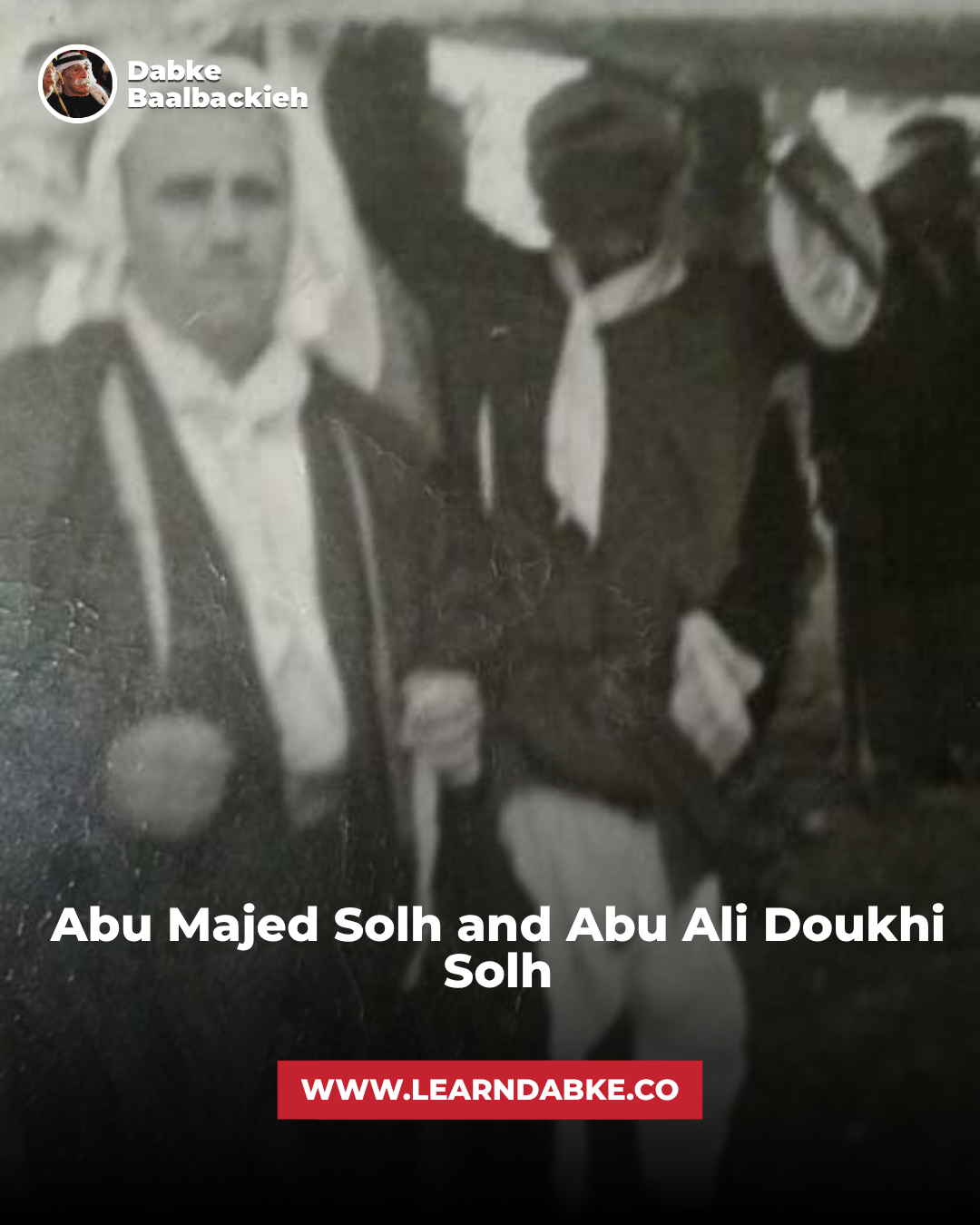
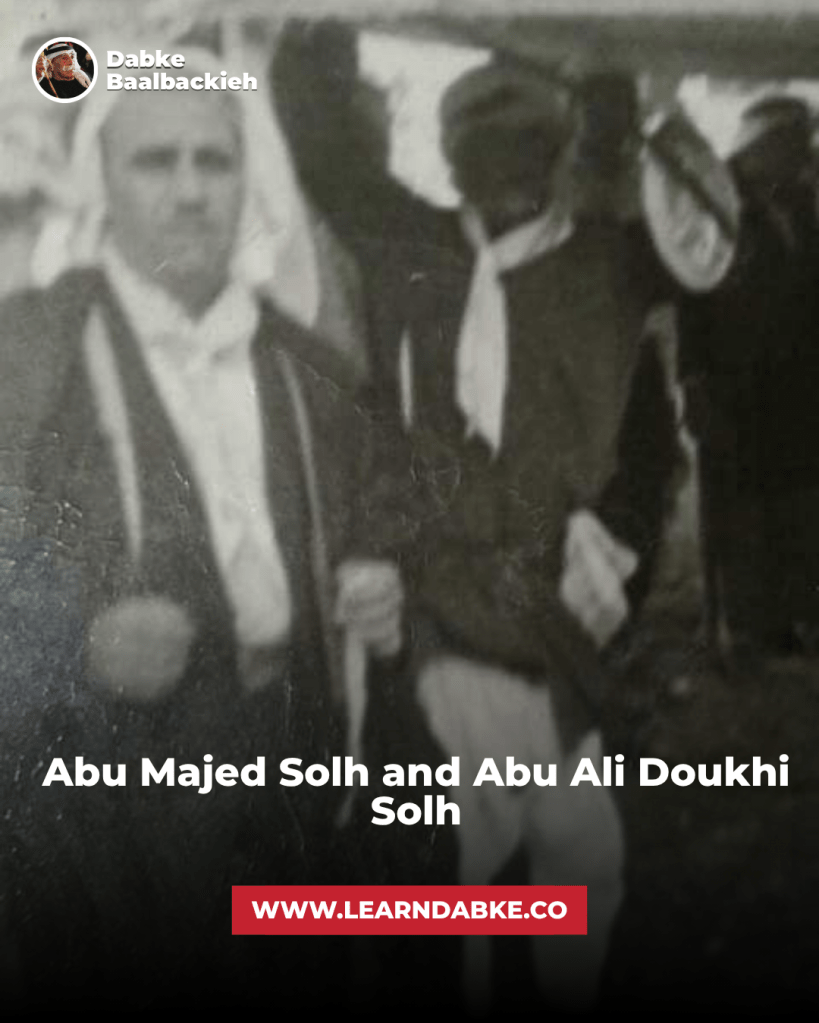
Alongside him stood Mohammad Solh (Abu Majed), another pillar of Baalbek heritage. Abu Majed was renowned for mastering the six foundational Dabke styles of the region: Arja, Zaino, Tirawieh, Askariyeh, Shamaliyyeh, and Bedouin Dabke. Beyond his dance mastery, he was famous for his performance of the sword and shield dance, a powerful display of strength and coordination that reflected the historical warrior traditions of the Bekaa Valley. His life also extended beyond the dance floor, as he participated in the 1948 battles, reinforcing the connection between Dabke, honor, and resistance.
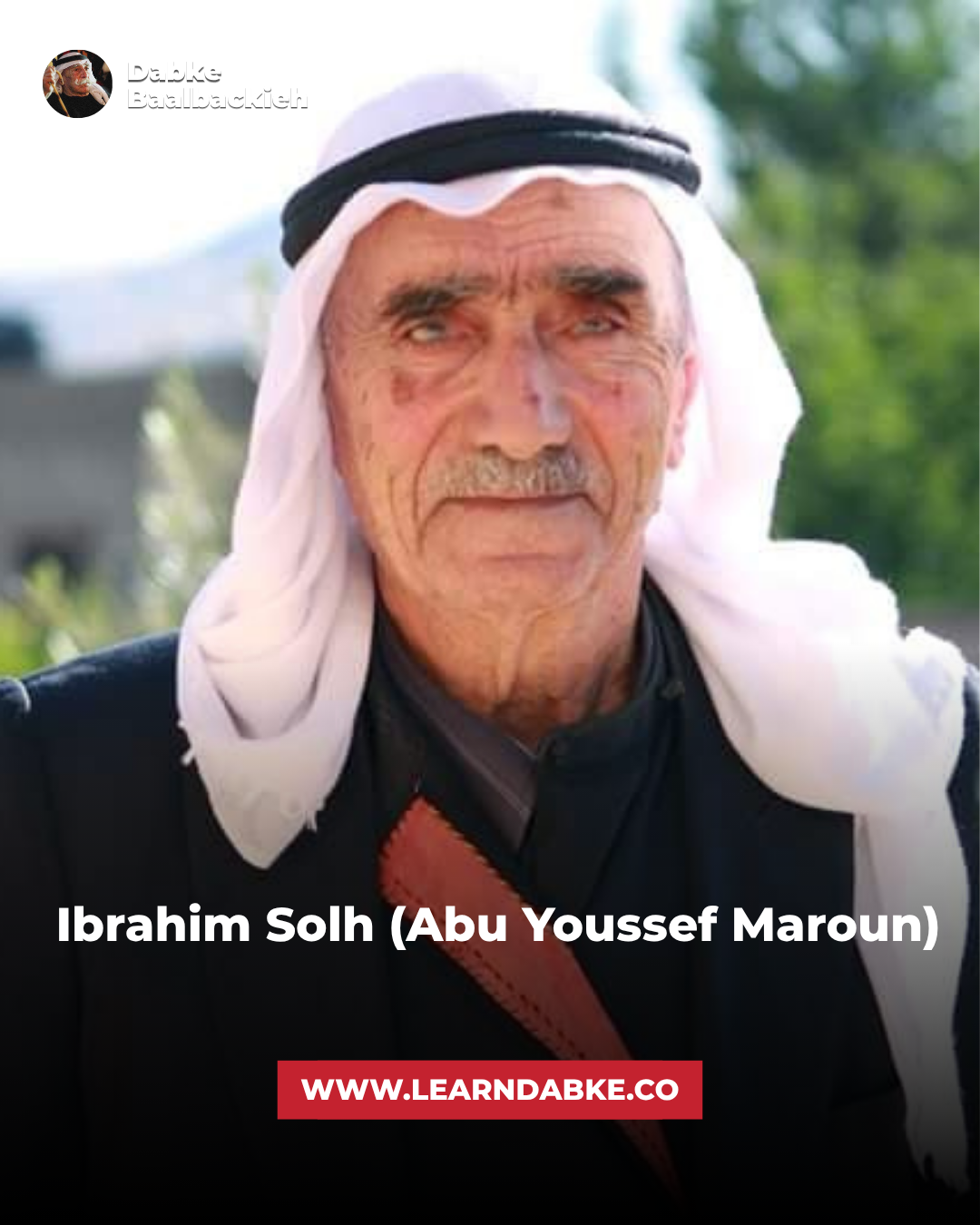
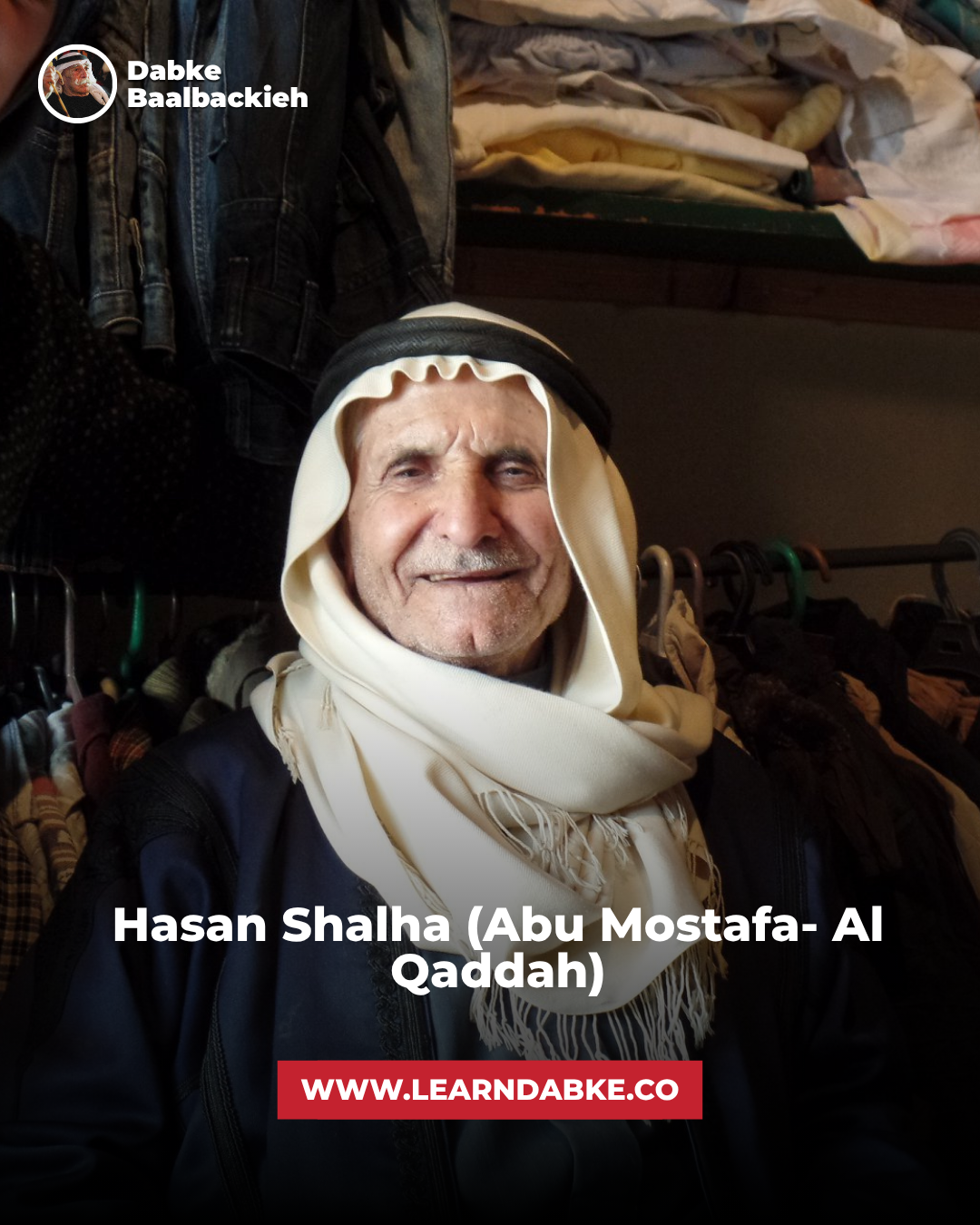
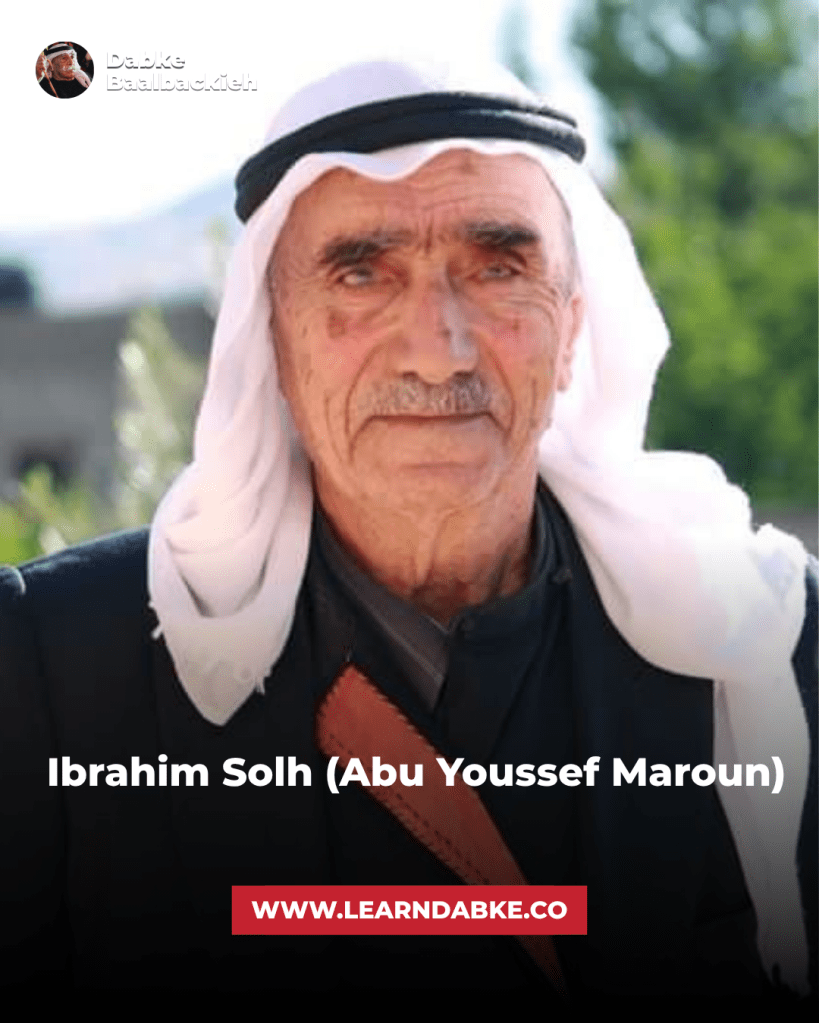
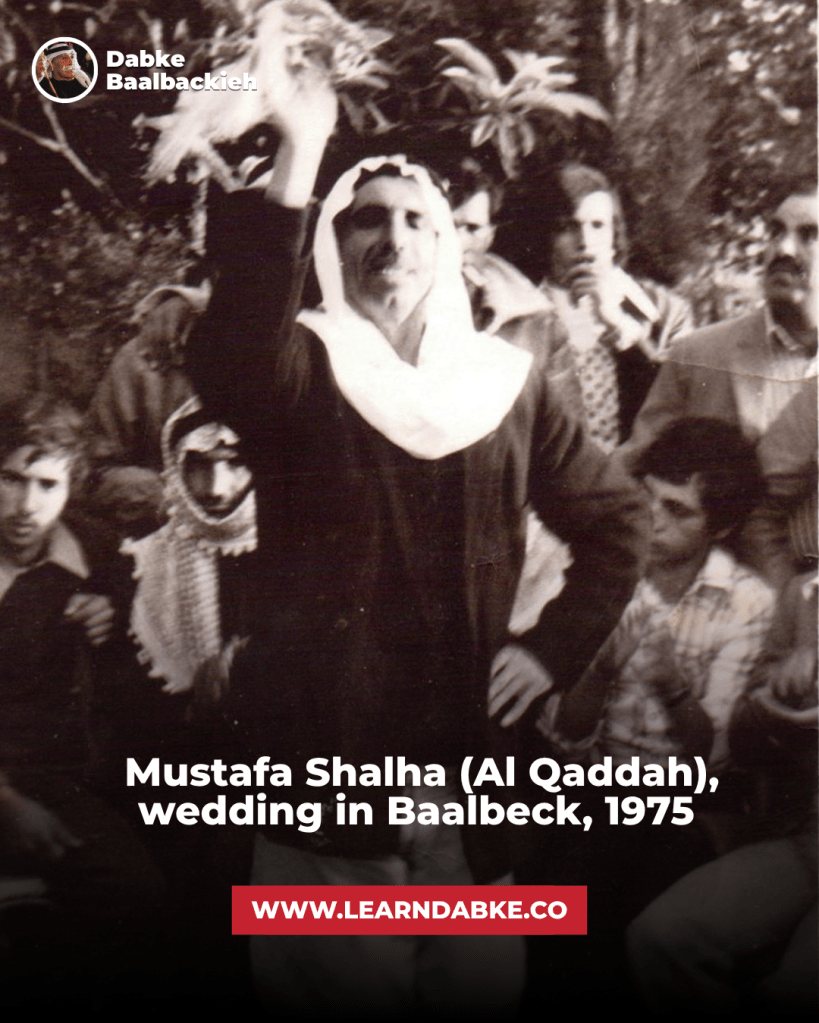
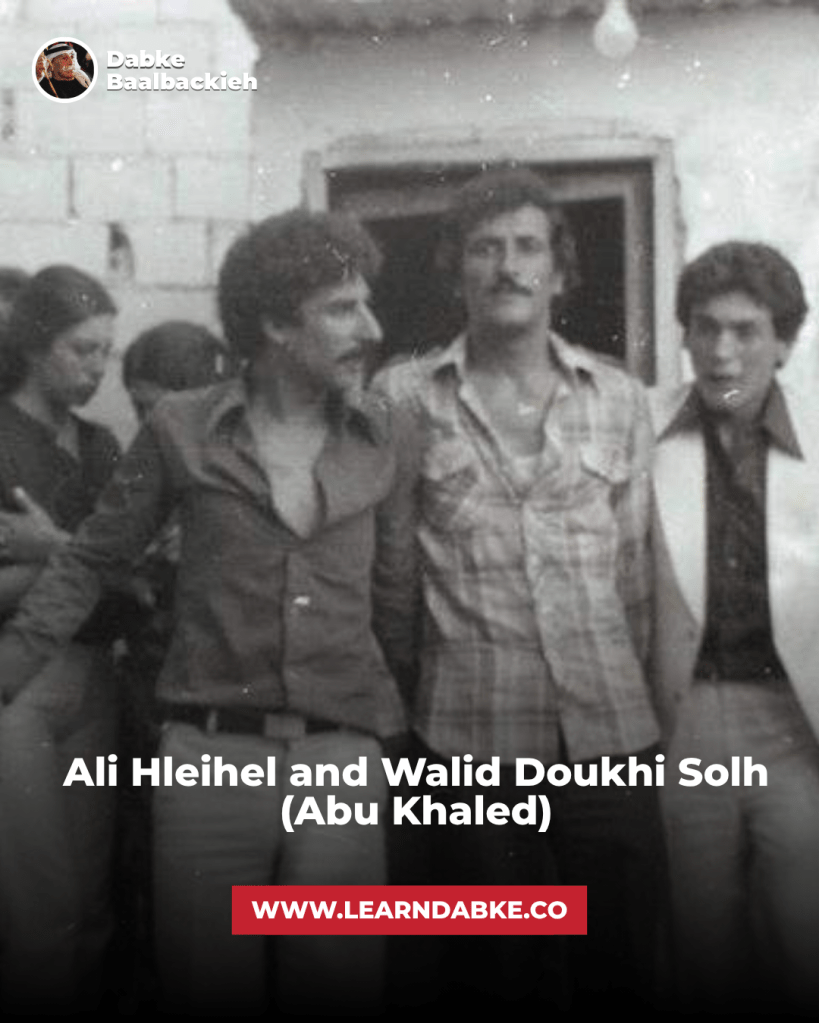
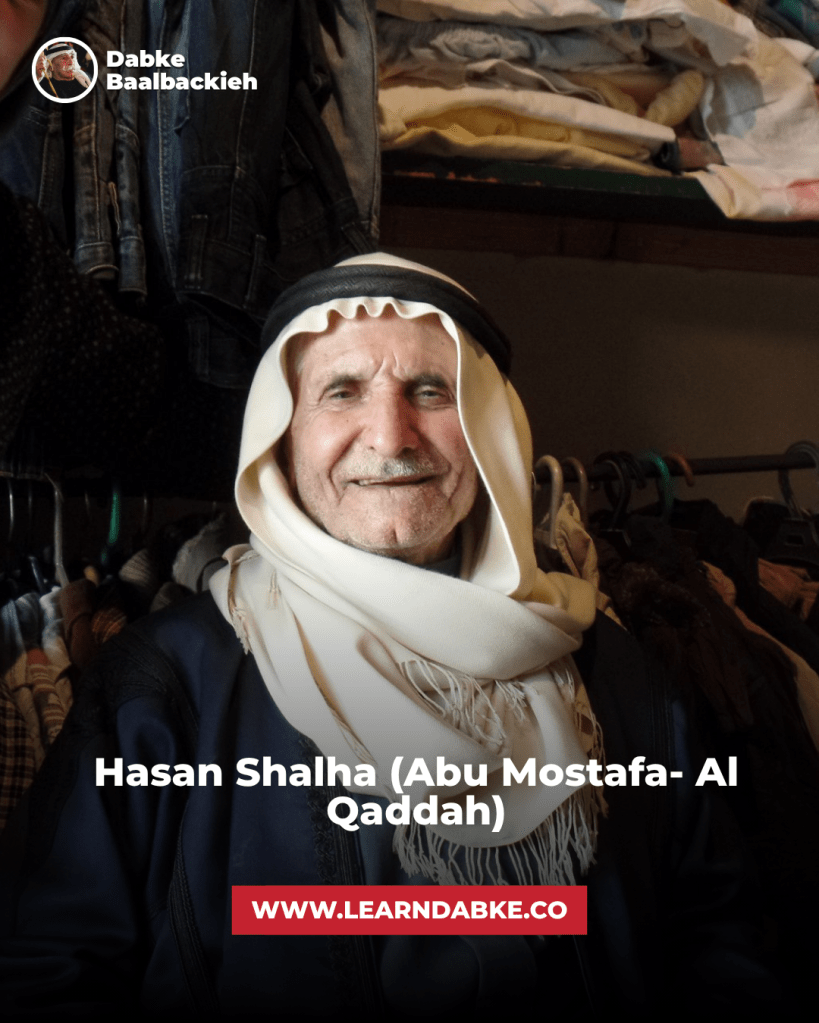
This living tradition was also strengthened by other key members of the First Heritage Group, whose dedication ensured the continuity of Baalbek’s Dabke identity. Among them was Walid Doukhi Solh (Abu Khaled), one of the principal torchbearers responsible for safeguarding the authenticity of Baalbek folklore and mastering the six classical Dabke styles. Another foundational figure was Ibrahim Yousef Solh (Abu Yousef), a core member of the group who devoted his life to reviving and presenting the traditional dances of Baalbek with renewed pride. The legacy of the legendary dancer Doukhi Solh continues today through his son Karim Solh (Abu Doukhi), widely recognized as one of the finest contemporary Dabke performers in Lebanon and a living continuation of his father’s artistic brilliance. Completing this heritage circle was Mostafa Shalha (Abu Mustafa), the powerful vocalist whose voice signaled the beginning of the performance. His famous “Awf” call marked the moment when music, poetry, and dance merged, guiding the rhythm of the dancers and the melodies of the flute played by Abu Rashid Solh. Together, these masters embodied a unique artistic unity where song, music, and movement formed a single expression of Baalbek’s cultural pride.
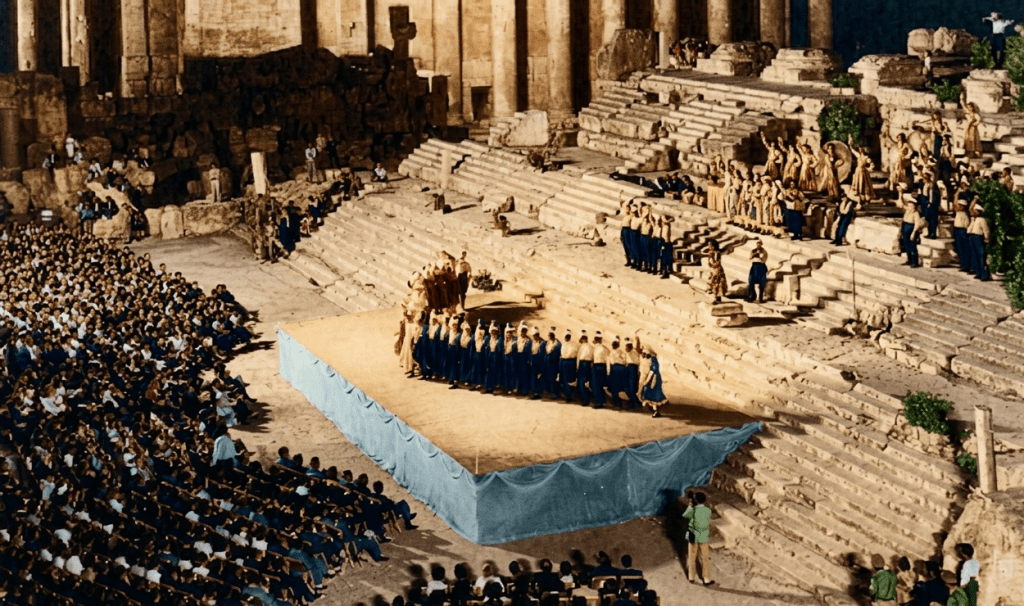
Rahbani brothers & Feiruz at Ballbeck festival – 1961
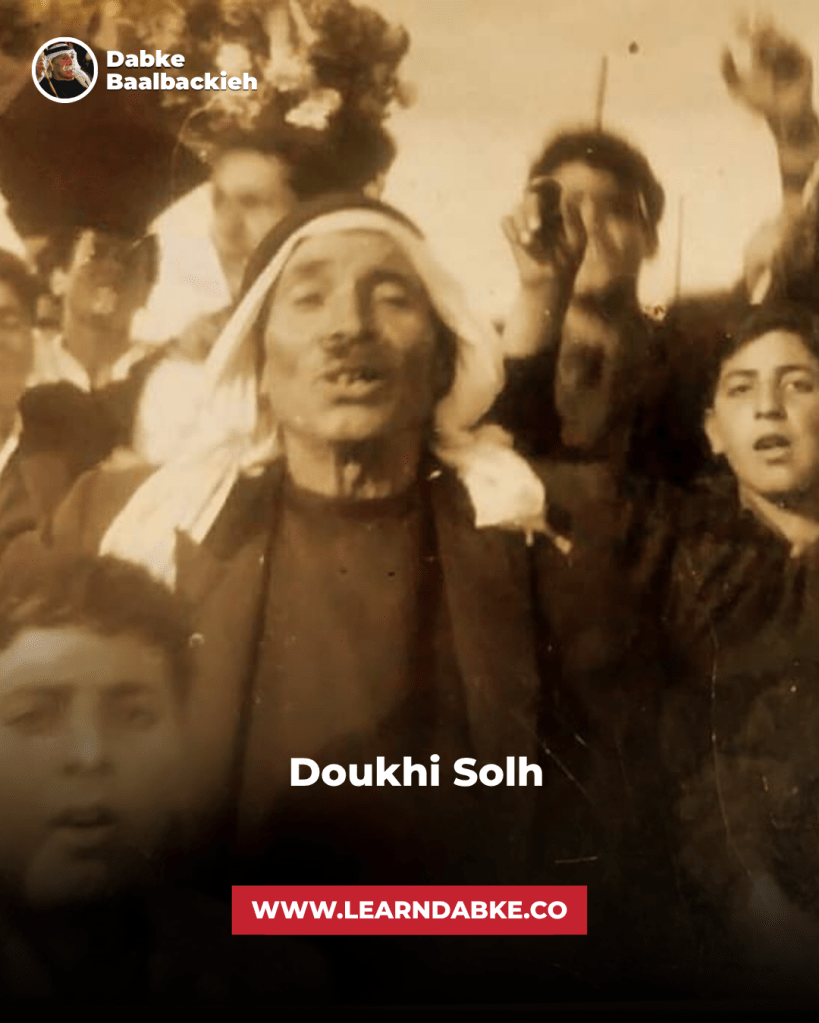
Another legendary figure in the Baalbek tradition is Doukhi Solh, whose performances pushed the limits of physical skill and creativity. Doukhi became famous for his acrobatic style, dancing with swords, daggers, and even traditional objects such as the nargila. One of his most remarkable demonstrations involved leaning backward and applying eyeliner using the tips of daggers, an act that blended humor, bravery, and theatrical skill. Such performances reflected the expressive freedom that masters of Dabke could achieve while remaining grounded in tradition.
Equally important to the preservation of Baalbek heritage is the role of musicians and singers.Ali Hleihel (Abu Asaad) is widely regarded as one of the most authentic voices of Baalbek folklore. Known as a guardian of traditional singing styles, his performances of Ataba and Mawwal were closely tied to Dabke gatherings. His voice carried the poetic narratives that accompanied the dance, and he was famously praised by the legendary singer Fairouz, who considered him among the most powerful voices of Lebanese heritage.
The evolution of Dabke from village gatherings to international stages was further shaped by the Caracalla family. Abdel Halim Caracalla and his brother Omar Caracalla founded the Caracalla Dance Theatre in 1968, bringing Lebanese folk dance into the realm of professional theater. Omar Caracalla, himself a champion athlete and master dancer, helped transform traditional Baalbeki movements into large-scale stage productions. Their early production “Black Tents” was inspired by Bedouin life and introduced audiences around the world to the dramatic power of Levantine dance traditions.
Together, these figures represent the living lineage of Baalbek Dabke. Through their dancing, singing, and artistic innovation, they preserved the six classical styles of the region while inspiring new generations to continue the tradition. Their legacy remains a central part of Lebanese cultural identity and continues to shape the global appreciation of Dabke as both a folk dance and a performing art.




 Learn Dabke