The Arab Dabke is not merely a dance; it is a profound vocal and physical manifestation of Levantine and Mesopotamian identity, a rhythmic language that has survived for millennia. Rooted in the ancient soil of the Fertile Crescent, it serves as a bridge between the mythological past of the Canaanites and Phoenicians and the vibrant, modern social fabric of Lebanon, Syria, Palestine, Jordan, and Iraq. Across these regions, the Dabke evolves through hundreds of regional variants, yet it remains unified by the core principles of communal solidarity, rhythmic precision, and the symbolic “stomp” that binds the dancer to the earth.
I. The Mythological and Historical Genesis of Dabke
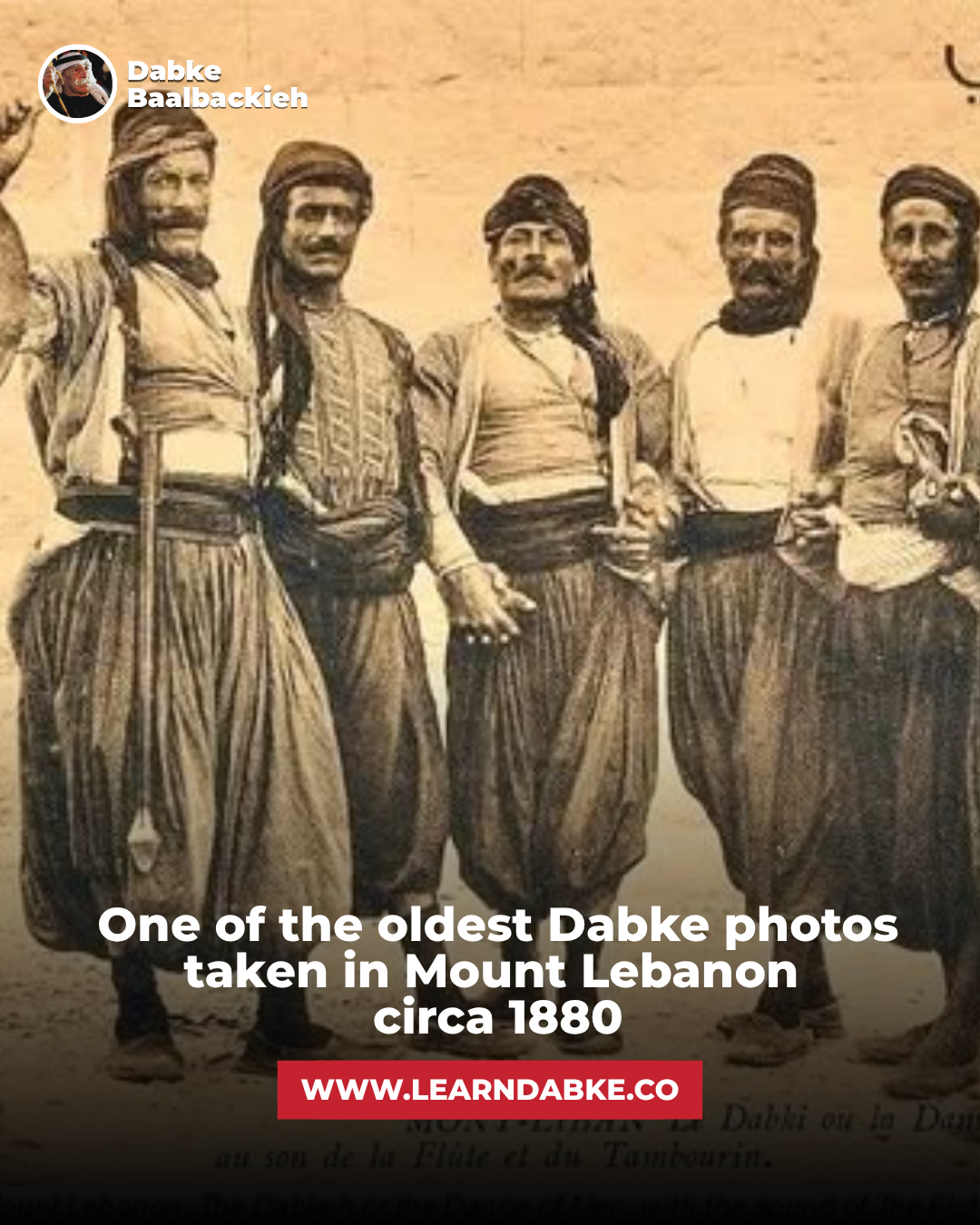
According to the sources, the origins of Dabke are shrouded in layers of history and legend, with several prominent theories explaining its birth.
- The Myth of Ishtar and Tammuz: One of the most poetic accounts links Dabke to the Syrian/Mesopotamian fertility myths. When the god of fertility, Tammuz (Domuzi), was abducted by the goddess of death to the underworld, the goddess of life, Ishtar, struck the earth with her feet in grief. She commanded the people to join her, forming a circle to stomp the ground to disturb the goddess of death and awaken the sleeping earth from its winter slumber. This rhythmic “waking of the earth” is believed to be the spiritual ancestor of the modern Dabke stomp.
- The Labor of the Roofs: A more practical historical theory attributes Dabke to the communal process of building houses. In ancient times, roofs were constructed from mud, straw, and clay. To prevent cracks and ensure the roof was waterproof, neighbors gathered in a process called “Aouna” (collective assistance) to stomp the mixture together with their feet. This rhythmic, functional labor gradually transformed into a celebratory folk dance performed at the completion of a home.
- Agricultural Rites: The dance is also deeply tied to the harvest seasons of wheat and grapes. Dancers would stomp on the harvested crops to separate the grains from the stalks or crush grapes in stone basins to create wine, accompanied by chants to ward off evil spirits and ensure the fertility of the next crop.
- Military Preparation: Historically, Dabke served as a tool for martial enthusiasm. Before battles, tribes performed synchronized, aggressive movements to ignite courage and unity; after victories, the dance became a medium to recount heroic deeds and celebrate triumphs.
II. The Lebanese School: The Six Columns of Baalbek
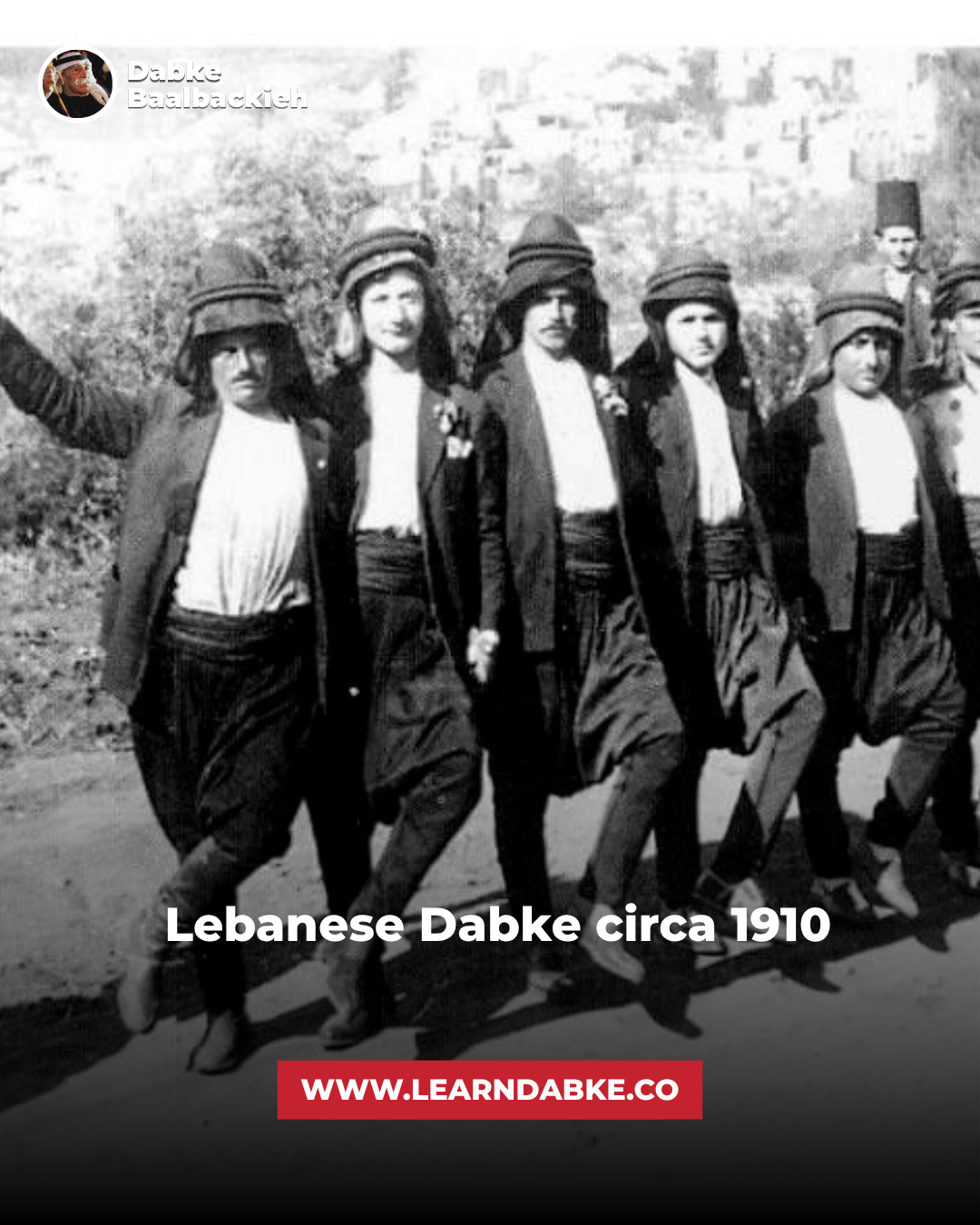
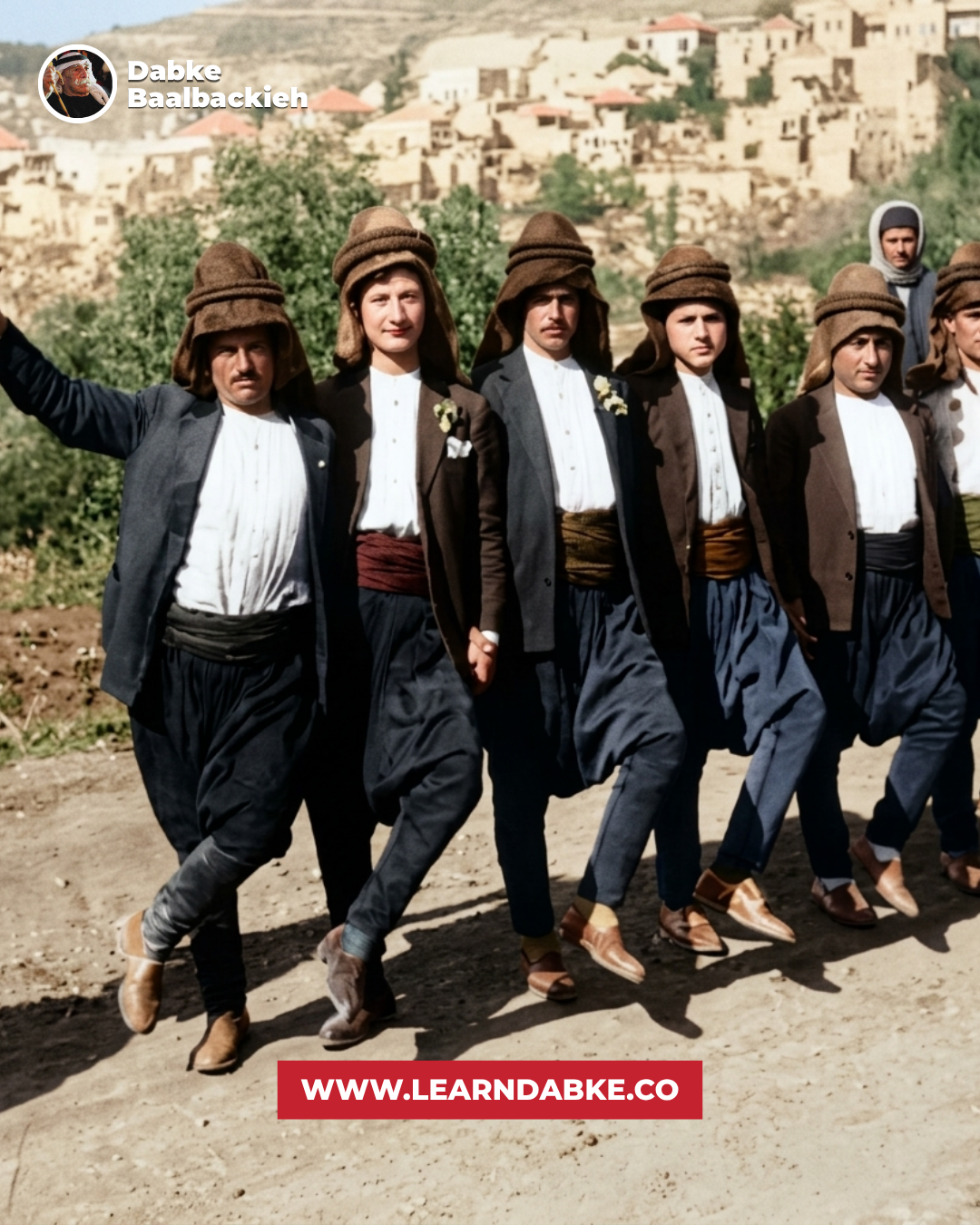
In Lebanon, the city of Baalbek is considered the “cradle” of traditional Dabke. The art form there is famously categorized into six primary styles, which are culturally equated to the six remaining columns of the historic Roman temple in the city, representing the pillars of Lebanese heritage.
- Al-Arja (The Limping): Known as the “Dabke of Pride and War,” this style is characterized by its heavy and steady (thaqila) pace and asymmetrical weight distribution. It originated from the return of victorious tribes carrying their swords. A popular legend suggests it was inspired by a limping woman who attempted to dance the Bedouin style but created a unique, rhythmic limp that became a standard. It is technically purely instrumental (ma’zoufa), having no lyrics, which forces dancers to follow the melodic pauses and suspensions of the music. Leaders of this style were noted for their “eagle eyes” and military precision.
- Al-Zaino (Al-Aadiyya / Al-Karadiyya): This is often cited as the most technically demanding style in Baalbek. It has roots in Kurdish traditions and movements derived from swordplay. Its defining technical feature is the shoulder-shake (nahza) and a foot-strike where the dancer lands specifically on the heel. Unlike many other styles, it features only a single stomp, which is performed only when the singer concludes a vocal phrase, making the dance deeply tied to vocal phrasing.
- Al-Shamaliyya (The Northern): This is the most widespread and iconic style across the entire Levant. Its name derives from its association with the “Northern Arab” regions or the technical rule of starting the dance with the left foot (shimal). It is a fast-tempo, high-energy dance involving a single stomp (khbat al-wahida). It is the primary style for the Dal’ouna and Nashla musical genres.
- Al-Badawiyya (Bedewe): Introduced approximately 400 years ago by Bedouin tribes migrating from Najd to the Baalbek area, this style features a unique weight-shifting pattern known as Naqla. It is famously called the “Two-Stomp” (khbatayn) Dabke, where every cycle is synchronized with six drum strikes. A signature move is the Kasra (body break), where the dancer bends the torso during a single accented stomp on the second step of the sequence.
- Al-Askariyya (The Military): This style was directly influenced by the marching drills of Ottoman soldiers. It maintains a strict military cadence with alternating leg lifts and powerful downbeats driven by thundering drums. It often serves as a transition into the Shamaliyya or Karja styles as the energy of the dance increases.
- Al-Tayrawiyya: Named after the village of Tariya, home to the Hamieh clan, this style focuses on grace, balance, and measured phrasing. It uses broader steps and a slower tempo than the Shamaliyya. Notably, it initiates with the right leg, making it a technical mirror of the Syrian Jofiyeh.
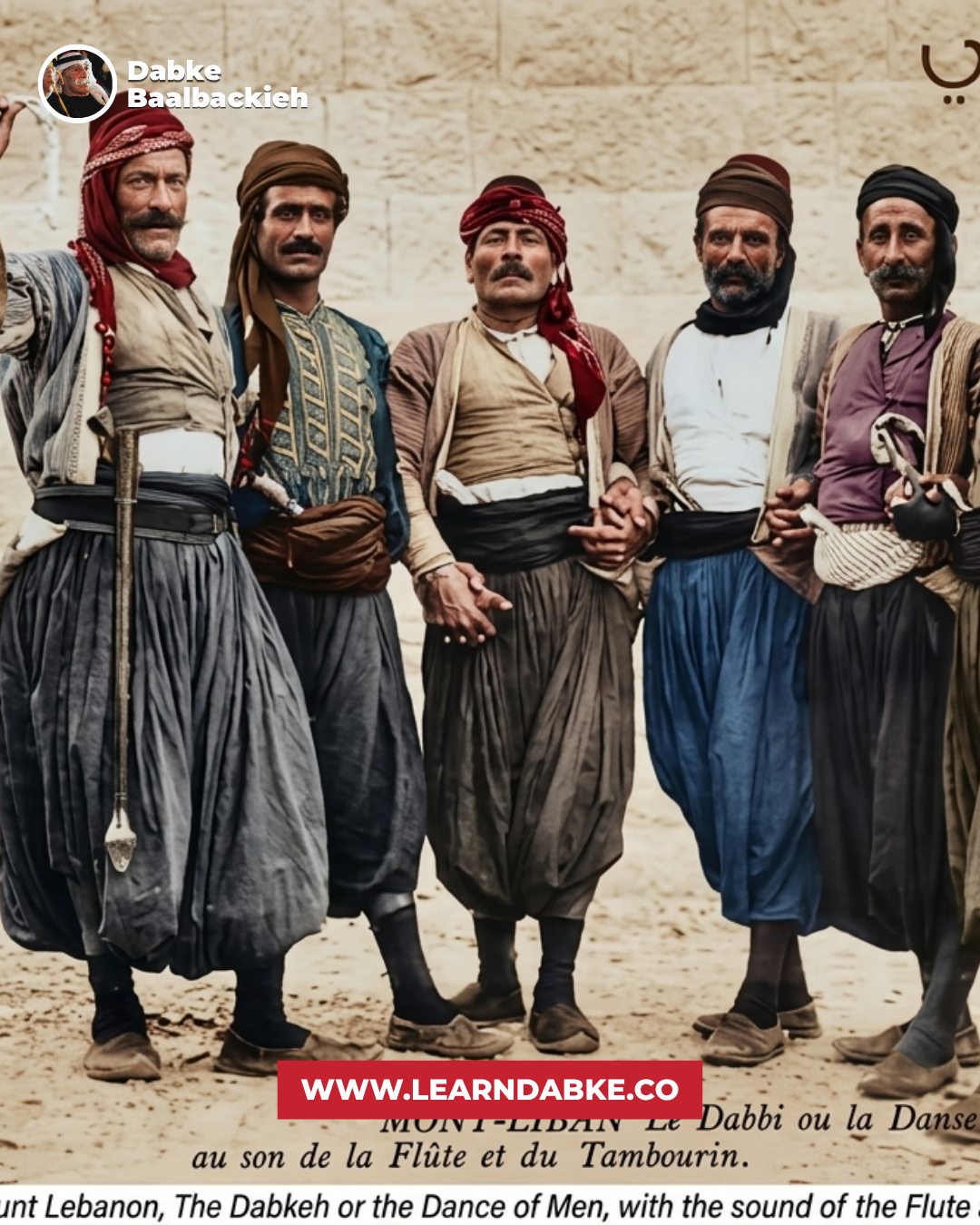
III. The Syrian Regional Diversity: Horan, Aleppo, and the Coast
Syrian Dabke is a vast mosaic of styles that reflect the geography and social history of its various provinces.
A. The Horan and Daraa Plains
The Horan region (southern Syria) is perhaps the most active hub for Dabke, where it is a fundamental part of the “Hawarneh wedding”.
- Habl Mode’ (Habl al-Mudda’): Named for the way dancers’ hands are interlocked to resemble a “connected rope,” this is a mixed-gender dance where men and women stand side-by-side. The word “Mode’” refers to cowrie shells (wada’) used to decorate ropes, symbolically representing the union of “the knot and the shell” (male and female). Technically, it follows a 6-step cycle starting with the left, ending in a kick and a stomp with the left foot. In the Ramtha area, it is expanded to 8 steps by adding an extra kick and stomp with the right.
- Dabke Darazi (Al-Kibariya): Known as the “dance of the elders,” this style is identical in footwork to the Sha’rawiyeh but is performed with extreme slowness, dignity, and elegance (razana). It is the preferred style for village seniors, who lead the line in traditional attire. Dancers interlock hands tightly, and the bodies are more closely pressed together than in other styles.
- Sha’rawiyeh: The most popular style in Horan and Palestine, this is a fast-paced, high-energy dance. While it follows a 6-count rhythm, it is distinguished by raising the legs high and replacing the final stomp with two rapid jumps. It is usually performed with hands on the shoulders to allow the circle to expand.
- Jofiyeh: A “migratory model” that reached Horan from the Al-Jouf region of the Arabian Peninsula. It is performed in two facing rows or a single line divided into two groups that engage in call-and-response singing. Dancers move slowly—one step forward with the left, bringing the right next to it, then one step back with the right, and bringing the left next to it—in 2-second cycles. The lyrics traditionally focus on heroism, chivalry, and the struggle against the French Mandate.
- Holeyah: A style native to the Jabal (Mountain) region, defined by the repetition of verses and moving from one segment of a song to another by repeating the final word of the previous verse.
- Miyah (Al-Meyha): A regional style common in Horan, often described as a “Falahiya” (peasant) style performed with simple, rhythmic movements.
B. The Aleppo and Northern Traditions
Dabke in Aleppo is noted for being balanced and steady, influenced by the Sama’ Sufi movements.
- Al-Walda, Al-Qba, and Al-Sheikhani: These are characterized by a slow, dignified tempo.
- Al-Ghazzawiyya and Al-Sajiyya: These are much more fast, dynamic, and loud.
- “Hal Asmar el-Loun” Style: A specific rapid Dabke where the stomp occurs on the seventh step and the “tap” occurs on the eighth.
C. The Coastal and Island Styles
- Muthallatha Tartousiyya: A historic style from Tartus that traces its roots back to the Assyrian era, with the rhythmic stomp occurring on the fourth step.
- Al-Lawha: A style from Latakia involving movements in 7-count phrases.
IV. Jordanian Heritage: From Ma’an to Aqaba
Jordanian Dabke is an essential expression of tribal pride and joy, with distinct regional signatures.
- Tesawiyah (Al-Ma’aniya): Native to Ma’an, this style is technically similar to the Lebanese Bedewe, consisting of three rounds (moving forward on the left and backward on the right) over 6 seconds. However, it differs by having only one stomp at the end of the three rounds instead of two. It is led by a “Lawwah” who improvises and carries “Msebha” (beads). It is famous for movements like the Shaila (rapid jumping) and the Karja (running-stomp).
- Ramthawiya: Native to Ramtha, this style is synonymous with strength and courage. The steps are identical to the Lebanese Shamaliyya, but with an extremely strong stress placed on the stomp at the sixth count. It typically involves a line where two dancers break away to perform solo routines.
- Dabke Gwaraneh (Deir Alla): This style is defined by extreme speed. While the rhythm is similar to the Shamaliyya, the technical difference occurs on counts 5 and 6; instead of a kick and stomp, the dancers move the left leg laterally to the left on count 5 and back to the right on count 6.
- Aqabawiyah: A coastal style from Aqaba that is uniquely linked to the Simsimiyya (a six-string instrument) and sea-themed melodies.
- Abu Alanda: A high-energy variant from the Abu Alanda region, typically performed to the Mijwez and noted for its rhythmic harmony.
V. Palestinian Dabke: Labor, Identity, and Resistance
In Palestine, Dabke has evolved from a rural celebratory dance into a powerful symbol of national identity and cultural resistance.
- Wahda w Nos (One and a Half): This style is the most direct descendant of the roof-building “Aouna” tradition. The name describes the rhythmic sequence:
- Count 1: Kick with the left leg.
- Count 2: Place the left on the ground while raising the right leg simultaneously (creating a visible jump).
- Count 3: A small stomp with the right foot next to the left. The cycle takes approximately 3 seconds and concludes with a double jump on both legs.
- Sab’awiya: A member of the Shamaliyya family performed with hands on the shoulders. It is named for its seven rhythmic strikes (qar’at), with the sequence concluding on the right foot.
- Tayara (Al-Karadiyya): Named for its “Airplane” speed, this is an extremely fast and active dance. It differs technically from the Lebanese Karadiyya (Al-Zaino). It involves a “running” motion in a circle (step-and-hop) for roughly 18 seconds, followed by 10-12 seconds of intense, heavy stomping and shifting between legs. Due to its exhaustion, it is performed primarily by young men.
VI. The Iraqi Jobi (Chobi): The Dance of Brotherhood
In Iraq, the term “Jobi” is used as the alternative to Dabke, and the act is referred to as “playing Jobi” rather than dancing. It is an ancient ritual representing brotherhood and solidarity.
- Technique and Stages: Participants stand shoulder-to-shoulder, often with the leader carrying a handkerchief or beads. The performance is divided into three distinct stages:
- Stage 1: Dancers strike the ground with the left foot, raising it about half a foot high.
- Stage 2 (Violent Stage): The right foot is raised half a foot, while the left is raised to the level of the right knee, and then they strike the ground together with force.
- Stage 3 (Tathlithiyah): The climax, where dancers perform three rapid jumps in unison to synchronize the final rhythm.
- Bedouin Jobi: This variant is characterized by rhythmic shoulder-shaking and minimal lifting of the feet off the ground, symbolizing the steady, nomadic movement of the tribe.
- Etymology: Theories suggest the name derives from the Persian Jub (wood), the Assyrian Ja (my love), or the Arabic Jouba (an open field where sheep are sold).
VII. Bedouin Arts: The Dahha and the Symbolism of the Hashi
The Dahha (Dahhiya) and Sahja are ancient tribal arts common in Jordan, Palestine, Saudi Arabia, and Syria.
- The Dahha Performance: Participants stand in a row or circle, producing a unique rhythmic sound that mimics the roar of a lion or the bellowing of a camel. A poet called the “Badda’” recites verses, and the group (“Raddada”) responds with a synchronized refrain, most famously: “Hala w hala bak ya hala la ya haleefi ya walad”.
- The Sahja: A collective performance involving rhythmic clapping (striking the right hand against the left) and coordinated movements like standing, sitting halfway, and bending the back while chanting “Dah Yooba”.
- The Role of the Hashi: The “Hashi” is the most symbolic element of these Bedouin arts. Traditionally, the Hashi is a woman (often a relative of the host) who enters the “Mal’aba” (dance field) veiled in a black Abaya to remain anonymous. She carries a sword or a stick and performs a skillful dance. The name “Hashi” comes from “tuhashi” (to defend), as she uses her sword to ward off any man who approaches too closely; if she strikes or “wounds” a participant, she is not blamed, as it represents her strength and the defense of honor.
VIII. Specialized Roles and Modern Adaptations
- Leadership: The leader of the Dabke line is known by various names: Lawwah, Rowis, Sanda, Qideh, or Ras. This individual is responsible for timing, improvising athletic displays, and signaling transitions through the waving of a handkerchief or beads.
- Al-Faradiya (Solo Dabke): In Jordan and Palestine, a solo dance is often performed by a woman—typically the mother of the groom—during the wedding procession to express joy. In Lebanon, this tradition is known as “Khal’at Bab al-Dar”.
- Instrumentation: Traditional Arab Dabke is driven by woodwind instruments (Mijwez, Yarghoul, Shababa, Qirbeh) and percussion (Tabl, Darbuka). In modern times, the keyboard (Org) has been introduced as a primary instrument.
- Signaling Terms: Dancers use specific calls like “Shayyalat” (to speed up or jump), “Ilham” (to close gaps in the line), and “Afred” (to expand the circle).
Through these diverse styles, the Arab Dabke continues to be a living archive of history—transforming ancient labor, forgotten myths, and tribal victories into a modern rhythmic celebration of community and the earth.
http://www.learndabke.co | WhatsApp: +96103301443
 Learn Dabke