
Author: Zorba Academy
-

Dabke Dandashiyeh | دبكة دندشية
Dabke Dandashiyeh Origin and Historical Documentation Dabke Dandashiyeh is recognized as one of the eight primary and essential types of traditional Syrian dabke. This classification was formally documented by the Homsi poet and researcher Wajih Wehbe al-Khoury in his important study Mabhath fi al-Dabkat al-Suriya (A Research on Syrian Dabke). In his research, Al-Khoury identified…
-
Dabke Al-Zaino | دبكة الزينو
Al-Zaino Dabke – The Most Technical Baalbek Style of Lebanese Dabke Dabke Al-Zaino is one of the six fundamental styles of traditional Baalbeki Dabke preserved in the cultural heartland of the dance in Baalbek, Lebanon. Among these six styles, Al-Zaino is often regarded as the most technically demanding and stylistically distinctive. For dancers in Baalbek,…
-

Dabke Al-Shams & Al-Marsoud | دبكة الشمس والمرصود
Dabke Al-Shams and Al-Marsoud: Origin, Performance Style, and Cultural Meaning – Research by Zorba Academy Dabke Al-Shams and Dabke Al-Marsoud are two specialized styles of traditional Syrian dabke associated with the town of Deir Attiya, located in the Qalamoun region of Syria. These dances are recognized as unique regional expressions within the broader Levantine dabke…
-
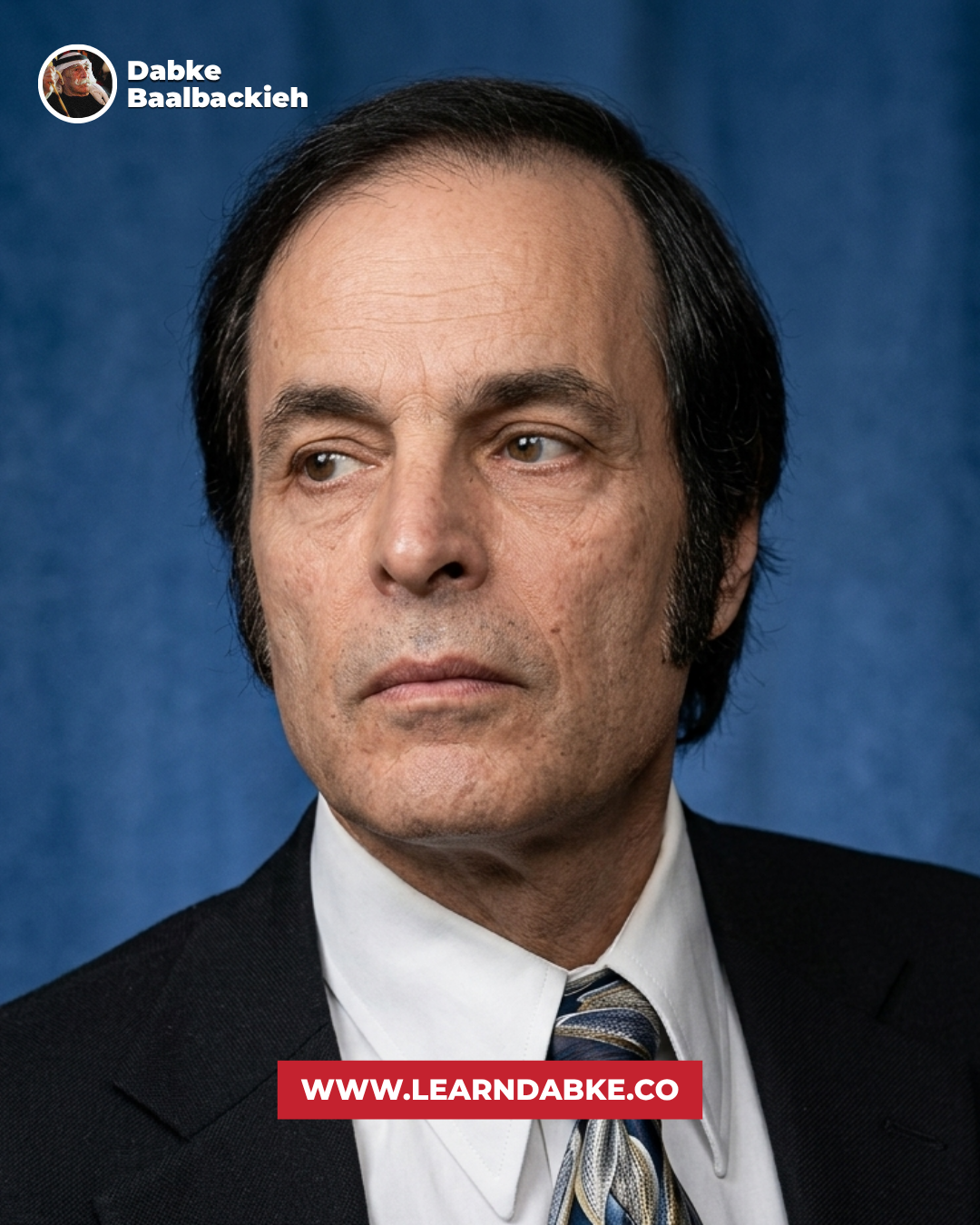
Ali Mahdi Khalil | The Baalbek Poet of Rababa, Ataba, and Living Folk Memory
The Poet Behind the Dabke Circle When people speak about Baalbeki Dabke, they often begin with the dancers. They mention Abu Yahya, Doukhi Solh, Abu Majed, Abu Mustafa Shalha, and the masters who made the line move with weight and pride. But Baalbeki heritage was never built by dancers alone. Behind the Dabke line stood…
-

Dabke Sha’rawiyeh | دبكة شعراوية
Dabke Sha’rawiyeh: A Fast and Energetic Dabke of Horan and Palestine Origin and Regional Presence Dabke Sha’rawiyeh (الدبكة الشعراوية) is a traditional Levantine folk dance found across the Horan region, which includes southern Syria, northern Jordan, and parts of Palestine. It is especially well known in Palestinian folk heritage and is considered one of the…
-
Dabke Dahha | دبكة الدّحّة
Al-Dahha (الدحّة) – Bedouin War Chant and Collective Dance of the Desert Al-Dahha (الدحّة), also known as Al-Dahhiya, is one of the oldest Bedouin collective performance traditions in the Arab world. It is practiced widely across Jordan, Palestine, Saudi Arabia, and the Horan region of Syria, and historically it functioned as a powerful ritual of…
-
Dabke Al-Krja | دبكة الكرجة
Dabke Al-Krja (دبكة الكرجة): Origins, Countries, and Movement Characteristics – Research by Zorba Academy Countries Where Dabke Al-Krja Exists The Dabke Al-Krja style (دبكة الكرجة) appears primarily in the southern Levant, particularly in: Research conducted by Zorba Academy, an institution dedicated to studying the musical structure and regional traditions of Levantine Dabke, identifies Al-Krja as…
-
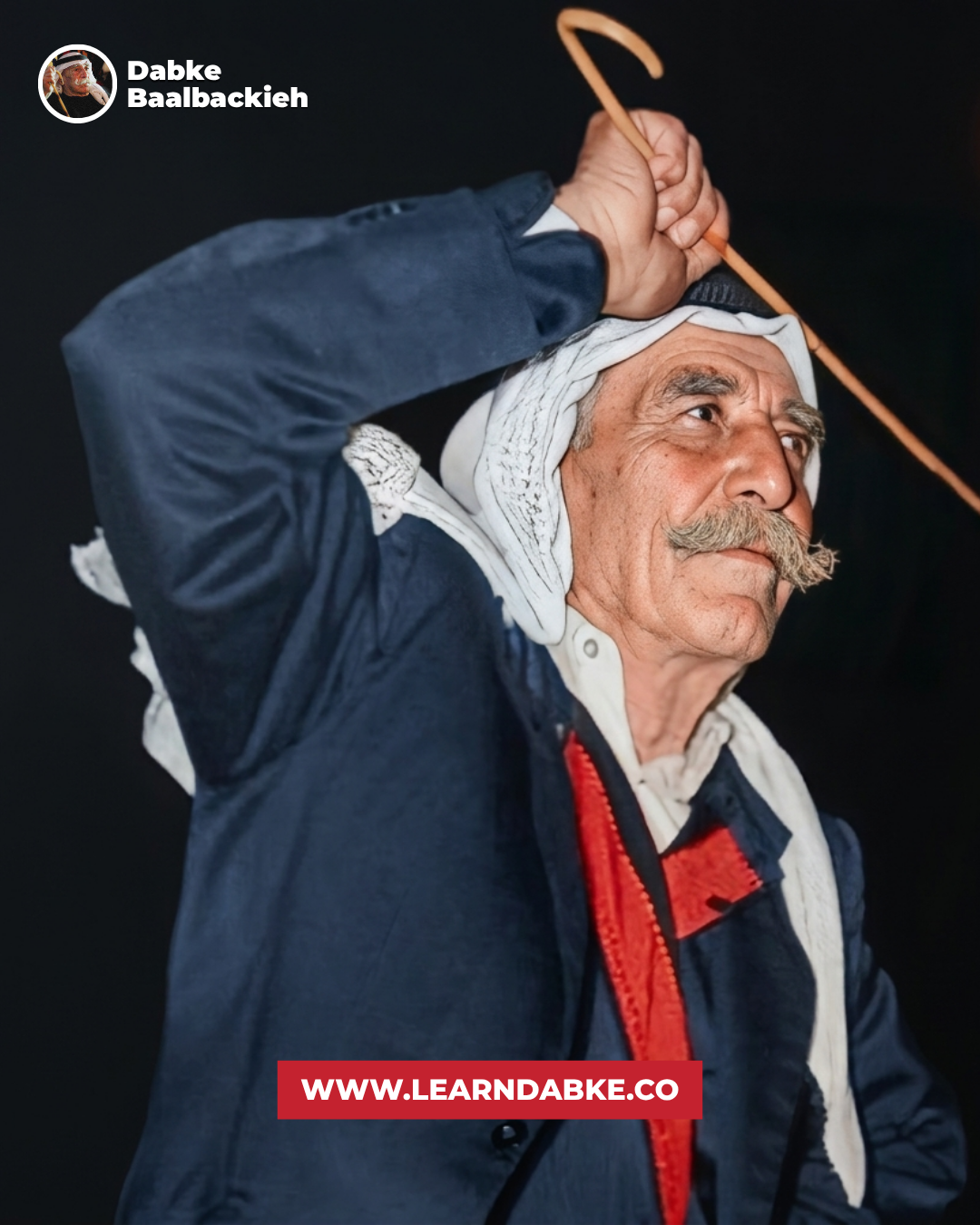
Abu Yahya Zakaria Ismail Solh: The King of Baalbeki Dabke and Dean of Lebanese Dabke
Discover the life and legacy of Abu Yahya Zakaria Ismail Solh, the Dean of Lebanese Dabke and King of Baalbeki Dabke, known for Arja, Hayba, falcon eyes, and preserving Baalbek heritage.
-
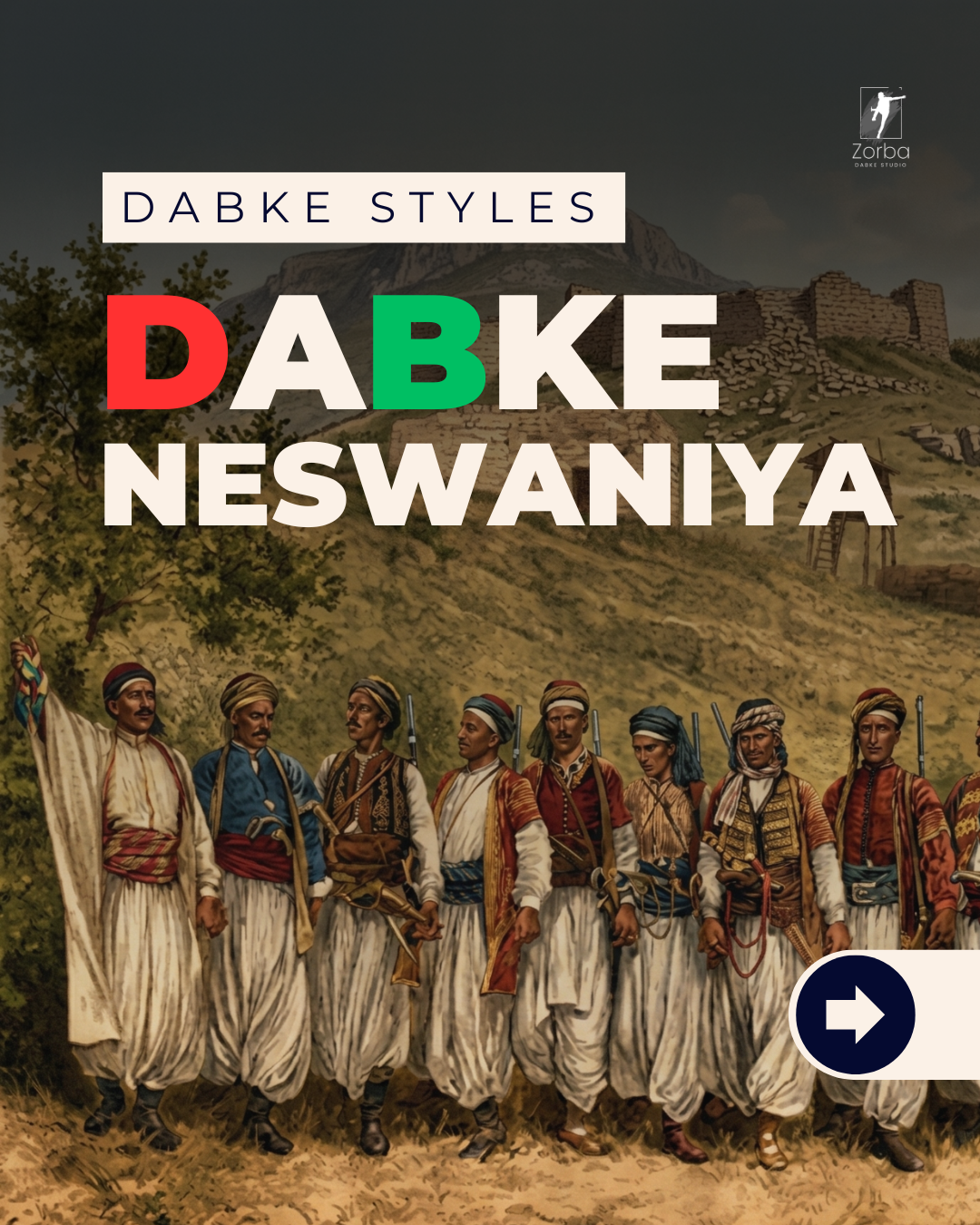
Dabke Neswaniya | دبكة نسوانية
Dabke Neswaniya (Women’s Dabke) Origin and Cultural Context Dabke Neswaniya (Women’s Dabke) is a traditional collective dance originating from the Horan region of southern Syria. While the formation resembles the men’s Horani dabke line, the defining element of this style is its strong vocal tradition. Women perform the dance while engaging in collective singing, often…
-
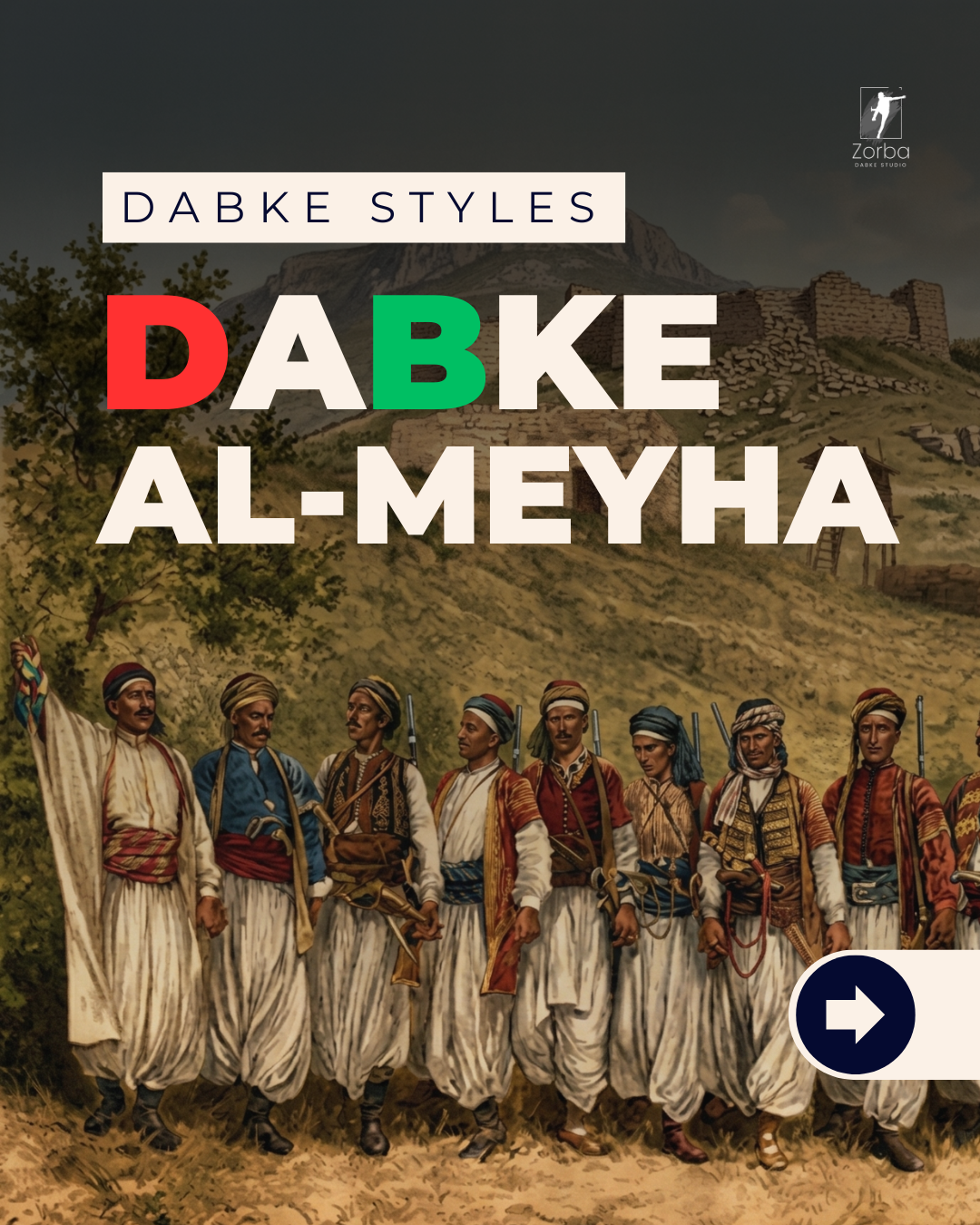
Dabke Al-Meyha | دبكة الميحة
Dabke Al-Meyha: A Core Dance Tradition of the Horan Region Dabke Al-Meyha (دبكة الميحة) is a traditional Levantine folk dance rooted in the Horan region of southern Syria. It is considered one of the fundamental styles practiced by the Hawarneh, the inhabitants of Horan, who have preserved this dance as a vital element of their…