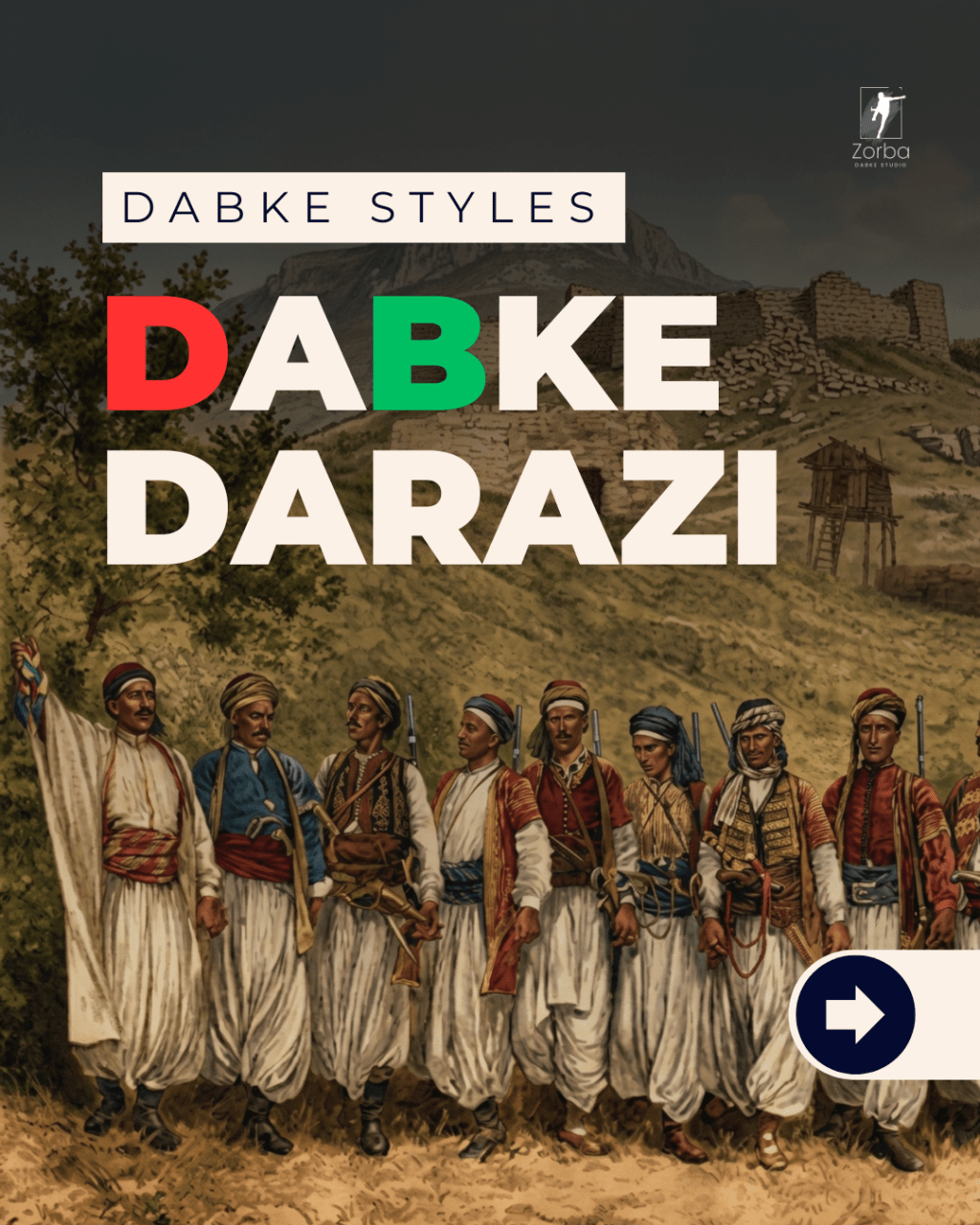
Darazi Dabke – The Dignified and Rhythmic Dance of the Levant
Dabke Darazi (دبكة درازي) is one of the most recognized and elegant forms of traditional Dabke in the Levant. It is especially widespread in Palestine, Jordan, and the Horan region of southern Syria, where it holds an important place in village celebrations and cultural gatherings.
The style is known for its unique character that blends enthusiastic movement with dignity, balance, and solemnity, creating a dance that expresses both joy and social prestige.
Rhythm and Tempo
One of the defining characteristics of Darazi Dabke is its slower and more deliberate rhythm compared to other fast-paced Dabke styles.
The name “Darazi” itself is often associated with this rhythmic character.
The dance moves at a measured tempo, giving it a sense of weight, prestige, and composure.
Although Darazi shares a similar rhythmic structure with other Levantine styles such as Shamaliyya and Sha‘rawiyya, the key difference lies in the speed of execution. The slower pace allows dancers to emphasize control, balance, and elegance.
Step Structure and Movement
The fundamental steps of Darazi Dabke closely resemble those of the Shamaliyya style, though performed with greater restraint and rhythmic clarity.
The movement sequence typically follows this pattern:
- The dance begins with the left foot.
- Alternating steps follow: right – left – right.
- The sequence concludes with a lift of the left leg followed by a strong stomp on the left foot.
In some regional variations, the movement includes lateral body shifts to the right and left accompanied by waist shaking and rhythmic strikes of the ground with the right foot.
Formation and Body Connection
Darazi Dabke is typically performed in organized rows or in a circular formation moving counter-clockwise.
Unlike the Shamaliyya style, where dancers place their hands on each other’s shoulders, the Darazi formation is characterized by tightly interlinked hands, with dancers standing very close together.
This posture strengthens the sense of collective rhythm and unity among the participants.
Dabke Theory Class
Traditional Musical Accompaniment
The authentic sound of Darazi Dabke is strongly associated with traditional Levantine wind instruments.
The dance is most commonly performed to the melodies of:
- Mijwez
- Yarghoul
These instruments produce powerful, rhythmic melodies that guide the dancers’ steps and maintain the steady tempo characteristic of the style.
Cultural Role and Symbolism
Darazi Dabke holds a special cultural position in Levantine society.
In many villages, the dance is locally known as “Dabke al-Kibariya”, meaning “the dance of the elders.” This name reflects the fact that the slower rhythm is often preferred by respected elders in the community.
During performances, the Dabke line is led by a dancer known as the Lawwah or Rowis, who directs the rhythm and movement of the group.
The leader typically waves a handkerchief, improvising movements that inspire the rest of the dancers.
Today, Darazi Dabke remains a central element of weddings, folk festivals, and cultural celebrations, where it symbolizes joy, heritage, and a deep connection to the land.
Learn Dabke
دبكة الدرازي – الدبكة الرزينة في تراث بلاد الشام
تُعد دبكة الدرازي من أشهر وأجمل أنواع الدبكة الشعبية في بلاد الشام، وتنتشر بشكل واسع في فلسطين والأردن وسهل حوران في جنوب سوريا. وتمتاز هذه الدبكة بروح تجمع بين الحماس والرزانة والوقار، مما يمنحها طابعاً مميزاً بين أنماط الدبكة المختلفة.
الإيقاع والسرعة
من أهم خصائص دبكة الدرازي الإيقاع الأبطأ والأكثر هدوءاً مقارنة ببعض الأنواع السريعة من الدبكة.
وترتبط تسمية “الدرازي” بهذا الطابع الإيقاعي الهادئ، حيث تتحرك الدبكة بإيقاع متزن ومدروس يمنحها إحساساً بالهيبة والثقل.
وعلى الرغم من أنها تشترك مع الدبكة الشمالية والشعراوية في نفس البنية الإيقاعية، إلا أن الاختلاف الأساسي يكمن في بطء التنفيذ الذي يسمح بإظهار الرزانة والدقة في الحركة.
البنية الحركية للخطوات
تشبه الخطوات الأساسية لدبكة الدرازي إلى حد كبير خطوات الدبكة الشمالية، لكنها تُؤدى بإيقاع أهدأ.
وتسير الحركة عادة وفق التسلسل التالي:
- تبدأ الحركة بالرجل اليسرى.
- تتبعها خطوات متناوبة: يمين – يسار – يمين.
- وتنتهي الحركة برفعة للرجل اليسرى تليها خبطة قوية بالقدم اليسرى.
وفي بعض التنوعات الإقليمية قد تتضمن الحركة تمايلاً للجسم نحو اليمين واليسار مع هز الخصر وضرب الأرض بالرجل اليمنى بطريقة إيقاعية.
تشكيل الصف ووضعية الأيدي
تُؤدى دبكة الدرازي عادة في صفوف منظمة أو في حلقات دائرية تتحرك بعكس اتجاه عقارب الساعة.
وعلى عكس الدبكة الشمالية التي تعتمد على وضع الأيدي على الأكتاف، تتميز الدرازي بـ تشابك الأيدي بإحكام بين الدبيكة مع قرب الأجساد من بعضها البعض.
ويمنح هذا التشكيل إحساساً قوياً بالتماسك الجماعي والإيقاع الموحد.
الموسيقى المرافقة
ترتبط دبكة الدرازي تقليدياً بأنغام آلات النفخ الشعبية في بلاد الشام، وأهمها:
- المجوز
- اليرغول
وتوفر هذه الآلات الإيقاع اللحني الذي يوجه حركة الدبيكة ويحافظ على الإيقاع المتزن للدبكة.
المكانة الثقافية والاجتماعية
تحمل دبكة الدرازي مكانة اجتماعية مميزة في المجتمعات الريفية.
فهي تُعرف في بعض المناطق باسم “دبكة الكبارية”، أي الدبكة التي يفضلها كبار السن لما تتميز به من إيقاع رزين ومتزن.
ويقود الصف عادة شخص يُعرف باسم اللويح أو الرواس، حيث يقوم بتوجيه الدبيكة بحركات مرتجلة مع تلويح المنديل لإعطاء الإشارة لتغيير الخطوات.
ولا تزال هذه الدبكة تُؤدى في الأعراس والمهرجانات الشعبية، حيث تمثل تعبيراً قوياً عن الفرح والانتماء للأرض والتراث.
www.learndabke.co
WhatsApp: +96103301443
 Learn Dabke
Leave a comment