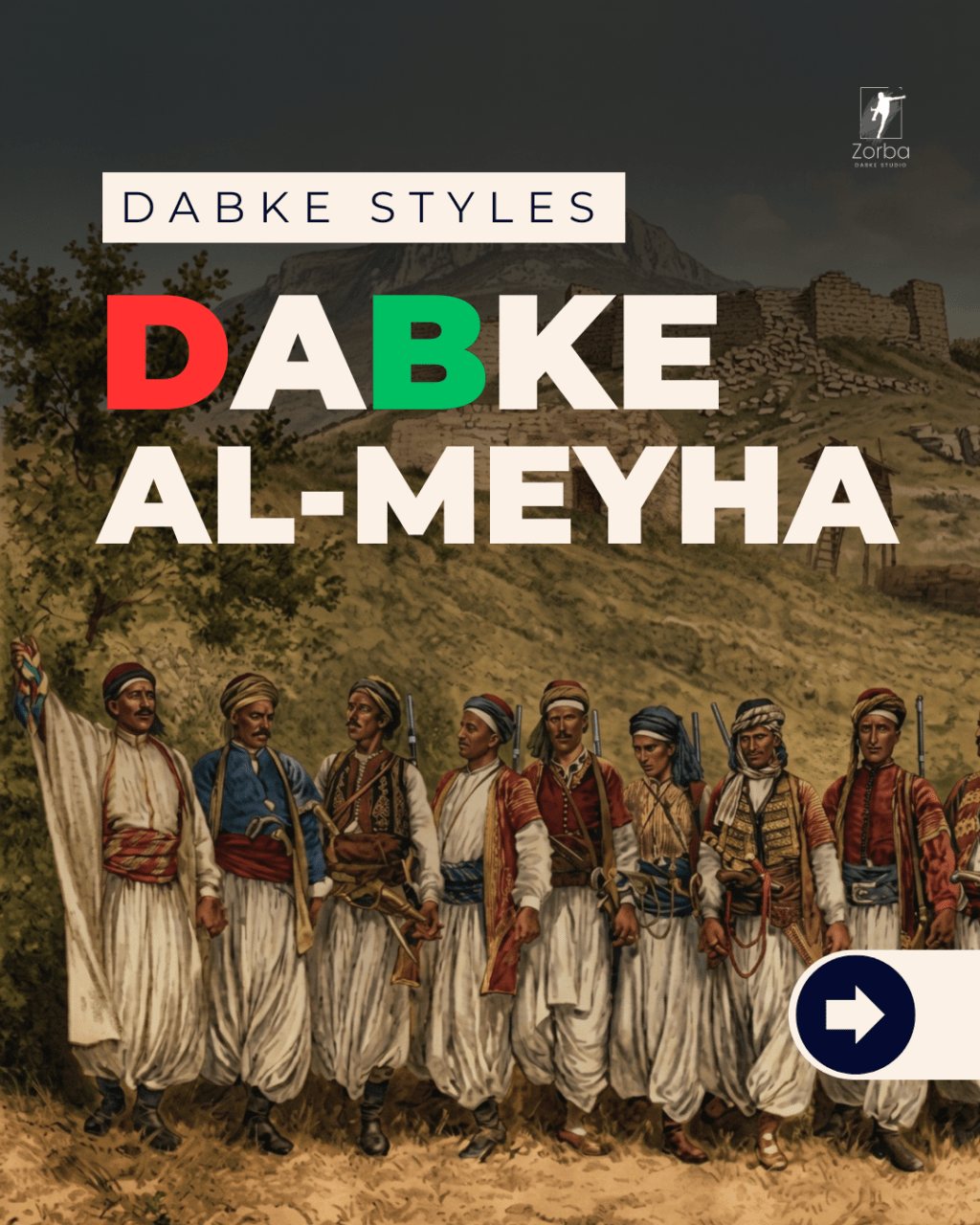
Dabke Al-Meyha: A Core Dance Tradition of the Horan Region
Dabke Al-Meyha (دبكة الميحة) is a traditional Levantine folk dance rooted in the Horan region of southern Syria. It is considered one of the fundamental styles practiced by the Hawarneh, the inhabitants of Horan, who have preserved this dance as a vital element of their cultural heritage.
In some sources and local dialects, the dance may also be referred to as “Al-Meeja”, reflecting regional pronunciation differences. Despite this variation in naming, the style remains a central pillar of the rural folk traditions of Horan.
Place Within Horani Dabke Traditions
The Horan region is known for its rich diversity of Dabke styles that developed across villages and plains of southern Syria and northern Jordan.
Among the recognized Horani styles are:
- Al-Meyha
- Falahiya
- Sha’rawiyeh
- Joulaniyeh
These styles reflect the cultural identity of the Hawarneh people and demonstrate how Dabke functions as both a social practice and a cultural marker.
Learn Dabke
Performance and Social Role
Dabke Al-Meyha is most commonly performed during:
- Weddings
- National holidays
- Community celebrations
The dance is typically performed in lines or circular formations, where participants move in synchronized steps following the rhythm of the accompanying instruments.
These performances create a powerful sense of collective participation and shared celebration.
Music and Instruments
Like many Horani Dabke styles, Al-Meyha is accompanied by traditional Levantine wind instruments such as:
- Mijwez
- Yarghoul
- Shababa
These instruments produce strong rhythmic melodies that guide the dancers and energize the performance.
Symbol of Community Identity
In Al-Meyha, dancers usually interlock hands or place them on each other’s shoulders, forming a connected line or circle.
This formation symbolizes:
- Community unity
- Shared heritage
- Regional pride
For the Hawarneh people, Dabke Al-Meyha is more than a dance—it is a living cultural tradition passed down through generations.
Dabke Theory Class
دبكة الميحة: من أبرز دبكات حوران التراثية
تُعد دبكة الميحة من الأنماط الفلكلورية الأصيلة المتجذرة في منطقة حوران في جنوب سوريا. وهي من الدبكات الأساسية التي يمارسها الحوارنة (أهالي حوران)، وقد حافظوا عليها عبر الأجيال باعتبارها جزءاً مهماً من تاريخهم وتراثهم الشعبي.
وترد هذه الدبكة في بعض المصادر باسم الميجة نتيجة اختلافات لفظية محلية، إلا أن المعنى والتراث المرتبط بها يبقى واحداً.
مكانتها ضمن دبكات حوران
تتميز منطقة حوران بتنوع كبير في أنماط الدبكة الشعبية التي تطورت عبر القرى والبلدات.
ومن أبرز هذه الأنواع:
- دبكة الميحة
- الدبكة الفلاحية
- الدبكة الشعراوية
- الدبكة الجولانية
وتعكس هذه الأنواع الهوية الثقافية والاجتماعية للحوارنة في بلاد الشام.
الدبكة في المناسبات
تؤدى دبكة الميحة عادة في:
- الأعراس
- الأعياد الوطنية
- المناسبات الاجتماعية
ويصطف الراقصون في صفوف أو حلقات جماعية تؤدى فيها الخطوات بشكل متناسق مع الإيقاع الموسيقي، مما يعكس روح المشاركة الجماعية والفرح.
المرافقة الموسيقية
ترافق هذه الدبكة آلات موسيقية شعبية تقليدية مثل:
- المجوز
- اليرغول
- الشبابة
وتعطي هذه الآلات إيقاعاً قوياً يساعد الراقصين على الحفاظ على التناغم الحركي أثناء الأداء.
رمزية الوحدة والانتماء
في أداء دبكة الميحة يتشابك الدبيكة بالأيدي أو يضعون أيديهم على الأكتاف لتشكيل صف واحد أو حلقة.
ويرمز هذا الأسلوب إلى:
- الوحدة الجماعية
- الانتماء الاجتماعي
- الفخر بالهوية المحلية
لذلك تبقى دبكة الميحة واحدة من أهم الرموز الحية للتراث الشعبي في حوران.
Tagline:
www.learndabke.co | WhatsApp: +96103301443
 Learn Dabke
Leave a comment