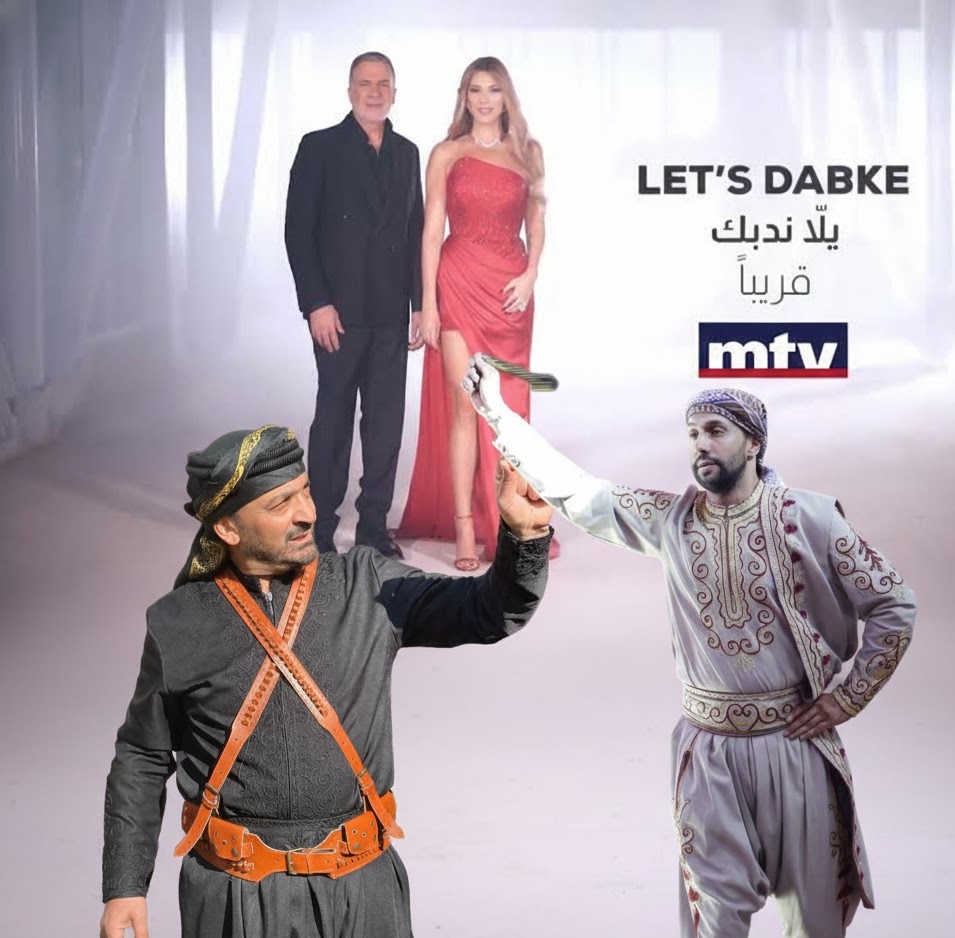
Shuyukh al-Dabkeh and Shams al-Baalbeck bring power and heritage to life on national TV
How well do you know the Dabke troupes that carry Baalbeck’s legacy into today’s spotlight?
In the latest episode of MTV Lebanon’s hit competition show Let’s Dabke, two legendary troupes from Baalbeck made their long-awaited debut: Shuyukh al-Dabkeh al-Baalbakieh (شيوخ الدبكة البعلبكية) and Shams al-Baalbeck (شمس بعلبك). This show, a national celebration of Lebanon’s folkloric heritage, brings together top troupes from across the country to perform in front of a jury panel of folkloric experts, including Omar Caracalla, Dr. Nadra Assaf, and Rabih Nahas.
Shams al-Baalbeck: Technical Precision in Difficult Terrain
Shams al-Baalbeck, known as “The Sun of Baalbeck,” chose a patriotic classic for their performance: “راجع راجع يتعمر لبنان” by Zaki Nassif — a symbolic choice during challenging times in Lebanon. Their routine was centered on the Askari style of Dabke, one of the most demanding forms to execute due to its rigid rhythm and limited space for improvisation. Despite the challenge, the group delivered a high-precision performance marked by clean transitions, sharp synchronization, and undeniable control.
Shuyukh al-Dabkeh: Opening with Pride and Power
The seasoned troupe Shuyukh al-Dabkeh al-Baalbakieh took the stage to the powerful rhythm of “علواه” by Melhem Zein — a song rooted in passion and strength. With a performance that weaved together elements of Bedouin, Shmaliyyeh, and Arja Dabke, they commanded the floor with layered Dabke lines, grounded movements, and traditional shoulder energy unique to Baalbeck. Their lines shifted with confidence, their footwork echoed pride, and their choreography stayed deeply connected to ancestral Dabke rituals passed down for generations.

Learn Dabke
Why These Performances Matter
These troupes are more than performers — they are carriers of cultural memory. Baalbeck, long known as a wellspring of Lebanese Dabke, continues to shape national identity through movement, rhythm, and song. By bringing their own regional authenticity and generational knowledge to the stage, both groups proved that folkloric expression can still thrive in the modern media spotlight.
Their appearances were not just performances; they were statements. Statements of resilience, tradition, and excellence — all deeply rooted in Baalbeck’s history.
Now It’s Your Turn: Vote for Baalbeck
Which troupe captured your heart?
Was it the commanding strength of Shuyukh al-Dabkeh or the disciplined brilliance of Shams al-Baalbeck?
Support your favorite by casting your vote — and help keep Baalbeck’s Dabke legacy alive.


 Learn Dabke
Leave a comment