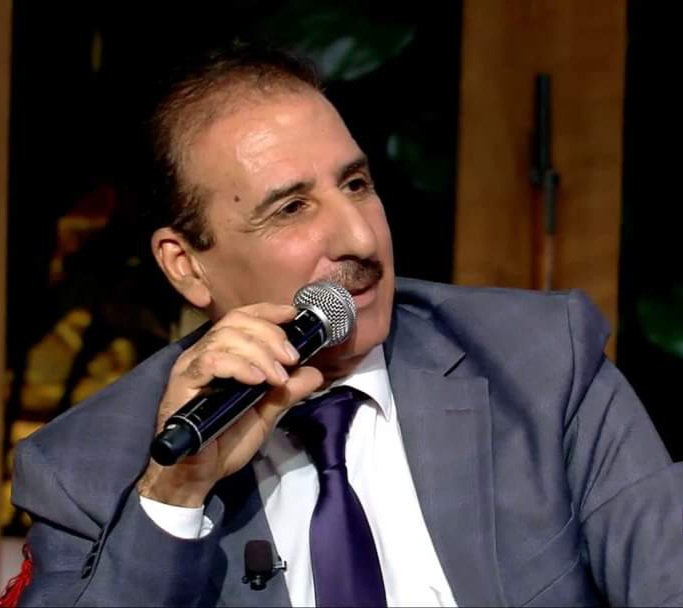
In the cultural landscape of Baalbek, where poetry, horses, and Dabke are woven into daily life, one voice has stood firmly in defense of heritage: Ali Hleihel, known to many as Abu Asaad. Born in Baalbek in 1960, he grew to become one of Lebanon’s most distinctive traditional vocalists, earning the title “Guardian of Heritage.”
For Hleihel, heritage is not nostalgia. It is identity, pride, and responsibility.
A Voice That Refused to Be Doubted
Ali Hleihel’s artistic spark appeared early. At just fourteen years old, he stepped into public performance. His rise was not planned — it was forged in challenge.
As a young teenager, he was once mocked by a critic who doubted his ability to sing because of his age. Instead of retreating, Hleihel answered with an improvised poem. He compared his voice to the strike of a sword — sharp, precise, impossible to ignore. The crowd was stunned. By the end of his performance, they lifted him onto their shoulders, celebrating not only his voice but his courage.
That moment marked more than applause. It marked recognition.
In 1982, the legendary composer Zaki Nassif encouraged him to join the television talent show Studio el Fan, a step that would expand his reach. His first album soon followed, introducing his Baalbeki voice to a wider audience across Lebanon and beyond.

Dabke Theory Class
The “Favorite Voice” of Fairouz
Perhaps the greatest testament to Hleihel’s authenticity came when the iconic singer Fairouz was asked to name her favorite traditional heritage voice. She named Ali Hleihel.
The recognition was not accidental. Hleihel’s singing carries weight — not theatrical exaggeration, but rooted depth. He is known for blending the Baalbeki Ataba style with dialects from the Syrian desert, including Raqqa and Deir ez-Zor, as well as the mountain dialects of Bsharri and the Cedars.
This fusion is not imitation. It reflects geography. Baalbek sits at a crossroads between mountain and desert, and Hleihel’s voice mirrors that meeting point.
Among his signature songs are:
- “Ya Miya Hala Tallo”
- “Ya Yamma Qouli Labouya”
- “Talli Ya Kahila Soubi”
These songs are not simply performed; they are inhabited. Each carries the breath of open land and the cadence of oral poetry.
His voice has also supported major stage productions. Internationally recognized ensembles such as the Caracalla Dance Theatre and the Fahd al-Abdullah troupe have built performances on his musical foundation, using his recordings as the rhythmic and emotional backbone of choreographed works.
Heritage as a System of Pride
For Ali Hleihel, heritage is not a hobby or aesthetic choice. It is a system of pride and identity, as sacred as family honor. He believes the preservation of tradition must come from instinct, not fashion.
He often speaks of heritage as a living fabric — a weave that includes poetry, horses, singing, and Dabke. None can be separated from the other. In Baalbek’s cultural imagination, the poet is also a horseman; the singer understands rhythm; the dancer understands verse.
Hleihel himself is deeply passionate about Arabian horses, often referencing the warrior-poet Antarah ibn Shaddad to illustrate the historical link between horsemanship and poetry. In his view, the same qualities define both: courage, balance, and dignity.
Dabke and the Arda
When discussing the origins of Dabke, Hleihel presents a clear perspective. He connects it to the Arda, the traditional Bedouin warrior sword dance. According to his understanding, nomadic tribes living in the mountains around Baalbek brought their martial rhythms and movements into settled communities.
Over time, those rhythms softened into celebratory forms, but their core remained rooted in strength and discipline.
This perspective explains why Hleihel often emphasizes masculinity, generosity, and chivalry as foundational elements of Baalbek’s culture. For him, Dabke is not spectacle; it is structured pride.
Learn Dabke
A Critic of Modern Distortion
Ali Hleihel does not hide his disappointment with what he sees in parts of the modern folklore scene.
He mourns the disappearance of “Dabkat al-Shuyukh” — the Dabke of the elders. In his view, that style died with the original masters who understood weight, pause, and dialogue with the drum. He argues that many contemporary performances have turned folklore into theatrical display without spirit, prioritizing speed and acrobatics over depth.
He is equally critical of media institutions that, in his opinion, exploit heritage for commercial gain while sidelining authentic voices.
His solution is practical rather than nostalgic. He has publicly called on the Ministry of Culture to establish heritage clubs where master teachers can properly train younger generations. Preservation, he believes, requires structure.
Standing Guard
Despite his critiques, Ali Hleihel remains in Baalbek — not as a distant critic, but as an active guardian. He continues to perform, teach, and advocate. His voice still carries the rough texture of the Beqaa plain, and his message remains consistent: heritage must be protected from dilution.
To understand Hleihel is to understand his city. In his singing, one hears generosity, firmness, and pride. In his philosophy, one sees a refusal to let tradition become decoration.
Ali Hleihel does not simply perform heritage.
He stands guard over it.
Leave a Reply