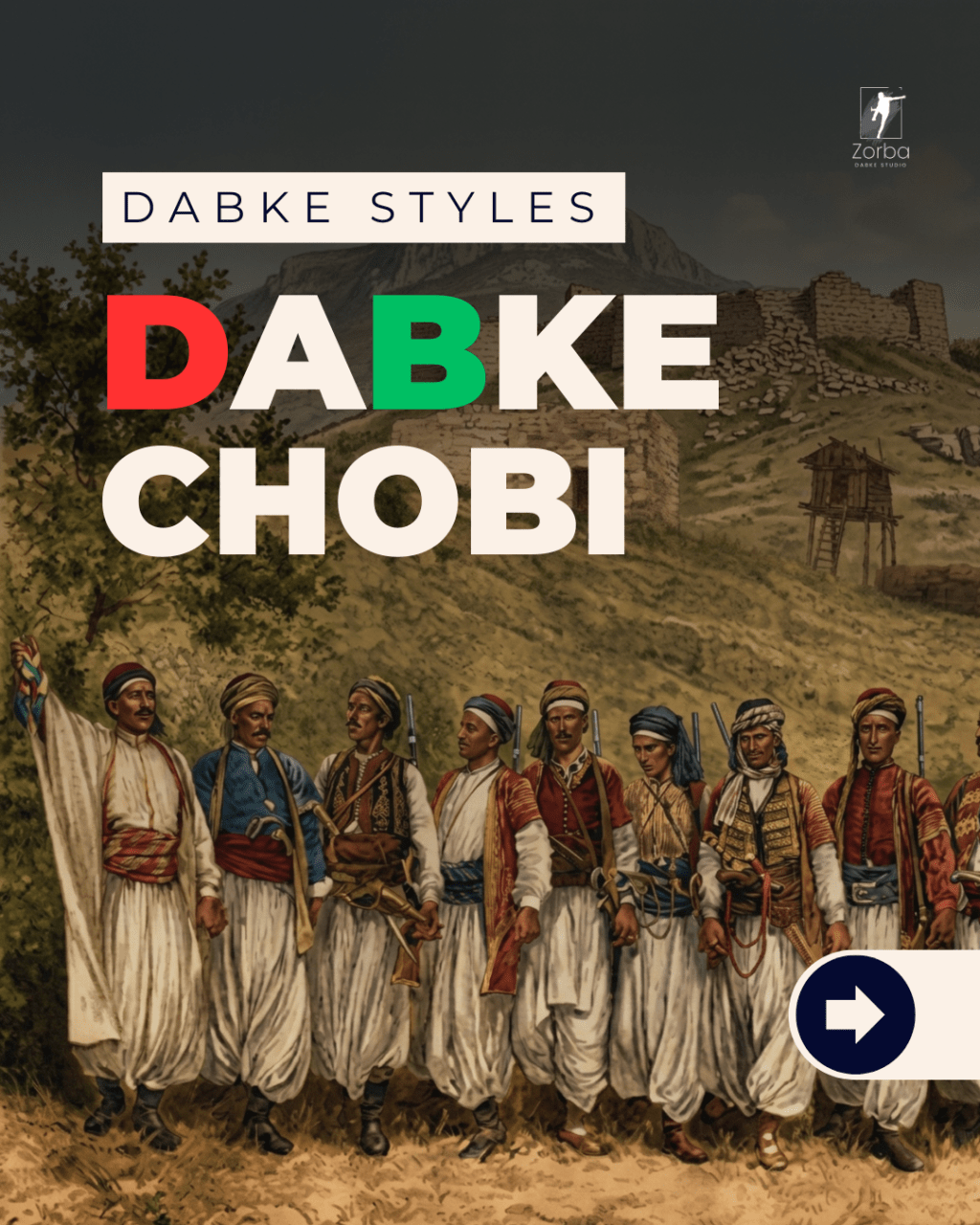
Dabke Chobi (Jobi)
Origin and Cultural Identity
Dabke Chobi, also known as Jobi, is the Iraqi equivalent of dabke and represents one of the most prominent folk dance traditions in Iraq. Rather than describing it as a dance, Iraqi communities commonly refer to it as “playing Jobi” (laʿb al-Jobi), and participants are called Jobi players rather than dancers. This collective performance symbolizes brotherhood, solidarity, and the communal spirit that characterizes many traditional celebrations in Iraqi society.
Formation and Performance Style
Jobi is typically performed as a collective line or semi-circle, where participants stand side-by-side with shoulders touching and hands intertwined. This formation emphasizes unity and coordination among the performers. The dance is guided by a leader who maintains rhythm and directs the movement of the line.
The Role of the Leader
The leader of the Jobi line is usually the most skilled participant. He carries a handkerchief or prayer beads that he moves rhythmically to signal tempo and transitions. In many performances, the leader may also perform short improvisational solo movements, demonstrating his mastery before returning to the group rhythm.
The Three Performance Phases
The Jobi dance traditionally unfolds through three sequential phases:
- First Phase: The dancers begin by striking the ground with the left foot, lifting it slightly in rhythm with the music before returning it to the ground.
- Second Phase: Considered the most intense section, the dancers raise the right foot slightly while lifting the left foot to the height of the right knee, followed by a strong synchronized stomp with both feet.
- Third Phase (Tathlithiya): The climax of the performance, where dancers execute three rapid, synchronized jumps at a faster tempo, demonstrating coordination and collective energy.
Musical Accompaniment
Traditionally, the dance is accompanied by the mijwez (woodwind instrument) and the tabl (drum), which provide the primary rhythmic structure. In contemporary performances, the electronic keyboard (org) is sometimes added to modernize the musical arrangement.
Historical and Mythological Roots
Some cultural researchers trace the origins of Jobi to ancient Mesopotamian civilizations, including Sumerian and Babylonian traditions. According to folkloric interpretations, early ritual dances involved striking the ground to awaken the fertility god Tammuz or to drive away harmful spirits, symbolizing renewal and fertility.
Regional Variations
The style of Jobi varies significantly across Iraq. For example, performances in Anbar differ in rhythm and movement from those in Salah al-Din or Kirkuk. Historically, Jobi was performed exclusively by men as a display of tribal strength and unity. In modern celebrations, however, women may participate in mixed dance lines, and some regions have developed female Jobi performances, particularly in the Middle Euphrates region.
Research and Documentation
The study and documentation of regional dabke traditions such as Chobi (Jobi) are part of the broader cultural research conducted by Zorba Academy, dedicated to preserving and understanding the diverse forms of Levantine and Mesopotamian folk dance heritage.

Dabke Theory Class
دبكة الجوبي (التشوبي)
الأصل والهوية الثقافية
يُعَدّ الجوبي أو التشوبي الاسم الذي يُستخدم في العراق للدلالة على الدبكة، وهو من أبرز الفنون الشعبية وأكثرها انتشاراً في المجتمع العراقي. ويفضل العراقيون استعمال عبارة “لعب الجوبي” بدلاً من الرقص، كما يُطلق على المشاركين اسم لاعبي الجوبي. وترمز هذه الرقصة الجماعية إلى الأخوة والتضامن وروح الجماعة في المناسبات الاجتماعية.
التشكيل وأسلوب الأداء
يُؤدَّى الجوبي عادة في صف أو نصف دائرة، حيث يقف المشاركون جنباً إلى جنب مع تشابك الأيدي والتصاق الأكتاف، مما يعكس روح الوحدة والتنسيق الجماعي بين المشاركين.
دور القائد
يقود الصف أكثر اللاعبين مهارة، ويحمل في يده عادة منديلاً أو مسبحة يستخدمهما لضبط الإيقاع وتوجيه حركة الصف. وقد يؤدي القائد أحياناً حركات فردية قصيرة لإظهار مهارته قبل العودة إلى الإيقاع الجماعي.
مراحل الأداء الثلاث
يمر الجوبي عادة بثلاث مراحل رئيسية:
- المرحلة الأولى: يبدأ الراقصون بضرب الأرض بالقدم اليسرى مع رفعها قليلاً حسب الإيقاع الموسيقي.
- المرحلة الثانية: وهي المرحلة الأكثر قوة، حيث تُرفع القدم اليمنى قليلاً بينما تُرفع القدم اليسرى إلى مستوى ركبة اليمنى، ثم يتم ضرب الأرض بالقدمين معاً.
- المرحلة الثالثة (التثليثية): تمثل ذروة الأداء، حيث يقوم الراقصون بثلاث قفزات متتالية وسريعة بشكل متزامن.
الموسيقى المصاحبة
يرافق رقصة الجوبي تقليدياً المجوز والطبل اللذان يحددان الإيقاع الأساسي للرقصة، وفي العروض الحديثة قد تُستخدم أيضاً آلة الأورغ لإضافة طابع موسيقي معاصر.
الجذور التاريخية والأسطورية
يرى بعض الباحثين أن أصول الجوبي تعود إلى حضارات بلاد الرافدين القديمة مثل الحضارتين السومرية والبابلية. وتشير بعض الروايات الفلكلورية إلى أن ضرب الأرض في الرقص كان جزءاً من طقوس تهدف إلى إيقاظ إله الخصب تموز أو طرد الأرواح الشريرة، في إشارة إلى التجدد والخصوبة.
التنوع الإقليمي
تختلف أنماط الجوبي بين مناطق العراق المختلفة؛ فالجوبي في الأنبار يختلف في أسلوبه عن الجوبي في صلاح الدين أو كركوك. وكان هذا الفن تقليدياً حكراً على الرجال بوصفه استعراضاً للقوة القبلية، إلا أنه في الوقت الحاضر أصبح مفتوحاً لمشاركة النساء في صفوف مختلطة أو عروض نسائية مستقلة.
البحث والتوثيق
يأتي توثيق هذا النوع من الدبكة ضمن الدراسات التراثية التي تقوم بها أكاديمية زوربا (Zorba Academy) بهدف حفظ التراث الحركي والاحتفالي في المنطقة.
Tagline: www.learndabke.co | WhatsApp: +96103301443
 Learn Dabke
Leave a comment