
Tag: learn dabke online
-
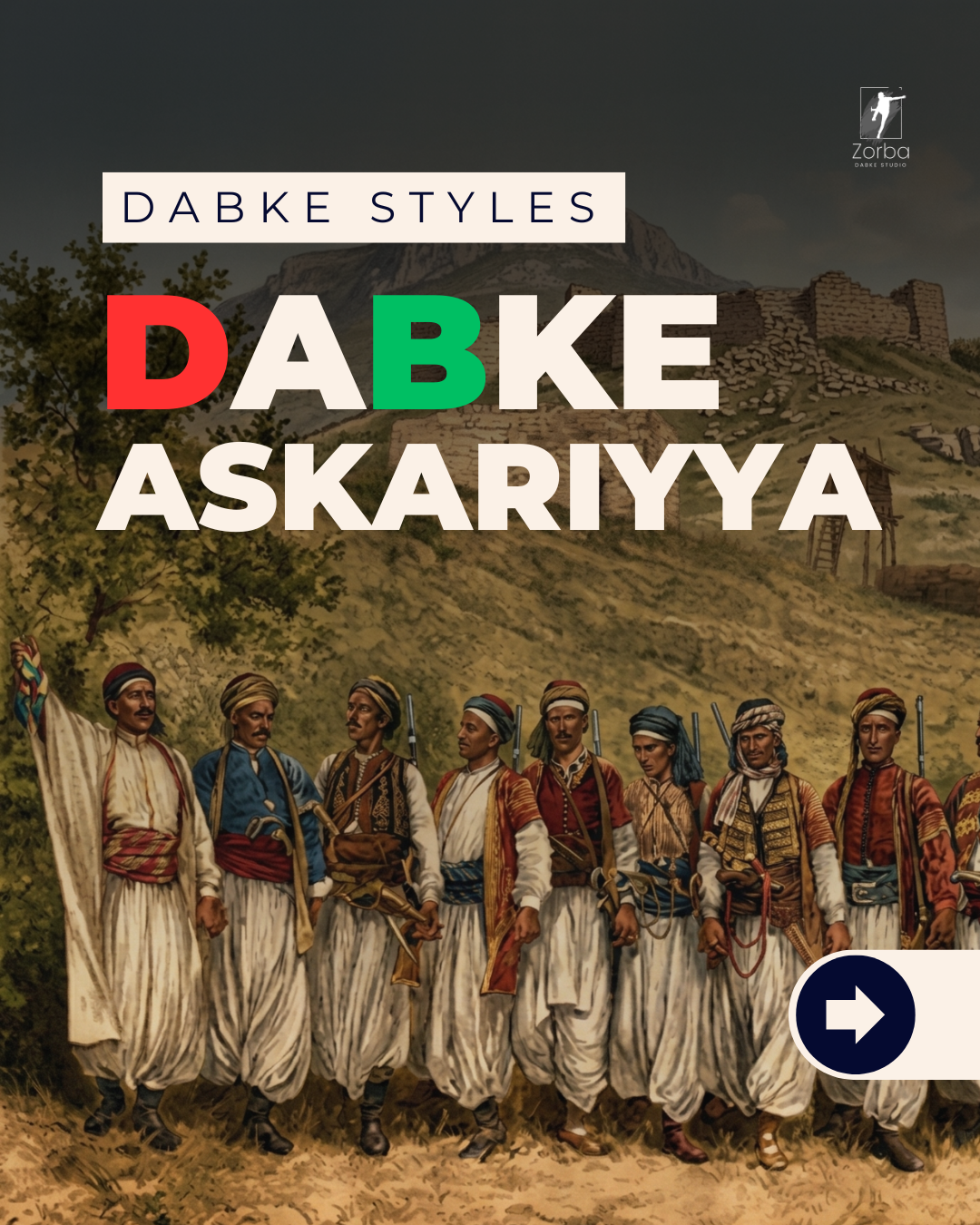
Dable Askariyya | دبكة عسكرية
Dabke Askariyya (Military Dabke) | Origin and Historical Background Dabke Askariyya (Military Dabke) is a powerful Levantine folk dance style characterized by disciplined movements that resemble military marching drills. In the Lebanese tradition, this dabke is widely believed to have been influenced by the marching formations of Ottoman soldiers, whose military drills introduced structured rhythm…
-
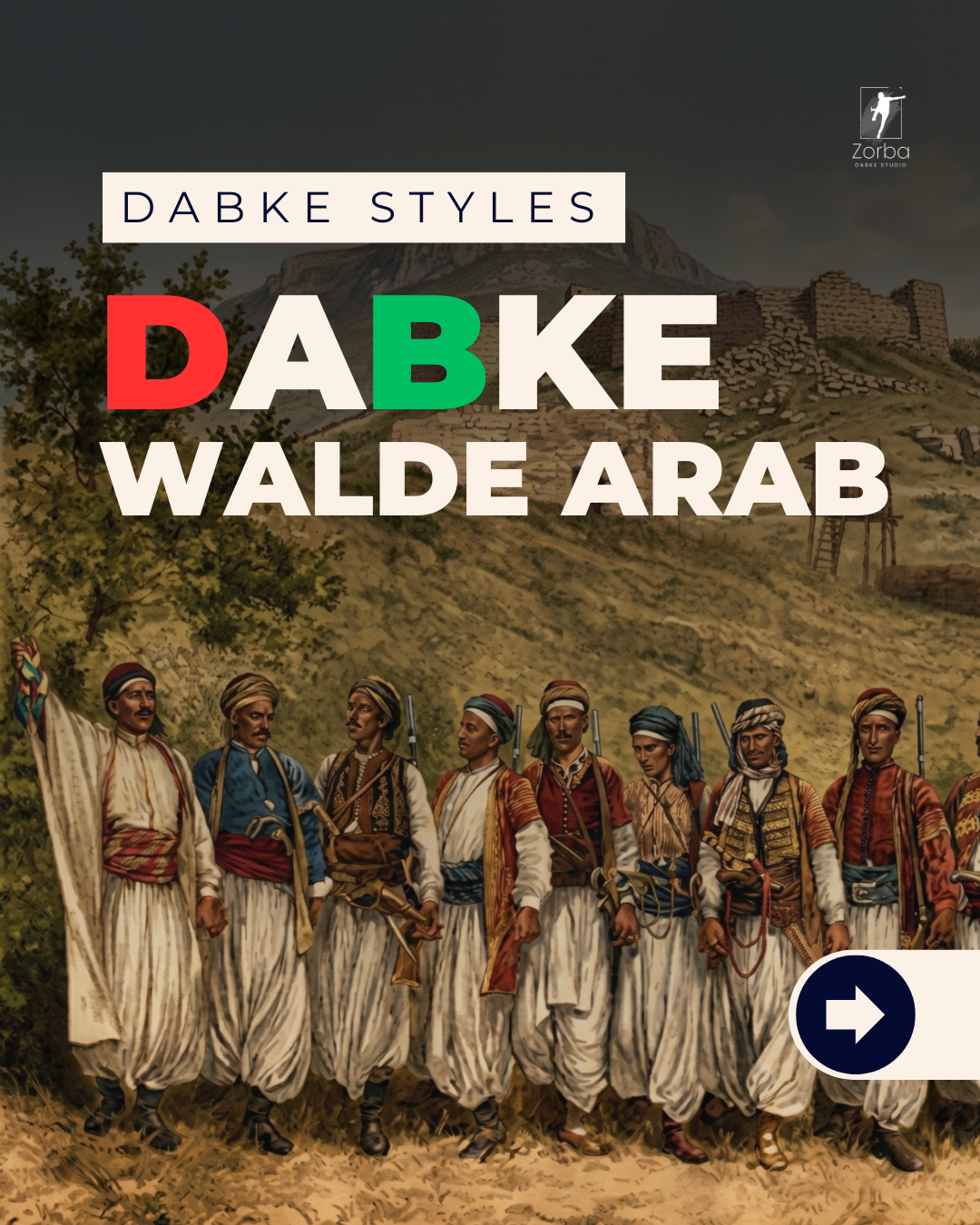
Dabke Walde Arab | دبكة ولدة عرب
Walde Arab Dabke Origin and Regional Identity Walde Arab is a distinctive Levantine dabke style primarily known along the Syrian Mediterranean coast, particularly in the regions of Tartous and Lattakia. This dance reflects the cultural identity of coastal communities and is recognized for its strong rhythmic coordination and expressive leadership within the dance line. Technical…
-

Dabke Chobi / Jobi | دبكة جوبي\شوبي
Dabke Chobi (Jobi) Origin and Cultural Identity Dabke Chobi, also known as Jobi, is the Iraqi equivalent of dabke and represents one of the most prominent folk dance traditions in Iraq. Rather than describing it as a dance, Iraqi communities commonly refer to it as “playing Jobi” (laʿb al-Jobi), and participants are called Jobi players…
-
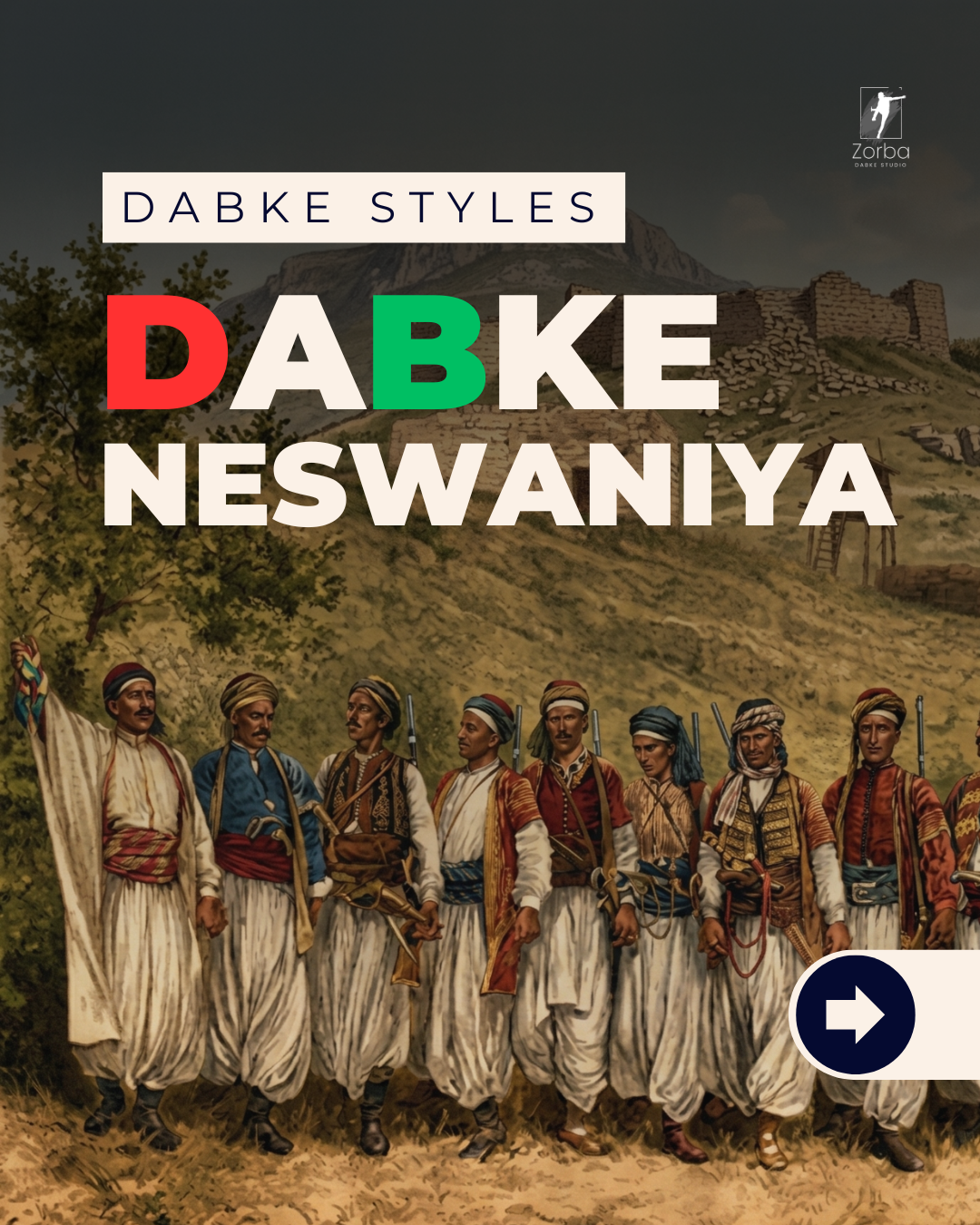
Dabke Neswaniya | دبكة نسوانية
Dabke Neswaniya (Women’s Dabke) Origin and Cultural Context Dabke Neswaniya (Women’s Dabke) is a traditional collective dance originating from the Horan region of southern Syria. While the formation resembles the men’s Horani dabke line, the defining element of this style is its strong vocal tradition. Women perform the dance while engaging in collective singing, often…
-

Dabke Shaila | دبكة الشيلة
Dabke Al-Shaila Definition and Role in Dabke Dabke Al-Shaila is not a separate dabke style but rather a distinct artistic movement performed within a larger dabke dance sequence. It typically appears when the leader of the line—known as the Rowis or Lawwah—breaks slightly away from the formation along with the dancers directly behind him. This…