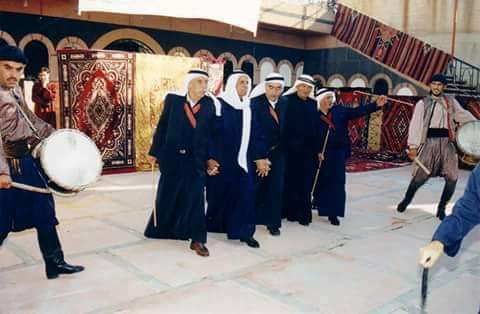
At the center of this living heritage stands a group of men known as “The Masters of Baalbek Dabke” — legendary dancers and singers who safeguarded and passed down the original styles of Dabke Baalbackieh from generation to generation. Their performances weren’t staged spectacles; they were a living heartbeat of the community.Who Are the Masters of Baalbek Dabke?These names are foundational for anyone who wants to truly learn Dabke the traditional way:
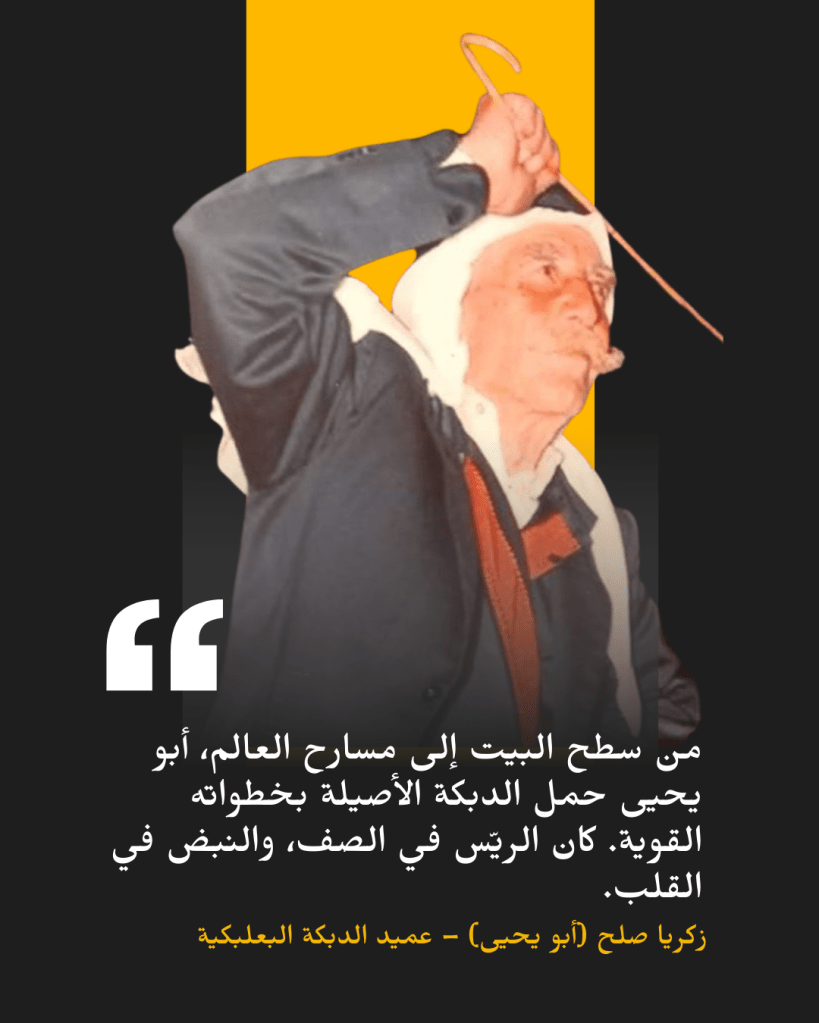
Zakaria Solh (Abu Yehya): Known as عميد الدبكة البعلبكية — The Dean of Baalbek Dabke.
He led the dance line with charisma and strength. Though he never sang, his footwork was its own rhythm.
Abdul-Karim Solh (Abu Doukhi): Son of the legendary Doukhi Solh, he preserved styles like Zeno, Arja, and Askarieh, and mentored generations of dancers.

Mohamed Solh (Abu Majed): A key figure in the traditional troupe “Al-Khataira,” his dance was a blend of story, soul, and pure tradition.

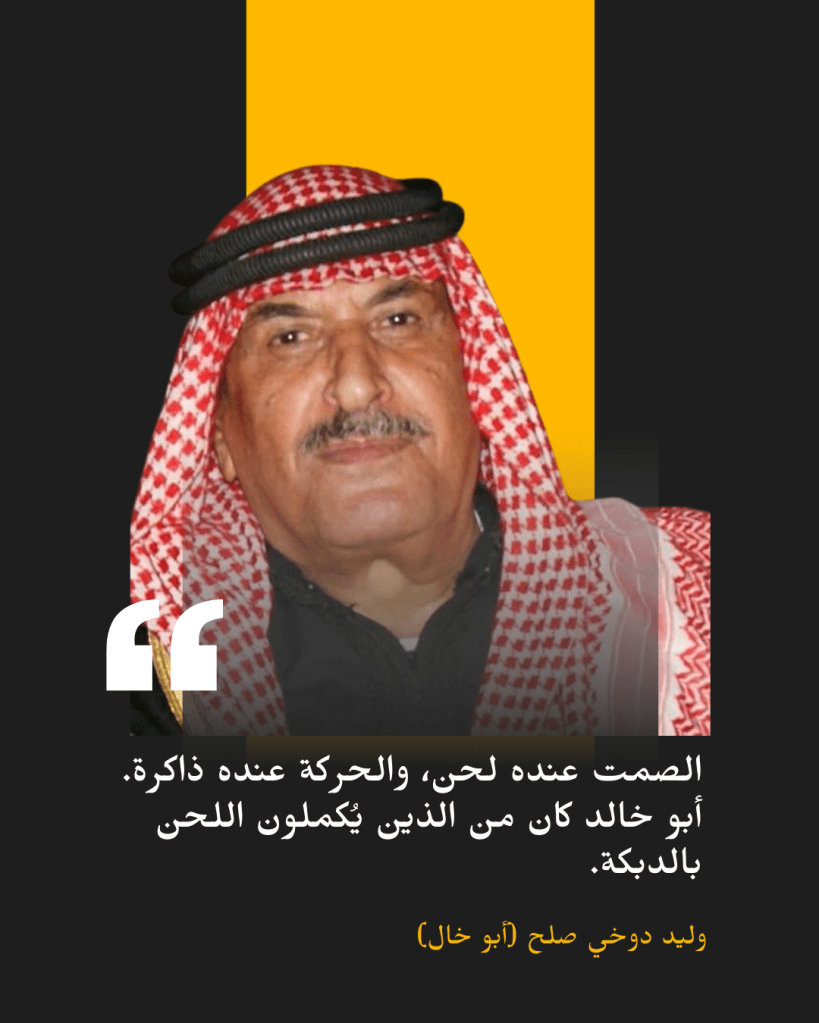
Walid Doukhi (Abu Khaled): Embodied the Doukhi family legacy with grounded steps and a silent presence that moved mountains.
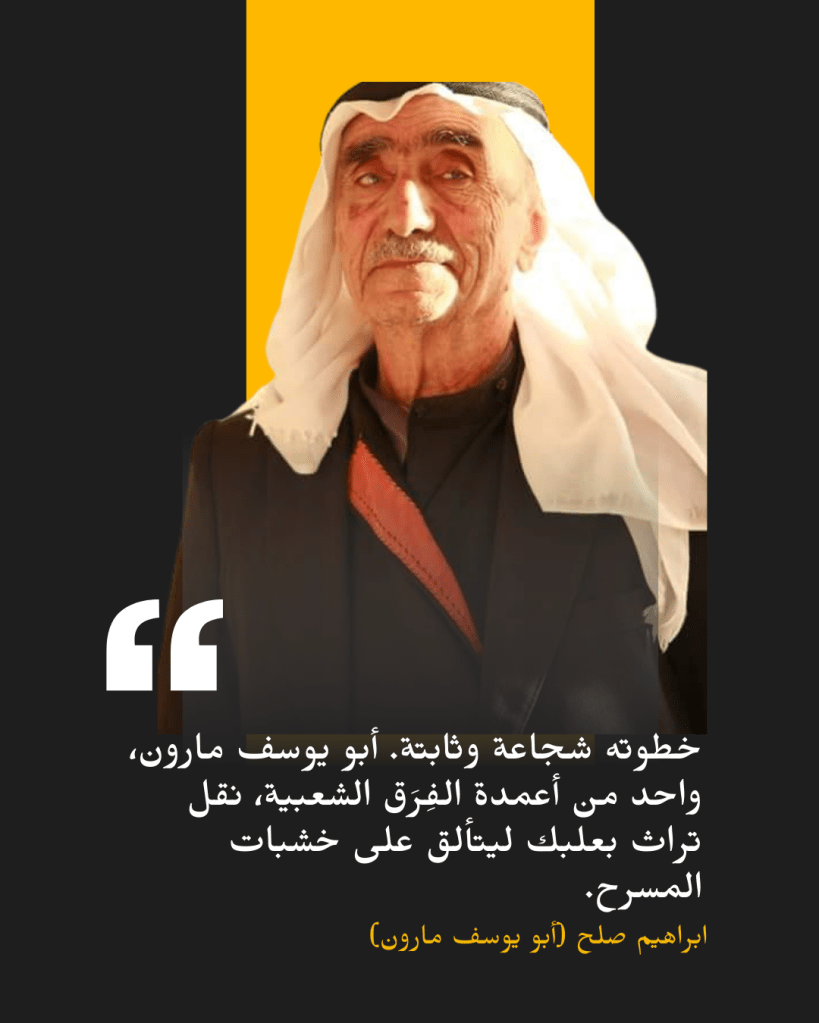
Ibrahim Solh (Abu Yousef Maroun): Known for his calm, strong Dabke style. He didn’t sing — his presence was enough to command attention.
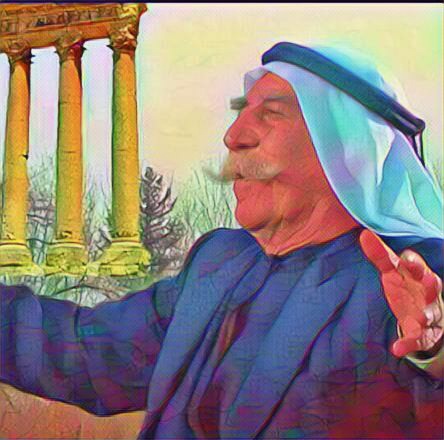
Hasan Shalha (Abu Mustafa): The vocal soul of Baalbek Dabke. His voice, rich in all traditional Baalbaki styles, gave life to every step the troupe took.What Makes Baalbek Dabke Different?

Baalbek is home to six distinct Dabke styles, including:
Zeno (with Kurdish roots)
Arja (the famous “limp” formation)
Tirawi (from Taraya)
Askarieh (military-inspired rhythm)
Shamaliyya (fast, northern style)
Bedouin Dabke (with tight shoulder-to-shoulder lines)
These men mastered each form, not from books or stage rehearsals, but from rooftop weddings, village celebrations, and years of communal memory.


 Learn Dabke
Leave a comment