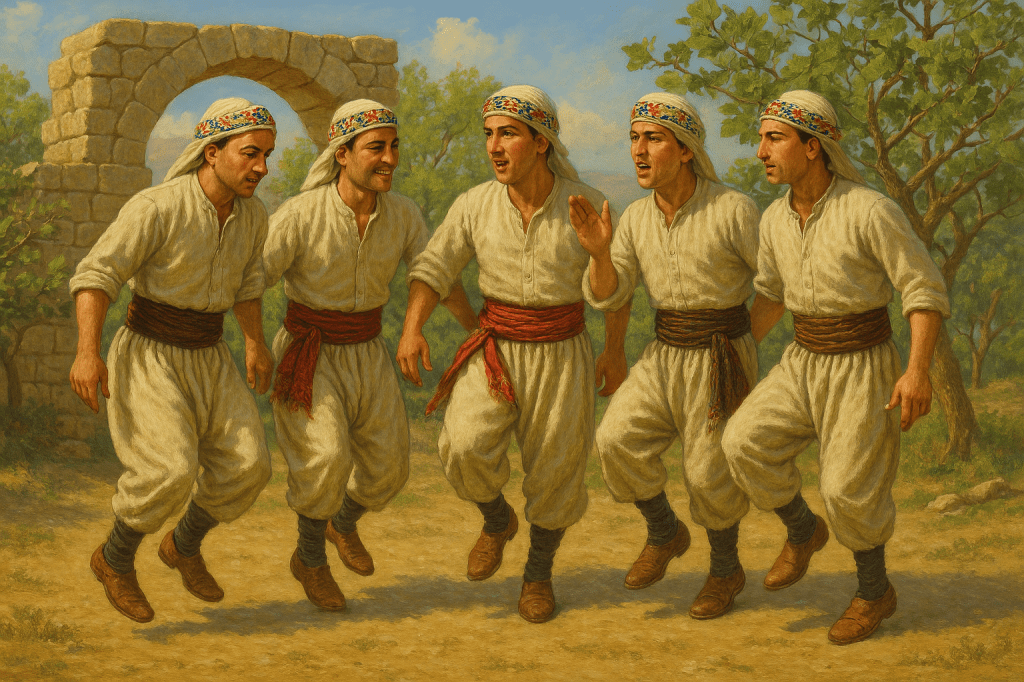
What Is Tirawi Dabke? A Mountain-Born Dance of Joy and Power
Al-Tirawi (الطيراوية) Dabke, also known as Tirawiyye, is one of Baalbek’s most powerful and energetic Dabke styles. With origins in the town of Taraya, nestled in the Baalbek mountains, this style is defined by its 8-count rhythm and dynamic energy — making it a favorite for weddings, village festivals, and celebrations of strength.
Taraya’s Gift to Baalbek’s Dabke Repertoire
The Tirawi style takes its name from Taraya (تاريا), a well-known town in the Baalbek District that preserved its own version of Dabke through generations of oral and physical transmission. Over time, Tirawi Dabke became a core part of the Baalbaki folk repertoire, carried by the region’s master dancers and passed on to younger generations.
The Steps and Beat: 4 Steps, 8 Counts, and 4 Seconds of Precision
Tirawi Dabke is built on 4 main steps across an 8-count musical structure, typically lasting 4 seconds per sequence. The steps are firm, straight, and delivered with strong lower body movement, giving it a grounded, mountain-like feel. While it shares energy with Askarieh and Shamaliyya, its tempo is steadier, more controlled, and slightly ceremonial in tone.

Learn Dabke
Symbol of Pride and Lineage in Baalbek’s Villages
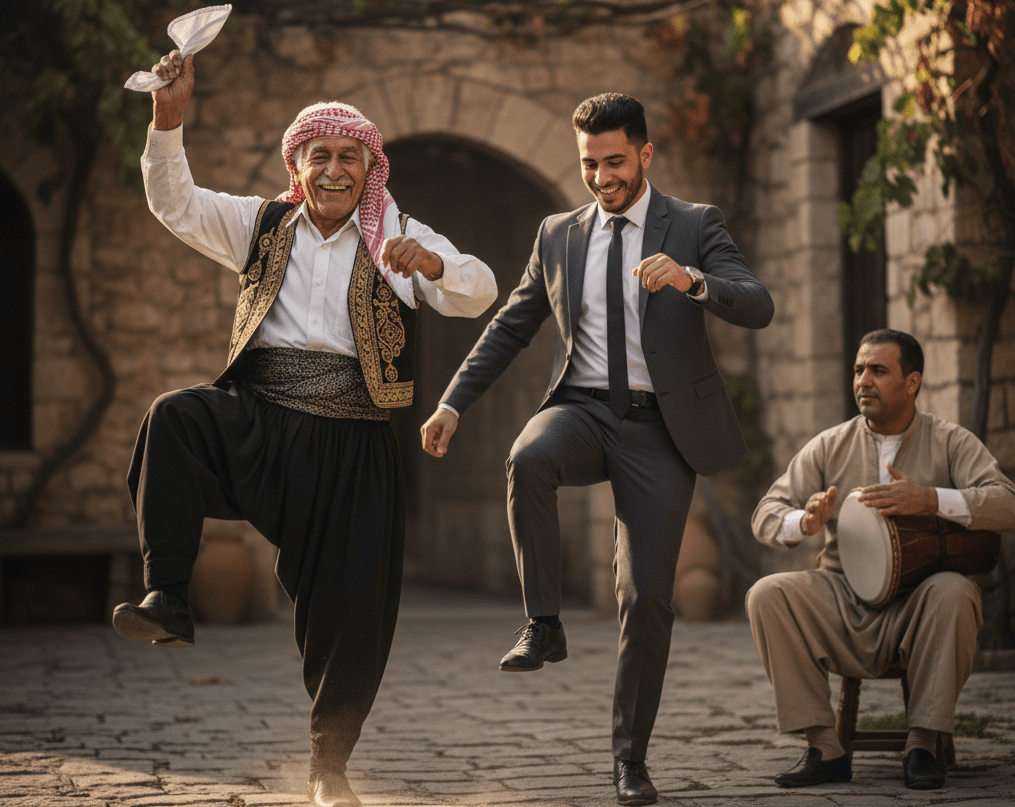
Tirawi Dabke is more than just a local variant — it’s a symbol of strength, endurance, and rural pride. It was traditionally performed by men in sherwal trousers and heavy boots, and is often remembered as the Dabke of “the strong ones” — those who carried the rhythm of their ancestors through work, war, and celebration.
Where to Experience Tirawi Dabke Today
You can still witness authentic Tirawi Dabke during weddings and local festivals in Taraya and surrounding areas of Baalbek. It’s also preserved by cultural initiatives like DabkeBaalbackieh, Zorba Academy, and Shams Baalbek, which teach the original form, rhythm, and steps of Tirawi to the next generation of Lebanese dancers and diaspora communities worldwide.


 Learn Dabke
Leave a comment