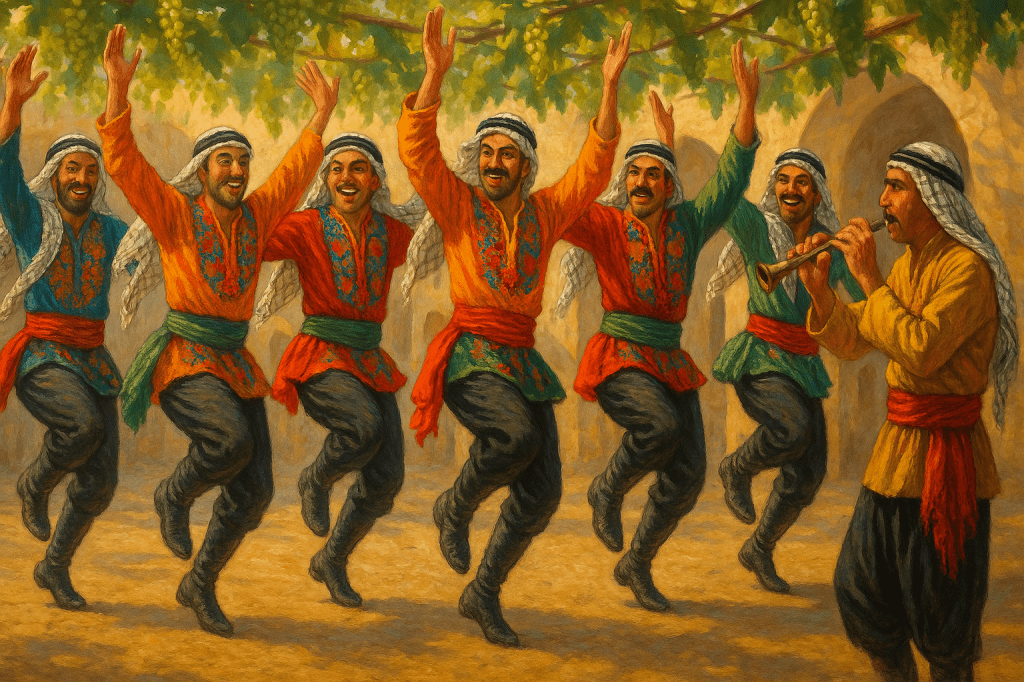
What Is Shamaliyya Dabke? A Northern Beat with Baalbaki Spirit
Al-Shamaliyya (الشمالية) Dabke — meaning “the northern style” — is one of the most electrifying and fast-paced Dabke forms in the Baalbek region. Known for its rapid stomps, continuous motion, and celebratory energy, this style originated in northern areas of the Middle East like Palestine, Lebanon, and Syria, but was fully embraced and preserved in Baalbek’s folk traditions.
Northern Origins, Bekaa Rhythm: How Shamaliyya Found a Home in Baalbek
The style is thought to have originated from coastal and northern highland communities such as Akkar, Tripoli, and parts of Syria. But due to migration, intermarriage, and musical influence, Baalbek’s dancers adopted and localized it, incorporating it into weddings and festivals with their own improvisational flair.
Today, Shamaliyya is a must-dance at any Baalbaki celebration — often used to ignite the crowd after a slower introduction like Arja or Zeno.
The Signature Steps: Quick Footwork, Nonstop Energy
This Dabke style is all about momentum. The rhythm typically follows a 6-count structure with short, sharp steps, knee lifts, and tight turns. There’s often no break in motion — the line moves like a wave, driven by fast tabl drums and often the double-pipe mijwiz.
In advanced versions, dancers may include jump-turns, rapid syncopation, or knee stomps, especially when led by experienced performers.
Learn Dabke
Shamaliyya in Social Settings: The Crowd-Pleaser of Every Party
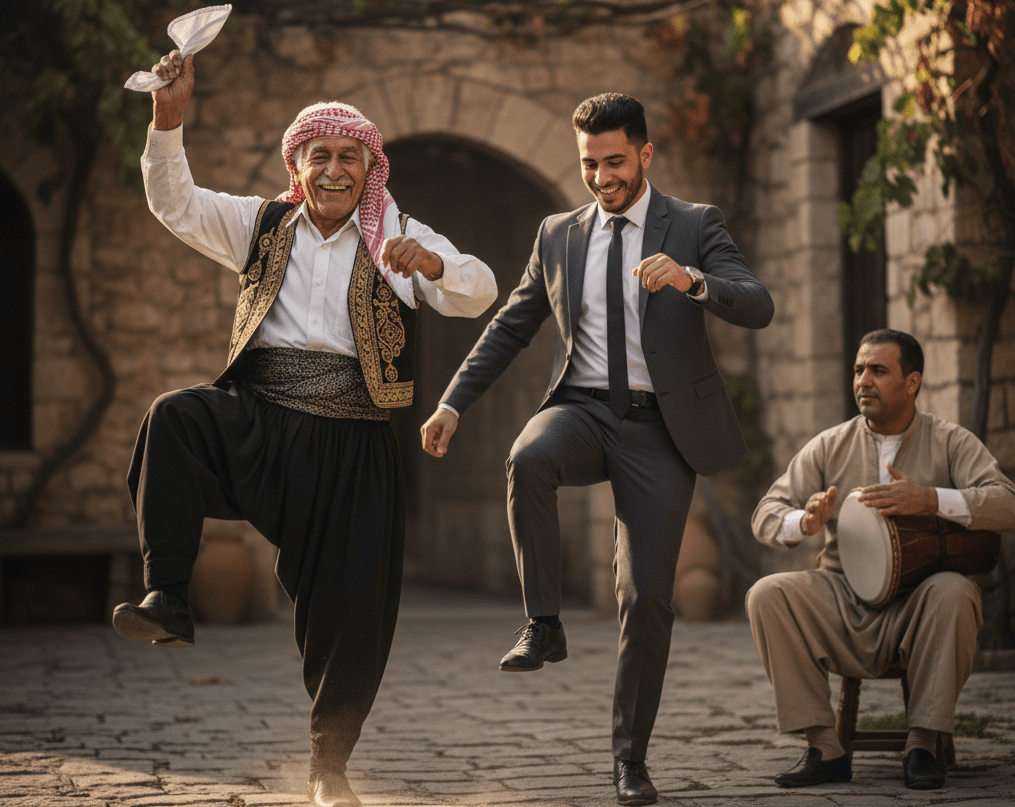
No Lebanese wedding, especially in Baalbek, is complete without a round of Shamaliyya. It’s the dance of euphoria — the moment when the guests rush to join the line, hands clapping, shoulders bouncing, and the leader improvising tricks at the front. In Baalbek, this Dabke is both entertainment and cultural celebration, signaling joy, youth, and freedom.
Learning and Performing Shamaliyya Dabke Today
Shamaliyya is often the first style taught to beginners due to its upbeat tempo and simplicity in structure. It’s featured in performances by Shams Baalbek, Zorba Academy, and other groups preserving Dabke culture. It’s also highly popular on TikTok and YouTube, where its visual energy makes for compelling short-form content that keeps younger generations dancing.



 Learn Dabke
Leave a comment