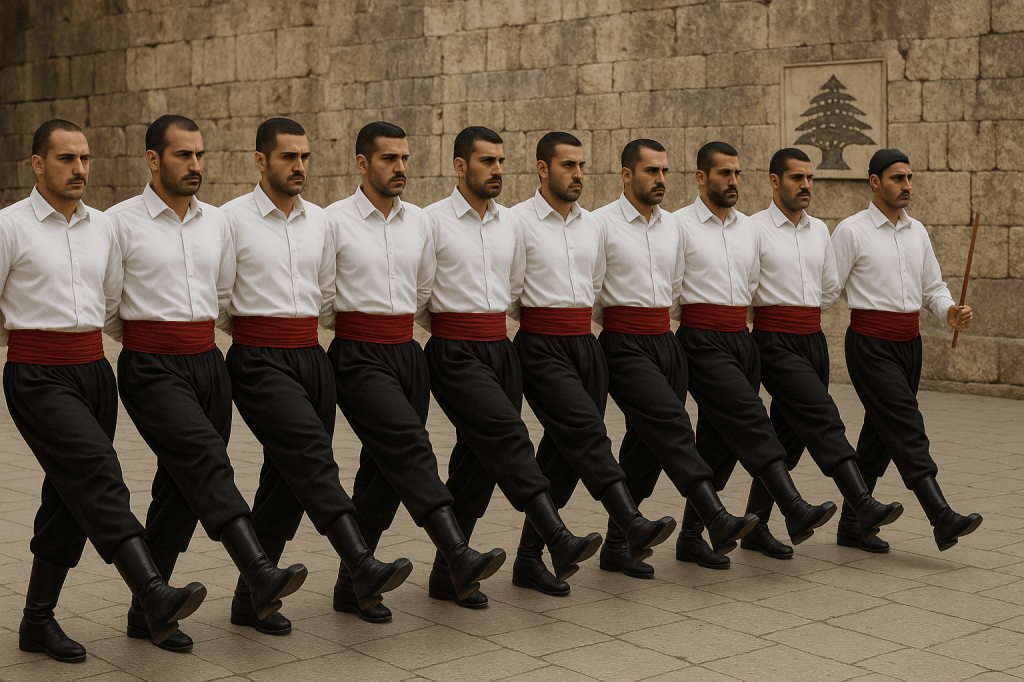
What Is Askariyya Dabke? Where Folk Rhythm Meets Martial Precision
Al-‘Askariyya (العسكرية) Dabke — meaning “military” — is one of the most vigorous and disciplined Dabke styles in the Baalbek tradition. Combining march-like footwork with forceful synchronization, this style reflects a strong, masculine energy that likely emerged from Baalbek’s historic exposure to Ottoman and French military formations.
From the Marching Grounds to the Village Line: The Origin of Askariyya
While Dabke is often associated with weddings and festive celebrations, Askariyya has roots in martial rhythm and parade formations. Oral history in Baalbek suggests that this dance evolved during times of military conscription and influence — when local youth adapted their training drills into rhythmic steps and integrated them into folk celebrations.
Structure and Movement: Straight Lines, Heavy Steps, and Commanding Presence
Askariyya Dabke is performed in tight, forward-facing lines — dancers march shoulder to shoulder, with high knees, loud stomps, and chest-forward posture. The beat is typically backed by strong tabl (drum) patterns, and sometimes accompanied by shouting or call-and-response chants to mimic the atmosphere of a regiment.
This Dabke is not about elegance — it’s about power, rhythm, and domination of the floor.
Learn Dabke
Cultural Symbolism: When Dabke Echoes Discipline and Brotherhood
Among all Baalbaki Dabke styles, Askariyya conveys a unique message of unity, strength, and discipline. It is often used in traditional displays to “open the stage” or lead into faster dances. In village events, it was the dance of the leaders — the first to step forward, drawing the crowd’s attention and setting the rhythm for what follows.
The Legacy Lives On: Where Askariyya Is Danced Today
Askariyya Dabke is still performed in formal settings — including municipal festivals, folk competitions, and ceremonial openings. Veteran dancers from the Solh family and Khataira groups have preserved its form, and it’s now taught in advanced workshops at Dabke Baalbackieh and Zorba Academy. Its martial intensity remains a powerful reminder that folk dance can carry the echo of history, pride, and strength.



 Learn Dabke
Leave a comment