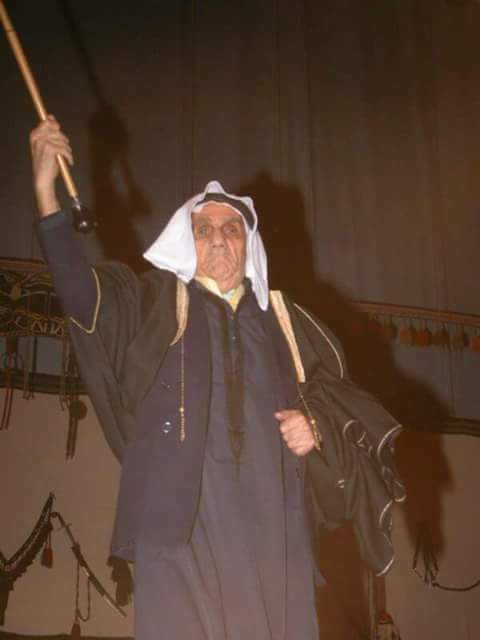
How do you measure the worth of a man who carried tradition in his bones and resistance in his heart? In Baalbek, you measure him by his footsteps—by the beat of the Arja, Shamaliyyeh, Askariyyeh, and Bedouin Dabke beneath his feet. By the roar of crowds following the rhythm of Abu Majed Mohammad Solh, the legendary Dabke master, cultural guardian, and national hero whose legacy still echoes in the streets of Baalbek.
A Humble Beginning, A Towering Legacy
Born in 1922 in the Tuffayliyyeh neighborhood of Baalbek, into the heritage-rich Solh family, Abu Majed inherited not only the traditions of Dabke, sword dancing, and hospitality, but also the values of dignity, justice, and national pride. Raised among a generation that defined Baalbek’s folkloric identity, he became a master of all six traditional Dabke styles of Baalbek—Arja, Shamaliyyeh, Askariyyeh, Tirawiyyeh, Bedouin, and Classic—and was known for his incredible precision and rhythm.
But his talents were not confined to dance alone. Abu Majed was a storyteller of Bani Hilal epic poetry, a rababa player, and an unparalleled performer of the sword and shield dance, known for his acrobatic moves where he’d leap between his own sword and chest with masterful control.

Learn Dabke
A Fighter for Lebanon
In 1948, Abu Majed answered the call of duty, joining Baalbek’s fighters in the historic Battle of Malikiyyeh against the Israeli army, alongside heroes like Mohammad Zgheib and Ali Faraj. As a freedom fighter, he carried both ammunition and water, supported his comrades under fire, and stayed firm at the front lines until victory. His courage and refusal to be swayed by bribes or threats earned him legendary respect—later reflected in his key role in Baalbek’s municipal council elections in 1960.
When asked to choose between money and dignity, he famously said:
“Honor and money never agree.”
He cast the deciding vote for Mayor Mohammad Abbas Yaghi and walked away from the political pressures with his head held high, remaining a symbol of integrity and leadership.
Guardian of Culture
As noted by Baalbeki cultural researcher and singer Ali Hleihel, families like the Solh clan preserved the heart of Lebanese Dabke. Abu Majed stood beside pillars like Abu Yehya (Zakaria Solh), Abu Doukhi (Abdul-Karim Solh), Walid Solh,Abu Yusuf Maroun, and Abu Mustafa (Hasan Qaddah). Together, they were the last generation of “true Dabke sheikhs” before Dabke was diluted by costume-driven performances and commercial shows.
Abu Majed passed away on August 1, 2009, leaving behind 13 children, countless students, and a legacy immortalized in every stomp, every chant, every echo of Baalbek’s folkloric pride.
 Learn Dabke
Leave a comment