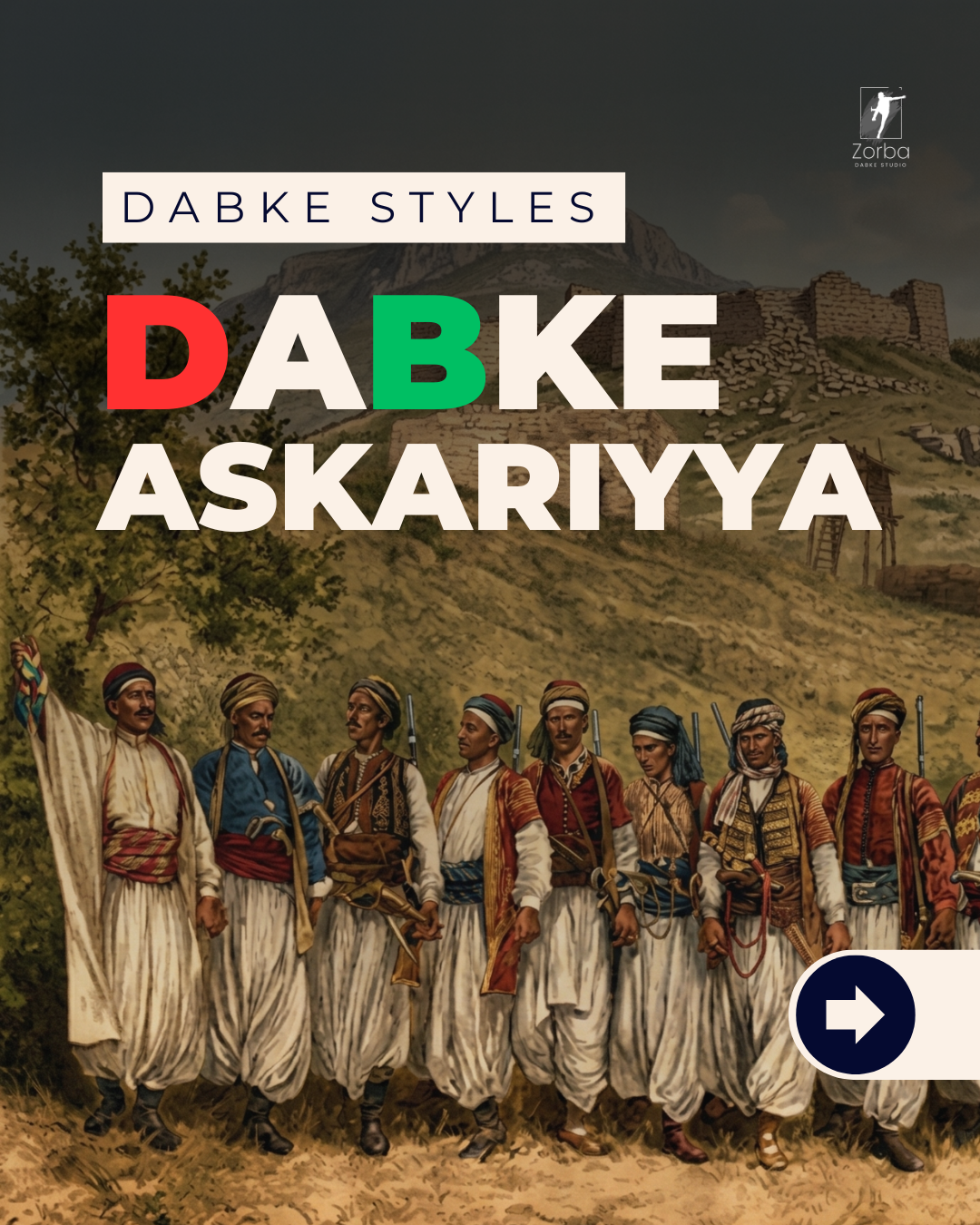
Dabke Askariyya (Military Dabke) | Origin and Historical Background
Dabke Askariyya (Military Dabke) is a powerful Levantine folk dance style characterized by disciplined movements that resemble military marching drills. In the Lebanese tradition, this dabke is widely believed to have been influenced by the marching formations of Ottoman soldiers, whose military drills introduced structured rhythm and synchronized footwork into local dance traditions.
Technical Characteristics
Technically, Dabke Askariyya is defined by alternating leg lifts combined with strong stomping downbeats that emphasize the power of the rhythm. In many regional traditions—particularly in Jordan and the Horan region—the dance follows a four-count rhythmic structure. Dancers alternate stomps between the right and left legs, and on the fourth count the leg is lifted strongly toward the side before returning to the ground.
Formation and Performance Style
The dancers perform in a connected line formation, either with hands linked or placed on the shoulders of the adjacent dancers. The line can form a semi-circle or a full circle, depending on the setting of the performance. Because of the intense physical movement and heavy stomping, this style is traditionally performed mostly by men, as it requires strong stamina and rhythmic precision.
Musical Accompaniment
The essential instrument for Dabke Askariyya is the tabl (drum), which produces a powerful rhythmic cadence that resembles the sound of soldiers marching. The strong drum accents guide the dancers’ stomps and lifts, creating a unified rhythmic structure between the musicians and the dance line.
Transitions and Variations
At the peak of the performance, the movements may transition into other energetic forms, including half-Shamaliyya sequences or incorporate the agile Krja movement, adding complexity and variation to the dance.
Research and Documentation
The study and documentation of regional dabke styles such as Dabke Askariyya are part of the cultural research conducted by Zorba Academy, which works to preserve and analyze the traditional dance heritage of the Levant.
Tagline: www.learndabke.co | WhatsApp: +96103301443

Dabke Theory Class
الدبكة العسكرية
الأصل والخلفية التاريخية
تُعَدّ الدبكة العسكرية من الأنماط التراثية المميّزة في الدبكة المشرقية، حيث تتميز
بحركات منضبطة تشبه المشية العسكرية. ويرى العديد من الباحثين أن هذا النوع تأثر بـ التدريبات العسكرية للجنود العثمانيين الذين أدخلوا نمط الحركة المنتظم والإيقاع القوي إلى الرقصات الشعبية في بلاد الشام.
الخصائص التقنية
من الناحية التقنية، تعتمد الدبكة العسكرية على تبادل رفع الأرجل مع ضربات قوية على الأرض. وفي العديد من المناطق، خصوصاً في الأردن ومنطقة حوران، تقوم هذه الدبكة على إيقاع من أربع عدّات؛ حيث يتناوب الراقصون الدبك بالرجل اليمنى واليسرى، وفي العدّة الرابعة تُرفع الرجل بقوة إلى الجانب قبل العودة إلى الحركة الجماعية.
التشكيل وأسلوب الأداء
يؤدي الراقصون هذه الدبكة ضمن صف متصل، حيث تكون الأيدي متشابكة أو موضوعة على الأكتاف. ويمكن أن يتخذ الصف شكل نصف دائرة أو دائرة كاملة بحسب طبيعة المناسبة. وبسبب طبيعة هذه الدبكة القوية والمجهدة، غالباً ما يؤديها الرجال نظراً لما تتطلبه من قوة بدنية وإيقاع ثابت.
الموسيقى المصاحبة
تُعَدّ آلة الطبل العنصر الأساسي في هذا النوع من الدبكة، إذ يمنح الإيقاع القوي الذي يشبه إيقاع مسير الجنود. وتنسجم ضربات الطبل مع ضربات الأقدام لتشكّل بنية إيقاعية واضحة تقود حركة الصف.
التحولات الحركية
عند بلوغ الأداء ذروته، قد تتطور الحركات لتتداخل مع أنماط أخرى مثل نصف الشمالية أو حركة الكرجة السريعة، مما يضيف تنوعاً وحيوية إلى الرقصة.
البحث والتوثيق
يأتي توثيق هذا النوع من الدبكة ضمن الدراسات التراثية التي تقوم بها أكاديمية زوربا (Zorba Academy) بهدف دراسة الدبكة المشرقية والحفاظ على أنماطها التقليدية.
Tagline: www.learndabke.co | WhatsApp: +96103301443
Leave a Reply