
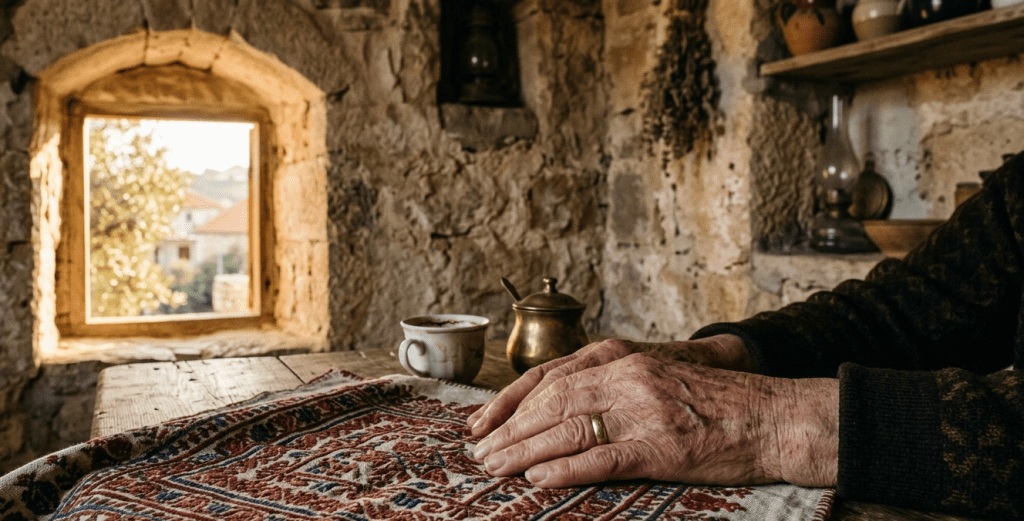
The unspoken rules of Lebanese life are not written anywhere, and that is exactly why they last. You do not learn them from school, from books, or from someone sitting you down to explain Lebanese culture. You learn them by being there: by standing in a doorway while your mother says, “khallik شوي,” by watching who reaches for the coffee first, by noticing that respect in a Lebanese home is rarely announced but always felt.
This is not a guide to food or a list of tourist clichés about Lebanese traditions. It is about the invisible code underneath daily life. The small gestures, pauses, refusals, invitations, and silences that shape Lebanese identity more deeply than most big speeches ever could. If you grew up in it, you already know it. You just may never have put it into words.
The Coffee That Waits
In many Lebanese homes, coffee is not simply served. It is offered, and then it waits.
The tray arrives. The cups are there. The smell is already in the room. But the person serving does not place the cup directly into your hand as if the ritual were only about efficiency. The coffee stays on the tray until the guest reaches for it. That small delay matters.
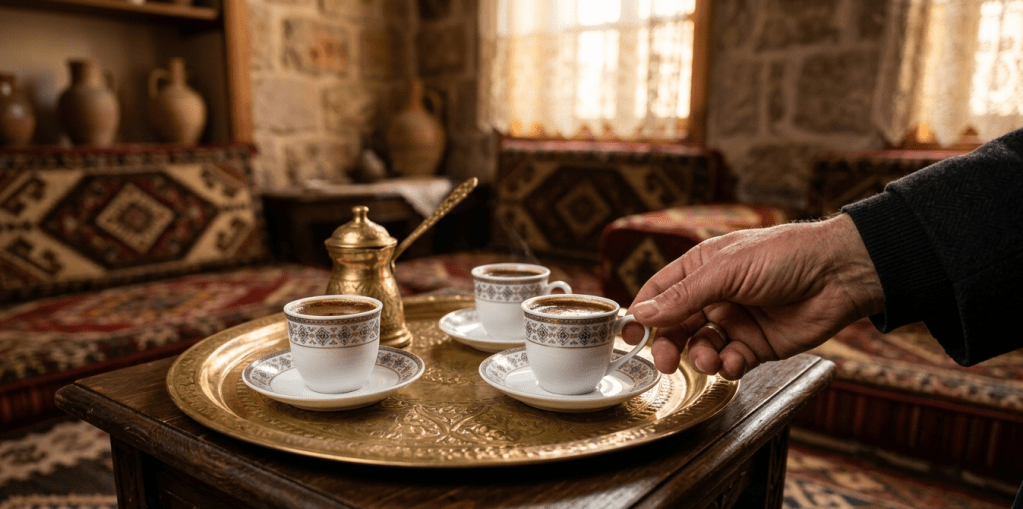
Nobody usually explains this as one of the unspoken rules of Lebanese life, but everybody understands it. The guest must be given the dignity of choosing the moment. The host offers. The guest accepts. Between those two actions sits a whole Lebanese idea of manners.
It is not only about hospitality. It is about hierarchy and respect. Who is offered first matters. How the tray is carried matters. Whether the eldest is served before the younger ones matters. Even the way someone says “tfaddal” can carry weight. In Lebanese hospitality, the action is never empty. It always says something beyond itself.
And coffee in a Lebanese house is rarely just coffee. It means, “You are received.” It means, “There is room for you here.” It means, “We are not strangers.” Even in tense moments, even in houses where money is tight, coffee appears because Lebanese hospitality is often less about abundance than about refusing to let someone feel like an outsider.
That is why the tray waits. Because in Lebanese culture, true generosity does not rush the other person. It gives them space to enter the ritual with dignity.
You Never Start Before the Elders
A Lebanese child does not need a lecture to understand that you do not begin before the elders. The room teaches you.
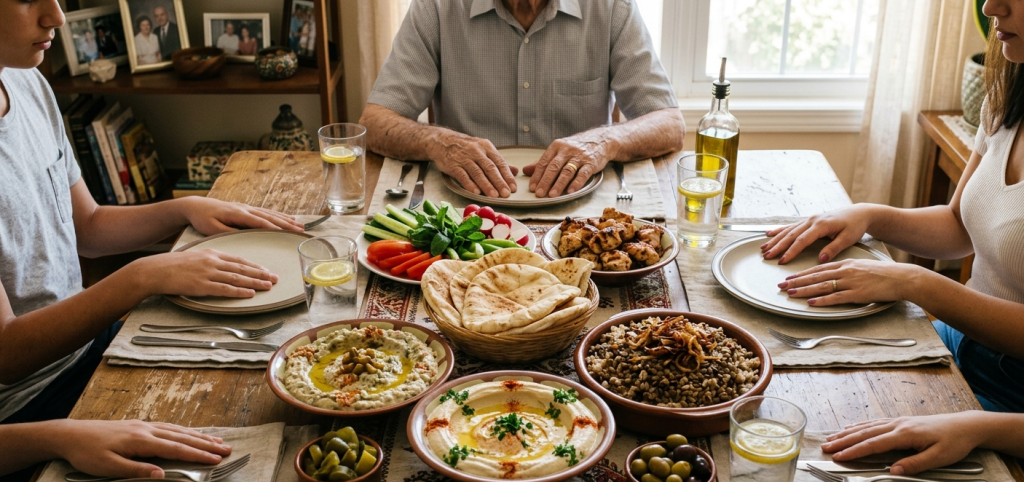
You learn it at the table first. The food is there, everyone is seated, but something remains suspended until the older person begins. Maybe it is the grandfather reaching for bread. Maybe it is the grandmother saying, “yalla, kloo.” Maybe it is only a glance that tells the room it can move. Before that, people wait.
The same rule extends far beyond food. You do not rush to speak over an elder who has just entered a conversation. You do not leave a gathering too casually if an older relative is still speaking to you. You do not walk into a room and ignore the eldest person first. These things are not always spoken as rules, but they sit inside Lebanese family life so deeply that breaking them feels heavier than a simple mistake.
This is one of the quiet structures of Lebanese traditions. Authority is not always loud. Often it is atmospheric. The elder does not have to demand the room. The room already knows where to place them.
That does not mean every Lebanese family is the same, or that every elder is wise, gentle, or easy. It means the culture has a built-in grammar of precedence. Age carries symbolic weight. To have lived longer is to have a claim on the room, even before anyone decides whether you deserve it personally.
In many Lebanese homes, this is how authority is transmitted without speeches. Not through formal instruction, but through choreography. Who sits where. Who is greeted first. Who is interrupted, and who is not. A child watching this for years absorbs it into the body before the mind can explain it.
That is why even Lebanese people who say they reject old customs often still pause before eating when an older person is present. Their mouth may not have the words for it. Their body already does.
When Someone Insists Twice, They Mean It
Lebanese politeness is rarely flat. It has layers.
If someone offers you food once and you say no, that first refusal may mean almost nothing. It may simply be your way of saying, “I do not want to look greedy.” The person offering knows this. So they ask again. Sometimes with more warmth. Sometimes with mild offense. Sometimes with a sentence that sounds less like a question and more like a correction: “La2, khod. Lezem tdou2.”
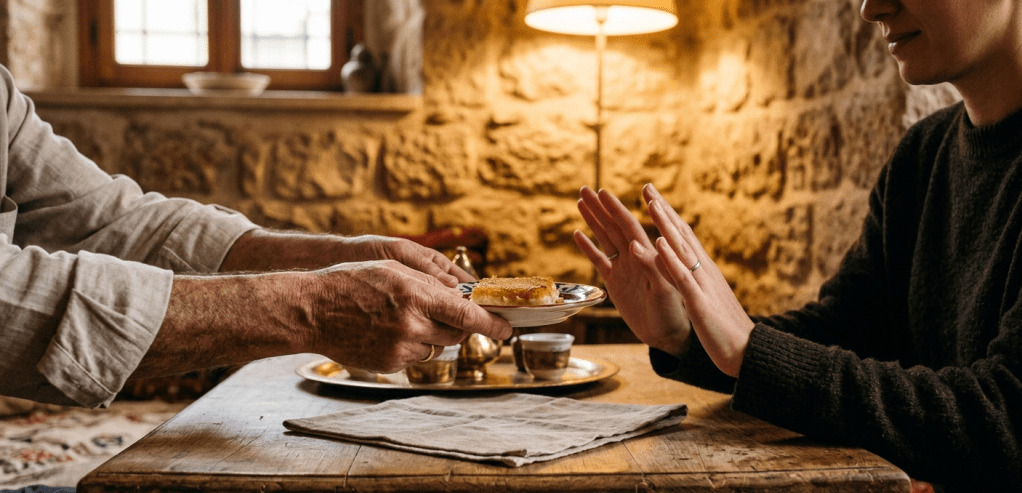
This is not dishonesty. It is social intelligence.
In Lebanese culture, there is often a difference between literal speech and relational speech. The first refusal protects modesty. The second offer confirms sincerity. By the third exchange, everybody knows where the truth is. One person proves generosity. The other proves restraint. Harmony is preserved, and nobody has to appear too eager.
This is one of the most revealing unspoken rules of Lebanese life because it shows how Lebanese people often move between truth and tenderness. Directness exists, of course. Lebanese people can be brutally direct. But in matters of hosting, feeding, and receiving, bluntness is often softened by ritual.
You can see this with invitations too. “Come by anytime” may be warm, but “No really, you must come Friday” carries a different weight. One is kindness. The second is commitment.
Even refusal has shades. A person saying “no” once may still be open. A person saying “wallah la2” twice with conviction is closing the matter. Lebanese social life trains people to hear the tone under the sentence.
For outsiders, this can seem confusing. For Lebanese people, it is natural. You are not only listening to words. You are listening to intention, affection, obligation, and face-saving all at once.
And maybe that is part of what makes Lebanese identity feel so recognizable to its own people. It is not only what is said. It is how much meaning lives around what is said.
There Is Always Food for Someone Who Didn’t Come
A Lebanese table is built with imagination. Not just for who is there, but for who might still arrive.
There is always extra. Extra rice. Extra wara2 3enab. Extra bread. Extra chairs that can be pulled in. Even when the household is careful, even when money is counted, the table often behaves as if one more person is always possible.
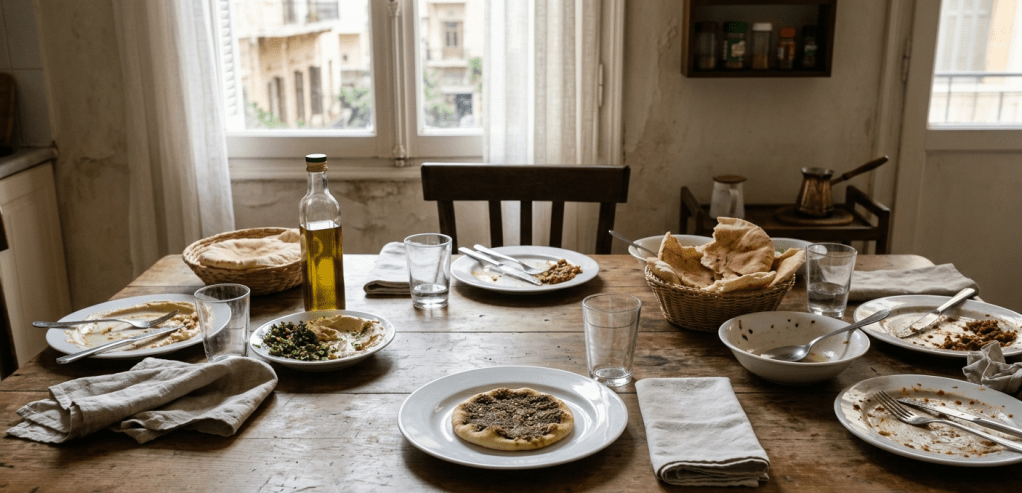
This is not just generosity in the emotional sense. It is structure. It is how many households understand normal life. Someone may drop by. A cousin may bring a friend. A neighbor may appear at the wrong time and become the right person at the table. A son may say, at the last second, that he invited someone. The house must be ready.
This is why Lebanese hospitality feels different from mere entertaining. It is not always staged. Often it is built into the kitchen itself. The pot is larger than strictly necessary. The host serves more than the plate asked for. The sentence “there’s nothing in the house” may be said while a full meal somehow appears twenty minutes later.
Food in Lebanese life is rarely only nutrition. It is reassurance. It is a way of saying, “You belong enough to be fed.” In many homes, refusing to let a guest leave hungry feels like a moral failure, not just a social one.
And the deeper layer is this: extra food means extra belonging. It means the household understands itself as porous, not sealed. People can still enter. The door is not only wood. It is a social philosophy.
That is why many Lebanese in the Lebanese diaspora still cook this way, even when they live in apartments in São Paulo, Sydney, Montreal, or Abidjan. The table still expands in the mind before it expands in space.
Some of the strongest parts of Lebanese heritage travel like this. Not in monuments. In portions.
Silence Is Respect, Not Distance
Not every silence in a Lebanese room is awkward. Some are full.
There is the silence before an elder begins speaking. The silence after someone says something painful or important. The silence that settles when a respected person enters and the mood shifts without anyone naming it. There is also the silence around grief, when people come to sit, not necessarily to explain.
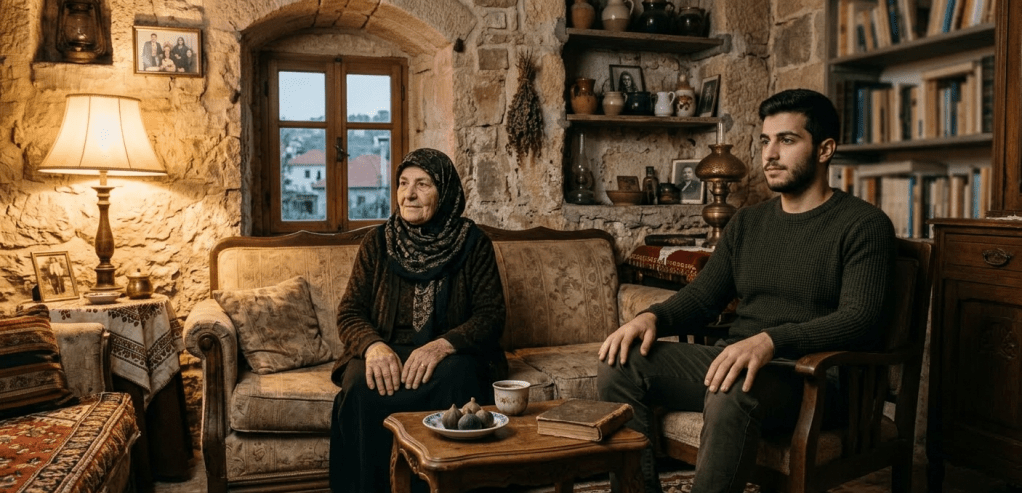
In many other settings, silence is read as discomfort or lack of connection. In Lebanese life, silence can mean attention. It can mean restraint. It can mean, “This moment is bigger than chatter.”
This matters because Lebanese people are often described as loud, expressive, emotional, always talking. Sometimes that is true. But the other half of the picture is less noticed. Lebanese social life also knows when not to speak. It knows that too much speech can flatten a moment that should remain weighty.
Think of a family gathering when an older man begins remembering someone who has passed. People do not jump in too quickly. Think of a host praising a guest with sincerity. Often the room quiets down for a second. Think of a condolence visit. The pause itself becomes part of the language.
This is one of the more delicate parts of Lebanese traditions because it is almost impossible to teach abstractly. You only understand it after sitting in enough rooms. You begin to feel when silence means discomfort, and when silence means reverence.
In Lebanese culture, silence is not always absence. Sometimes it is a form of participation. A way of giving the moment enough room to stand.
You Don’t Leave Quickly — Even When You Should
Leaving a Lebanese house is rarely a single action. It is a process.
First you announce it. Nobody fully accepts it. Then you stand up. Somehow conversation continues. Then you move toward the door, but the host walks with you. Then there is another sentence, another memory, another insistence: “Stay five more minutes.” Then you reach the building entrance, or the street, or even the car, and the farewell begins all over again.
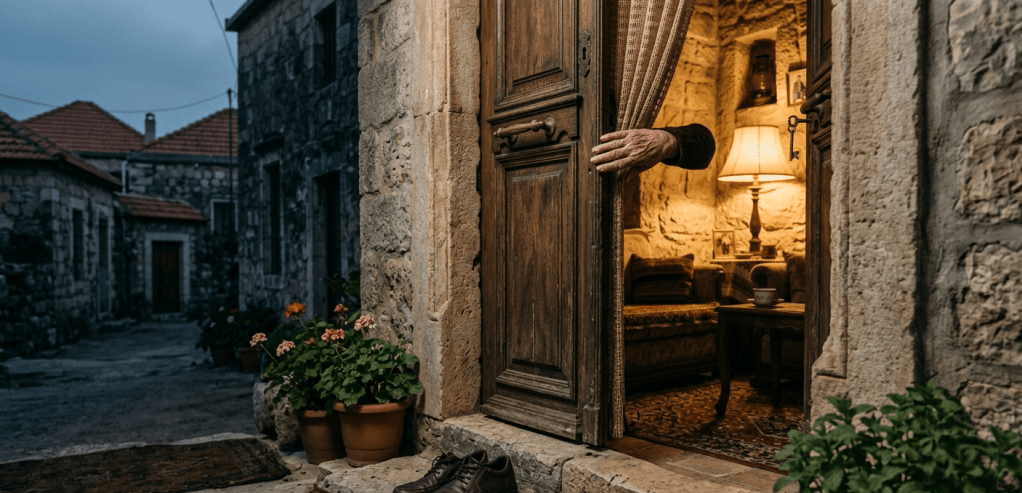
Everybody knows this. Everybody performs it.
On paper, this looks inefficient. In real life, it carries meaning. A quick exit can feel too cold, too abrupt, too transactional. If the visit mattered, the leaving must show that it mattered too.
This is one of the clearest unspoken rules of Lebanese life because it reveals something essential about how time works in Lebanese social life. Presence is not measured only by arrival. It is also measured by the reluctance to end. The long goodbye says, “Your company had weight.” It says, “We are not pushing you out.” It says, “This visit deserves a proper ending.”
That is why Lebanese farewells often include repetition. Repeated blessings. Repeated invitations. Repeated concern: “Call when you get home.” “Next time you come, stay longer.” “Bring the family.” These are not filler lines. They are part of sealing the relationship again before the person leaves.
Even the body language matters. Walking someone to the door. Standing outside with them. Waiting until the car starts. These gestures turn departure into one last act of hospitality.
A culture reveals itself not only in how it welcomes, but in how it lets go. Lebanese life rarely lets go quickly.
How These Rules Are Passed Down
Nobody sits a Lebanese child down and says, “Today I will explain the invisible code of this house.”
That is not how it works. These things are absorbed through repetition, proximity, and observation. You learn by being in the room. By getting corrected once with a look. By being gently pulled back when you reached too early. By watching your mother serve guests. By seeing your father stand when an older relative enters. By hearing how adults insist, refuse, bless, pause, and depart.
This is behavioral heritage. Oral heritage, yes, but also something even more embodied than oral tradition. It lives in practice. In timing. In tone. In the order of gestures.
That is why so much of Lebanese heritage survives even when people cannot fully explain it. A person may not know how to analyze the social meaning of the coffee tray, but they still carry it. A woman may never use the phrase “intergenerational transmission,” but she has already transmitted half a world through the way she hosts.
This is also why certain losses feel bigger than they first appear. When the household rhythm breaks, when the shared table disappears, when visits become rare, when elders are no longer physically central in family life, something more than custom is interrupted. A whole method of cultural teaching becomes fragile.
Because these rules are not mainly written, they depend on living contact. You cannot inherit them the same way you inherit a surname or a document. You inherit them by witness.
And maybe that is why they feel so intimate. They are not ideas you memorize. They are habits you become.
Why These Rules Matter Now — Especially for the Diaspora
When Lebanese people emigrate, they do not only carry language, recipes, and surnames. They carry timing.
They carry the reflex of offering coffee before asking serious questions. The instinct to add extra food “just in case.” The habit of insisting once more so the other person feels wanted. The inability to let a guest leave too quickly. The way respect still shapes seating, speech, and attention, even in homes far from Lebanon.
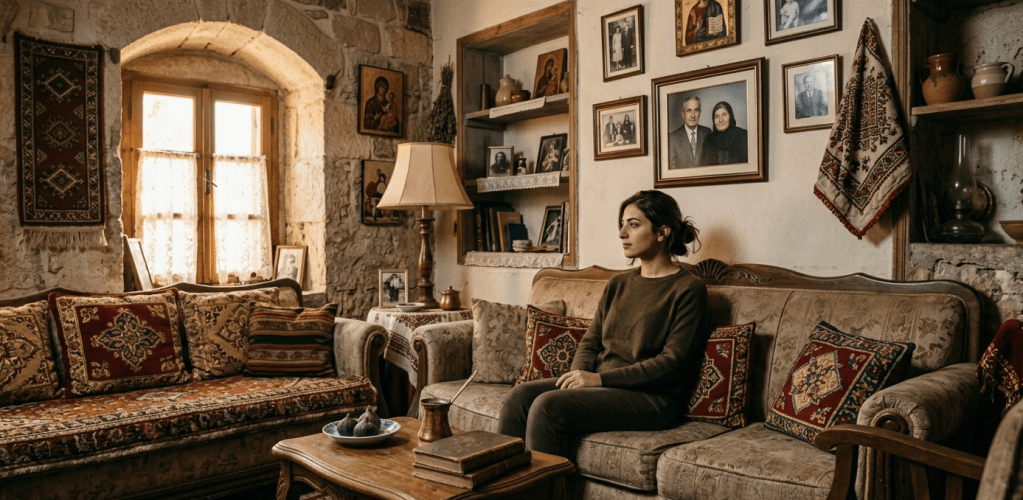
This may be one of the most portable forms of Lebanese identity. You can lose accent. You can marry into another culture. You can raise children who speak less Arabic than you hoped. And still, when guests arrive, something old returns to your hands without permission.
A Lebanese family in Brazil may still set one more plate than necessary. A Lebanese home in Australia may still keep coffee ready even on an ordinary weekday. A family in West Africa or Canada may still teach children, without formal explanation, that older people are not addressed casually, that guests are fed before being left alone, that departure is a ritual, not a technicality.
This is where the Lebanese diaspora becomes so important to understanding culture. Diaspora communities do not preserve everything. No community does. Some things fade. Some things transform. But often the things that travel best are not the ones written in history books. They are the ones built into behavior.
And right now, that matters.
Because modern life can flatten people into convenience. Faster meals. Shorter visits. Fewer elders in the center of the room. Less patience for ritual. Less time for the unnecessary things that were never unnecessary at all.
The old Lebanese codes remind people that culture is not only what you say you are. It is what your body still does when someone knocks at the door.
Frequently Asked Questions
What are the most important unspoken rules of Lebanese culture?
The most important unspoken rules of Lebanese culture include serving and receiving guests with dignity, giving elders precedence, insisting more than once when offering food or invitations, and treating hospitality as a duty rather than a performance. These rules are rarely taught directly, but they shape daily behavior in Lebanese homes. They help organize respect, belonging, and family life without needing to be formally stated.
How do Lebanese people show respect without words?
Lebanese people often show respect through behavior before speech. They wait for elders to begin, offer coffee and food in the proper order, lower their tone in certain moments, and avoid leaving too abruptly after a visit. Silence can also be a sign of respect, especially when someone older or honored is speaking. In Lebanese culture, manners are often expressed through timing, posture, and restraint.
Why is hospitality so important in Lebanese culture?
Hospitality is important in Lebanese culture because it signals more than kindness. It tells the guest, “You are received, protected, and included here.” In many Lebanese homes, feeding someone or making room for them is a way of turning relationship into action. Lebanese hospitality carries ideas about honor, family reputation, generosity, and the open door.
How do Lebanese diaspora communities keep their culture alive?
Lebanese diaspora communities often keep their culture alive through everyday practices rather than formal lessons. They continue the rituals of coffee, extra food, extended farewells, and respect for elders, even when living far from Lebanon. These habits become a portable form of Lebanese heritage that children absorb at home. Culture survives because the household still performs it.
You were never taught this in a lesson. Nobody wrote it on a wall. But somewhere inside you, the tray still pauses before the cup is taken, the goodbye still takes too long, and one extra plate still waits on the table for the person who did not come.
 Learn Dabke
Leave a comment