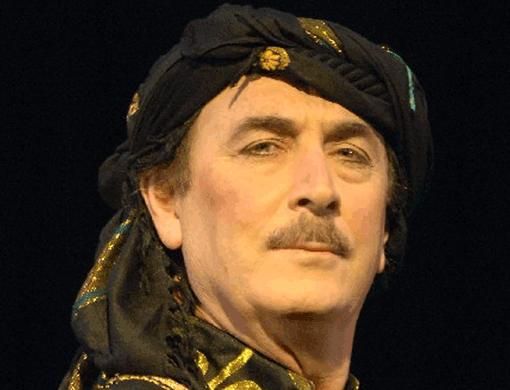
When discussing the transformation of Lebanese Dabke from village celebration to international stage art, one name stands firmly at the center of that evolution: Omar Caracalla. Recognized as a pioneer in the history of Dabke and often described as a “Sheikh of Baalbeki Dabke,” Omar played a decisive role in shaping how Lebanese folk dance would be seen not only in Baalbek, but across the world.
His contribution was not merely artistic. It was structural. He helped move Dabke from spontaneous performance into disciplined theatrical expression.
Roots in Baalbek
Omar Caracalla was born into a family deeply connected to culture and poetry in Baalbek, a city long associated with strong rural traditions and powerful Dabke styles. His father, Abbas Caracalla, was known as the “Sheikh of Baalbek’s Youth,” a poet whose words reflected the pride and identity of the region. Poetry, rhythm, and language were therefore not external influences in Omar’s life — they were inherited.
His mother, Ramza Hamieh, came from the village of Taraya, a place known for the Tayrawiya style of Dabke. This connection is not incidental. Tayrawiya is measured, grounded, and disciplined — qualities that later became visible in Omar’s own performance style.
From family, he inherited rhythm. From Baalbek, he inherited weight and dignity.
The Athlete Before the Dancer
Before the stage lights, there was the track field.
Omar Caracalla was not only a dancer — he was a national athlete. He held the title of Lebanon’s champion in multiple track and field disciplines, including:
- Pole vault
- High jump
- 100-meter sprint
- 400-meter sprint
This athletic background shaped his approach to movement. Discipline, explosive power, and body control became core elements of his dance identity. Where others saw Dabke as celebration, Omar approached it with the precision of a trained competitor.
The physical excellence that later defined Caracalla performances did not come by accident. It was built on years of athletic training.
Learn Dabke
The Birth of Caracalla Dance Theatre
In 1968, alongside his brother Abdel Halim Caracalla, Omar officially co-founded the Caracalla Dance Theatre.
At that time, most Dabke groups were local, performing primarily at weddings and social gatherings. The dance was powerful but informal. What Omar and his brother envisioned was something different: a structured theatrical form that could stand on major international stages.
Abdel Halim brought academic study from London and Paris. Omar brought the embodied authority of a Baalbeki Sheikh and the discipline of an athlete. Together, they created a new model for Lebanese dance theatre.
Their first major production, “Black Tents” (Al-Khiyam Al-Soud), reflected this vision. Inspired by Bedouin life and the natural landscape of Baalbek, the production carried both rural authenticity and theatrical structure. It did not imitate Western ballet. Instead, it elevated local movement into a dramatic narrative format.
This marked a turning point. Dabke was no longer only communal — it was performative art.
From Circle to Stage
Traditional Baalbeki Dabke thrives in the circle — the lawweeh at the front, the line responding, the drum controlling tempo. Omar understood this structure intimately. As a “Sheikh” of the dance, he embodied leadership inside the circle before stepping onto the stage.
On stage, that same leadership transformed into choreographic authority. Movements became larger, formations expanded, and musical arrangements grew more complex. Yet the core remained rooted in Baalbek’s style: strong footwork, grounded stance, and controlled power.
Unlike purely theatrical adaptations that risk losing authenticity, Omar’s presence ensured that the Caracalla productions retained the spirit of traditional Dabke. The energy was not decorative. It was intentional.
This balance between authenticity and innovation became the hallmark of Caracalla Dance Theatre.
Preserving Culture Through Innovation
The work of Omar and his brother is often described as having an unprecedented role in preserving Lebanese cultural identity. At a time when modernization threatened to overshadow rural traditions, they offered an alternative: evolve the form without abandoning its roots.
Rather than confining Dabke to nostalgia, they carried it into international festivals, opera houses, and cultural stages. Lebanese folk dance was no longer limited to village squares — it became a symbol of national identity abroad.
Omar’s contribution to this shift cannot be separated from his physical authority as a performer. His athletic training translated into disciplined choreography, while his upbringing in Baalbek preserved the raw strength of the movement.
Dabke Theory Class
The Sheikh of Baalbeki Dabke
The title “Sheikh” in Dabke is not honorary. It implies mastery, leadership, and understanding of rhythm beyond steps. It means knowing when to hold the stomp, when to lift, and when to command the line.
Omar Caracalla earned this title not only because of performance skill, but because of presence. He represented a generation that understood Dabke as heritage before it became theatre.
Through the founding of Caracalla Dance Theatre, he helped shape a new chapter in Lebanese cultural history — one where Dabke could travel the world without losing its Baalbeki heartbeat.
Omar Caracalla stands at that intersection:
Between circle and stage.
Between athlete and artist.
Between preservation and transformation.
 Learn Dabke
Leave a comment