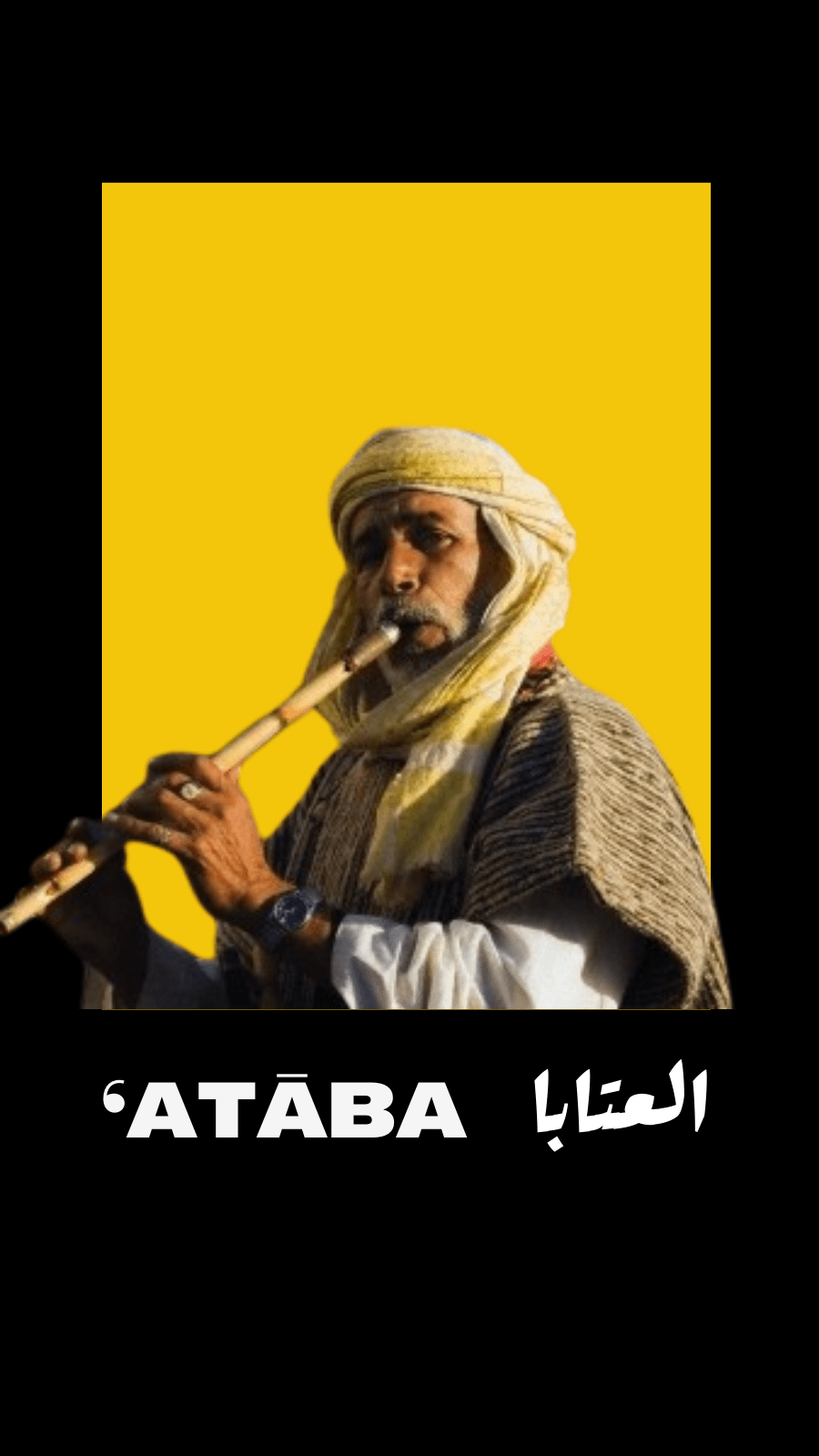
‘Atāba is one of the oldest and most emotionally resonant forms of Bedouin music. Rooted in the deserts of Arabia, this genre of sung poetry migrated with nomadic tribes and found a new home in the mountains and plains of Lebanon. Today, it remains a living tradition in places like Baalbek and the Bekaa Valley.
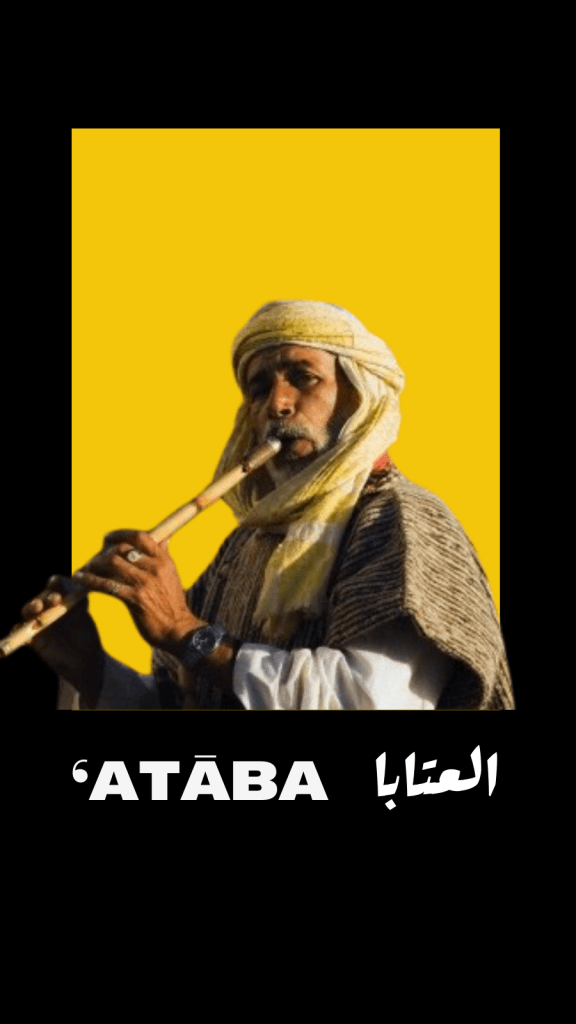
‘Atāba is a deeply expressive, improvised poetic form. It typically consists of four lines, with the first three ending in the same sound, creating a pun-like or homonymous rhyme. The fourth line resolves emotionally, often ending with the exclamation “aba,” from which the name derives. Unlike urban song forms, ‘atāba is entirely free in rhythm and meter, making it a true voice of spontaneous emotion.

Learn Dabke
The melodies are often mournful, set in the Hijaz maqam, which evokes sorrow and longing. In particularly emotional settings, singers use a variant called far‘ūgiyyāt—performed during funerals or moments of intense grief. The structure allows for melisma and improvisation, where syllables stretch over many notes, drawing the listener into the depths of the singer’s feeling.
‘Atāba plays a vital role in Bedouin communal life. It is sung during weddings, around fires, in mourning rituals, and at family gatherings. The singer may accompany themselves on the rebab (a one-string fiddle), or perform unaccompanied, relying solely on the power of voice. Common themes include love, loss, honor, tribal stories, and nostalgia.
As Bedouin tribes settled in the Levant, especially in regions like Baalbek, ‘atāba was preserved, adapted, and fused into Lebanese rural traditions. In Baalbek’s villages, descendants of Bedouin families still sing ‘atāba at festivals and cultural events. This form of oral poetry became a cornerstone of the region’s folk identity.
‘Atāba is more than a musical genre—it is an archive of feeling, a storyteller’s tool, and a cultural treasure that continues to shape Lebanese music.
 Learn Dabke
Leave a comment