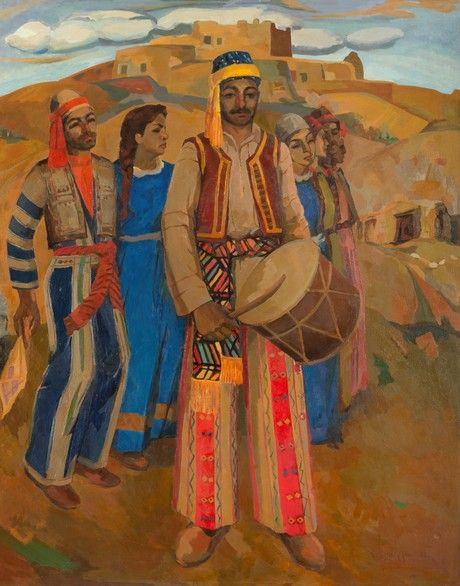
How did Lebanese Dabke music transform across the decades? From folklore to festival stages, from cassette tapes to global remixes—this is the story of Dabke’s musical heartbeat.
1950s–1960s: The Golden Folk Revival Dabke enters the national spotlight. Fairuz, Zaki Nassif, The Rahbani Brothers, and Sabah lead a cultural revival. Folk songs like Dalouna and Lamma Bada Yatathanna are broadcast on Radio Lebanon and performed at the Baalbek Festival, turning village tunes into national treasures.
1970s: Modernization & Performance Art Dabke is refined with theatrical flair. Choreographers and musicians merge tradition with stagecraft. Caracalla Dance Theatre blends Dabke with modern dance. Wadih El Safi becomes the voice of the mountains, fusing mawwal and Dabke rhythms in powerful ballads.
Learn Dabke
1980s: War, Diaspora, and the Rise of Synth Civil war halts festivals but Dabke survives. In weddings, shelters, and diaspora halls, the synth keyboard replaces full ensembles. Cassette tapes keep the music alive in exile. Dabke becomes a symbol of resilience and unity for Lebanese worldwide.
1990s: Pop Fusion & New Voices Dabke meets Arab pop. Artists like Assi El Helani and Najwa Karam blend Dabke beats with pop melodies, revitalizing the tradition for younger audiences. Mohammad Iskandar and others create radio hits with fast-paced Dabke rhythms.
2000s–2010s: Globalization & Remixes From Beirut clubs to global stages, Dabke gets remixed. Electronic DJs like Said Mrad sample traditional melodies. Diaspora youth organize flash mobs and break world records. Yet, the roots remain strong—traditional instruments, poetic lyrics, and cultural pride still drive the beat.
Dabke is more than dance. It’s Lebanon’s rhythm. Its memory. Its soul.
#Dabke#LebaneseMusic#LebanonCulture#Fairuz#ZakiNassif#WadihElSafi#AssiElHelani#NajwaKaram#RahbaniBrothers#Dalouna#LebaneseHistory#LebaneseDance#Mijwiz
 Learn Dabke
Leave a comment