
A blog about Dabke
-
Dabke Aleppo Technical Styles | دبكة حلب
Dabke Styles of Aleppo (Al-Shahba): Rhythm, Structure, and Sufi Influence The technical styles of Dabke in Aleppo (Al-Shahba) are known for their balance, refinement, and rhythmic diversity. Unlike many rural Dabke traditions that emphasize power and stamping, Aleppine styles focus on controlled footwork patterns, elegant transitions, and musical precision. Many researchers note that several Aleppo…
-
Rameh Medlej (Abu Arif): The Blind Rababa Poet Who Became the Voice of Baalbek
The Poet Whose Voice Saw What His Eyes Could Not Long before social media turned poetry into short clips, the villages of the northern Beqaa gathered around voices. A poet did not need a stage filled with lights. He needed a strong memory, a commanding voice, a quick answer, and the ability to turn the…
-

South Lebanon History: From Tyre and Sidon to Nabatieh, Jabal Amil, and the Border Villages
Heritage Lebanon — learndabke.co/heritage Most people say South Lebanon as if it is one place. But the more honest question is: Which South? The South of Tyre is not the South of Nabatieh. The South of Sidon’s old souks is not the South of Bint Jbeil’s border villages. The South of Jabal Amil’s scholars is…
-
Dabke Sab’awiya | دبكة سبعاوية
Dabke Sab’awiya: The Seven-Strike Palestinian Dabke Dabke Sab’awiya (دبكة سبعاوية) is a traditional Palestinian folk dance that belongs to the Shamaliyya (Northern) family of Dabke styles. The name Sab’awiya comes from the Arabic word “Sab’a” (seven), referring to the dance’s structure of seven rhythmic strikes or counts that define its movement pattern. This style represents…
-
Dabke Sahja | دبكة السحجة
Dabke Al-Sahja: The Rhythmic Clapping Tradition of Levantine Dabke Origins and Cultural Presence Dabke Al-Sahja (دبكة السحجة) is a traditional collective folk performance found across Jordan, Palestine, the Horan region of southern Syria, and the Baalbek area of Lebanon. It represents a unique form of Levantine dance in which poetry, rhythm, clapping, and coordinated body…
-

Dabke Al-Hashi | دبكة الحاشي\المحوشي
Dabke Al-Hashi (Al-Mahoushi) Origin and Cultural Context Dabke Al-Hashi, also known as Al-Mahoushi, is a traditional Levantine folk performance closely connected to the Bedouin dance traditions of Ad-Dahhiya (Ad-Dahha) and Al-Jofiyeh. These performances are widely known across the Levant and the northern Arabian Peninsula, particularly within tribal celebrations and weddings. Rather than being a standard…
-

Dabke Shamaliyya | دبكة شمالية
Al-Shamaliyya Dabke – The Most Widespread Dabke Style of the Levant Dabke Al-Shamaliyya (Northern Dabke) is widely considered the most famous and widely practiced Dabke style across the Levant, including Lebanon, Syria, Palestine, and Jordan. Because of its energetic rhythm and recognizable structure, it has become the style most commonly associated with Dabke in weddings,…
-

Dabke Faradiya | دبكة فرادية
Dabke Faradiya (Solo Dabke) Origin and Cultural Context Dabke Faradiya (Solo Dabke) is a traditional folk dance found primarily in Jordan and Palestine. Unlike most dabke styles, which are performed in a collective line or circle, the Faradiya is a solo performance typically danced by one woman alone. The dance is especially associated with wedding…
-

Dabke Gwaraneh | دبكة غوارنة
Dabke Al-Gwaraneh: The Fast-Paced Dabke of Deir Alla Dabke Al-Gwaraneh (دبكة الغوارنة), also widely known as Dabke Deir Alla (دبكة ديرعلا), is a traditional Levantine Dabke style distinguished by its extremely fast rhythm and dynamic movements. The dance originates from the Jordan Valley region, particularly around the town of Deir Alla, and forms an important…
-
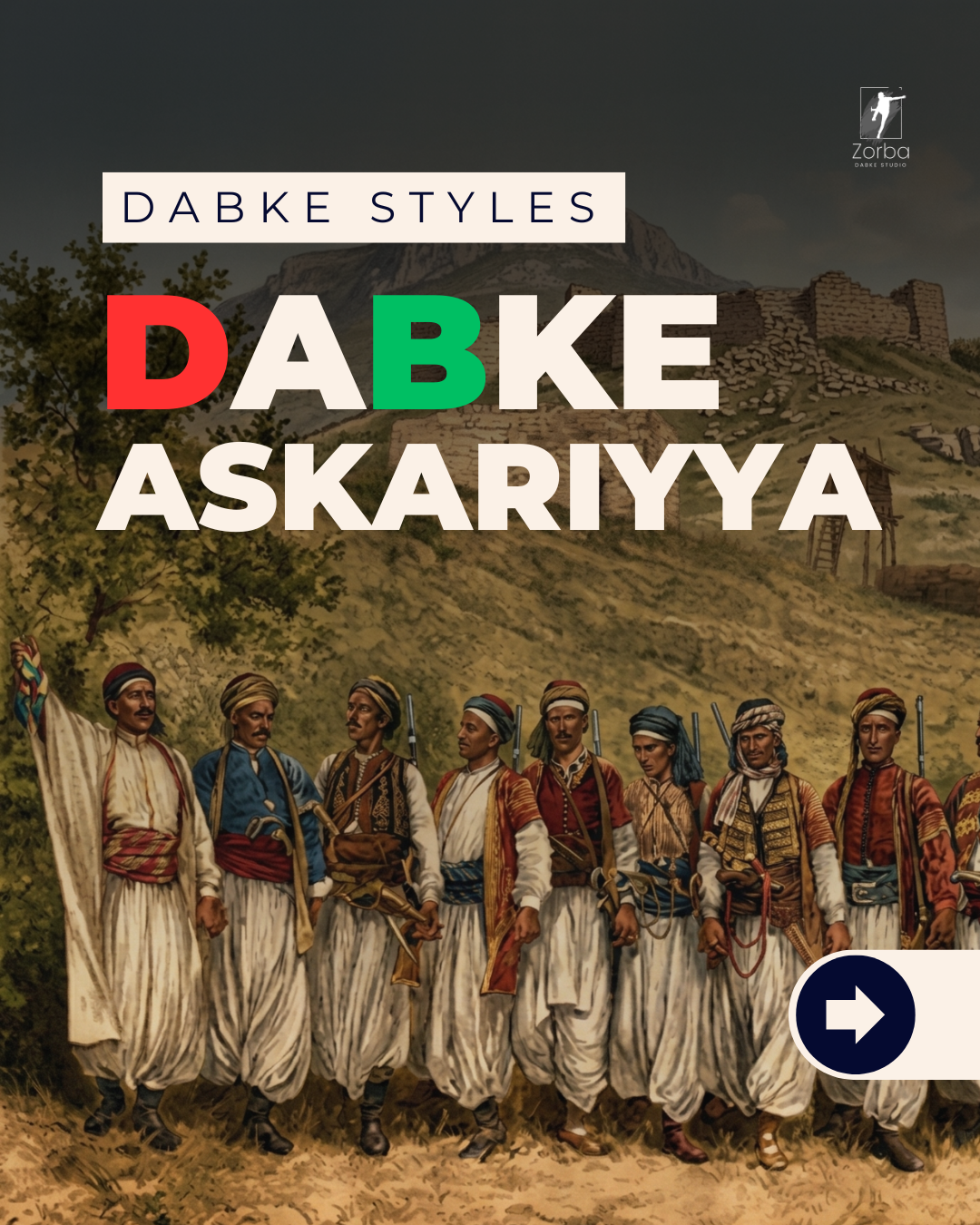
Dable Askariyya | دبكة عسكرية
Dabke Askariyya (Military Dabke) | Origin and Historical Background Dabke Askariyya (Military Dabke) is a powerful Levantine folk dance style characterized by disciplined movements that resemble military marching drills. In the Lebanese tradition, this dabke is widely believed to have been influenced by the marching formations of Ottoman soldiers, whose military drills introduced structured rhythm…
Got any questions?