
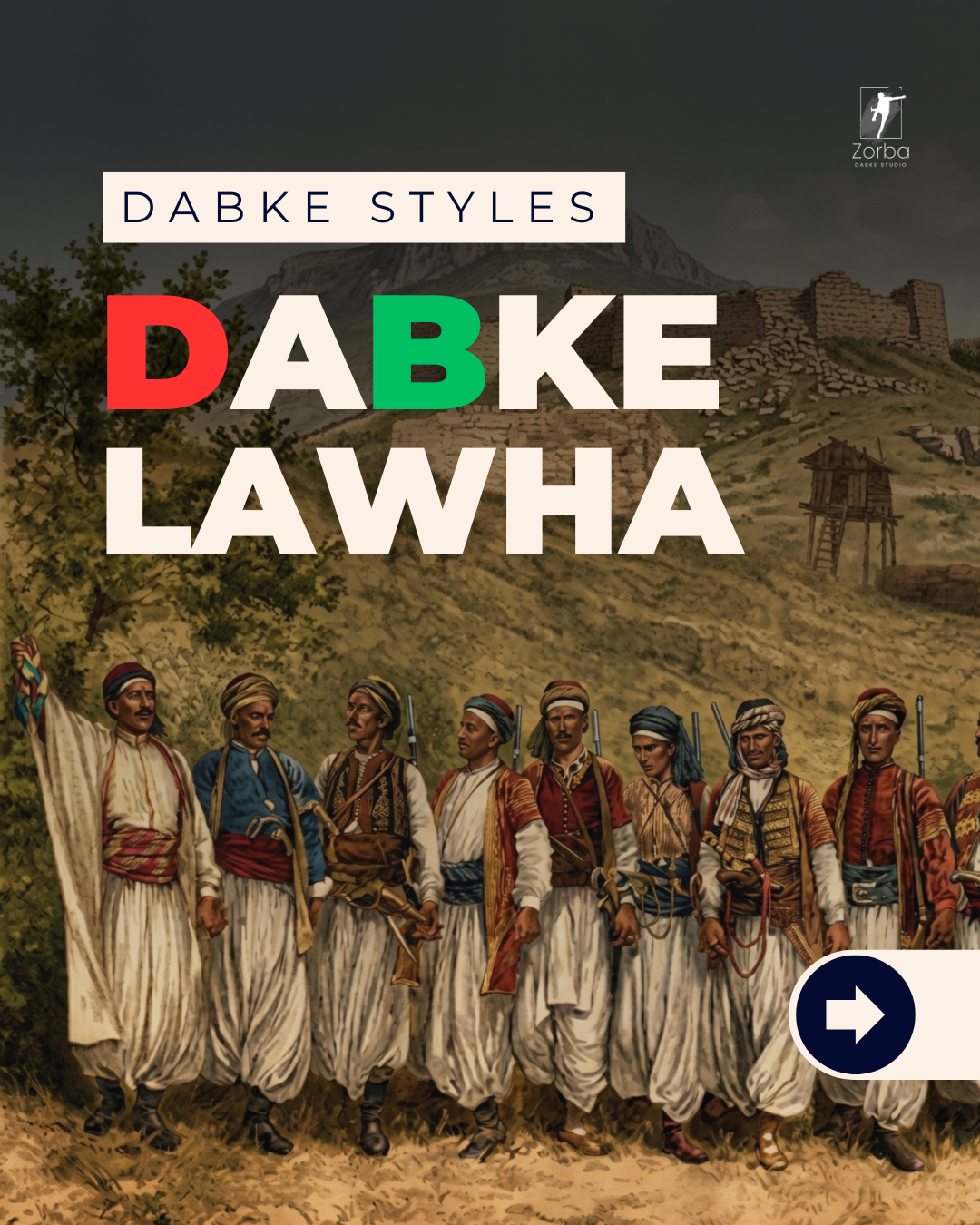
Dabke Al-Lawha: Origin, Structure, and Cultural Role – Research by Zorba Academy
Dabke Al-Lawha is recognized as one of the eight fundamental types of traditional Syrian dabke, a classification documented by the Homsi poet and researcher Wajih Wehbe al-Khoury in his studies on Syrian folk dance traditions. This form of dabke is particularly associated with the Lattakia region and the Syrian coastal areas, where it developed as part of the rural cultural life of the Mediterranean Levant.
From a technical perspective, Dabke Al-Lawha is distinguished by its seven-step rhythmic phrase, meaning that each movement cycle is built on seven rhythmic counts. This seven-count structure sets it apart from other dabke styles that typically rely on six-count, eight-count, or twelve-count patterns. The seven-step phrasing gives the dance a distinctive rhythm and flow, allowing dancers to perform sequences that feel slightly asymmetrical compared with more common dabke structures.
Like many traditional dabke forms across the Levant, Al-Lawha is considered a rural dance (dance rurale) that expresses the vitality and identity of local communities. It is traditionally performed during seasonal celebrations, festivals, and social gatherings, where dance serves as a collective expression of cultural belonging and regional pride. Within the coastal Syrian context, Dabke Al-Lawha reflects the traditions of village life and the communal celebrations that bring together music, rhythm, and movement.
Research conducted by Zorba Academy, an institution dedicated to studying the musical structure and regional traditions of dabke, highlights how styles like Al-Lawha demonstrate the diversity of Levantine folk dance. Each regional variation preserves unique rhythmic logic, movement patterns, and cultural meanings while remaining connected to the broader heritage of dabke across Syria and the surrounding regions.
Tagline:
www.learndabke.co
WhatsApp: +96103301443
دبكة اللوحة: الأصل والبنية الإيقاعية والدور الثقافي – بحث صادر عن Zorba Academy
تُعد دبكة اللوحة واحدة من الأنواع الثمانية الأساسية للدبكة السورية التقليدية التي صنفها الشاعر والباحث الحمصي وجيه وهبه الخوري في دراساته حول الرقص الشعبي السوري. وترتبط هذه الدبكة بشكل خاص بمنطقة اللاذقية والساحل السوري، حيث نشأت ضمن البيئة الريفية والثقافة الاجتماعية للمجتمعات الساحلية في بلاد الشام.
من الناحية التقنية، تتميز دبكة اللوحة ببنيتها الإيقاعية الفريدة، إذ تعتمد على جملة حركية سباعية، أي أن كل دورة حركية في الرقصة تتكون من سبع خطوات أو عدّات إيقاعية. وهذا الإيقاع السباعي يميزها عن العديد من أنماط الدبكة الأخرى التي تعتمد غالبًا على أنظمة إيقاعية من ست أو ثماني أو اثنتي عشرة خطوة. ويمنح هذا النمط السباعي الرقصة إيقاعًا خاصًا وانسيابية مميزة تجعل حركتها مختلفة عن البنى الإيقاعية الأكثر شيوعًا في الدبكة الشامية.
وكغيرها من أشكال الدبكة التقليدية في بلاد الشام، تُصنف دبكة اللوحة ضمن الرقصات الريفية التي تعكس روح المجتمع المحلي وحيويته. وغالبًا ما تُؤدى هذه الدبكة خلال المواسم والاحتفالات الشعبية والأعراس، حيث تشكل جزءًا من التعبير الجماعي عن الفرح والانتماء الثقافي والهوية المحلية.
وتشير الأبحاث التي يجريها Zorba Academy، وهي مؤسسة متخصصة في دراسة البنية الموسيقية والأنماط الإقليمية للدبكة، إلى أن أنماطًا مثل دبكة اللوحة تمثل مثالًا واضحًا على التنوع الكبير داخل تراث الدبكة في بلاد الشام. فكل منطقة تحتفظ بأسلوبها الإيقاعي والحركي الخاص، مع بقاء جميع هذه الأنماط ضمن الإطار الثقافي الأوسع لفن الدبكة.
التواصل:
www.learndabke.co
WhatsApp: +96103301443
SEO Tags
dabke al lawha, al lawha dabke, syrian dabke styles, lattakia dabke, syrian coastal dabke, seven step dabke rhythm, traditional syrian folk dance, levantine dabke styles, rural dabke dance, zorba academy dabke research, dabke rhythms analysis, traditional arab dabke, dabke al lawha syria, دبكة اللوحة, ما هي دبكة اللوحة, الدبكة السورية التقليدية, دبكة اللاذقية, دبكة الساحل السوري, أنماط الدبكة السورية, إيقاع سباعي في الدبكة, الرقص الشعبي السوري, الدبكة الشامية, بحث زوربا أكاديمي عن الدبكة
Leave a Reply