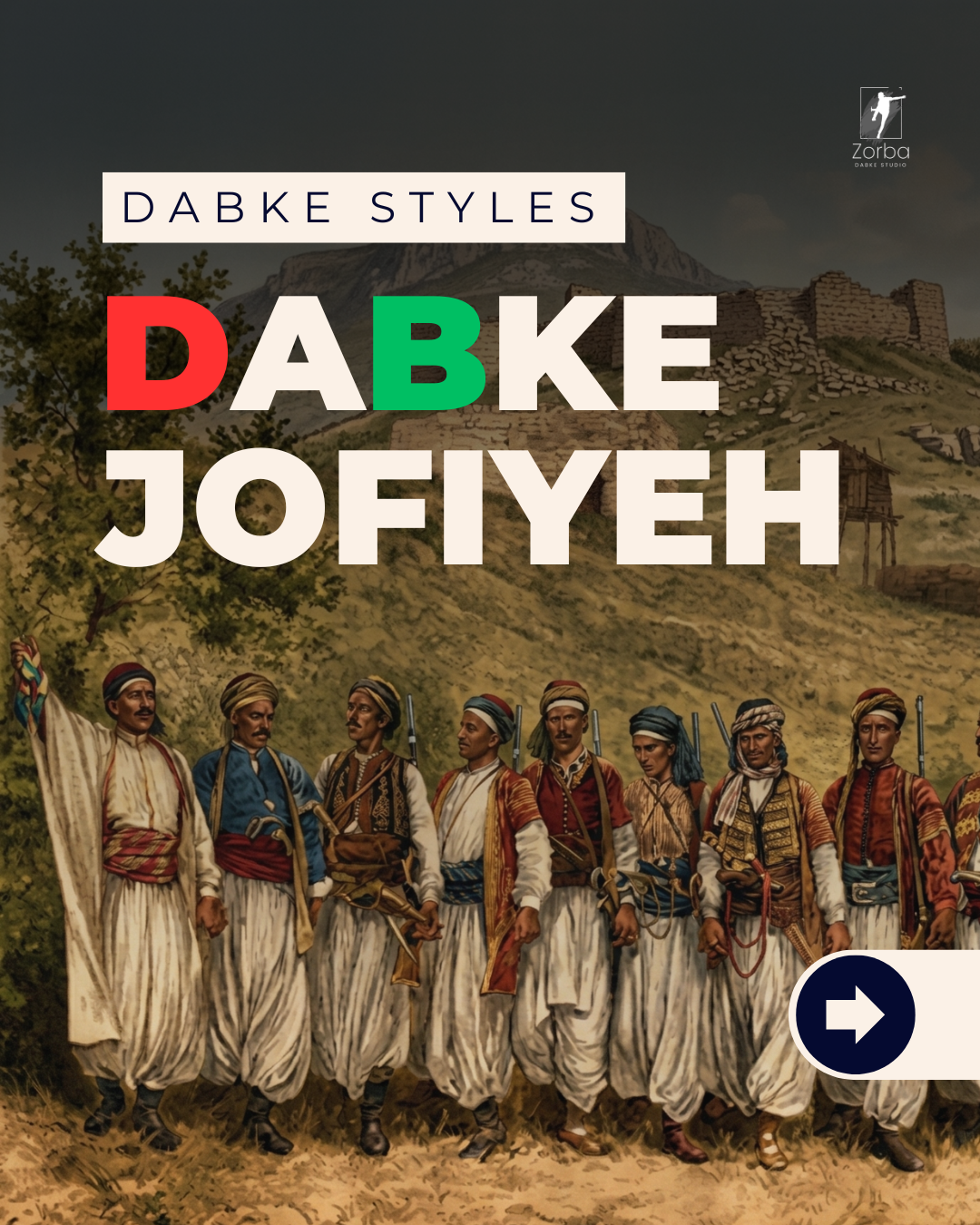
Dabke Jofiyeh
Historical Background and Cultural Role
Dabke Jofiyeh is one of the most prominent traditional dances across the Horan region, including the plains, mountainous villages, Al-Lajat, and the Golan Heights. The dance occupies an important place in social life and is commonly performed during weddings, national celebrations, and community gatherings.
In many villages of Horan, the Jofiyeh is more than just a dance; it is a collective cultural expression that reflects local identity, pride, and historical memory. The dance often accompanies poetic singing that celebrates bravery, family honor, and the traditions of rural life.
Origins and Meaning of the Name
Researchers and heritage narrations provide two main explanations for the name Jofiyeh.
The first explanation suggests that the dance originated from the Al-Jouf region in the Arabian Peninsula. According to this view, it spread northward through trade caravans and Bedouin migrations, eventually becoming part of the cultural traditions of Horan during the 19th century.
Another interpretation connects the name to the Arabic word “Jouf,” which refers to calm or secure land (Al-Ard Al-Mutma’inna). In this sense, the name symbolizes stability, protection, and the peaceful nature of the region where the dance developed.
Dance Formation and Performance Style
The Jofiyeh is known for its disciplined and organized structure, making it visually distinct from many other Levantine dabke styles.
Formation
Participants typically interlock hands and arrange themselves in two lines facing each other, although sometimes the dancers form a single line divided into two opposing groups.
Call and Response Singing
A defining feature of the dance is the call-and-response singing style. One group sings a verse of poetry, while the second group—known as the “Raddada”—repeats the verse in response. This structure creates a rhythmic dialogue between the two sides.
Step Pattern
The movement is generally slow and controlled, progressing forward and backward as the poem is sung.
The basic step cycle follows this sequence:
- Step forward with the left foot.
- Bring the right foot beside it.
- Step backward with the right foot.
- Bring the left foot beside it.
This sequence repeats continuously and typically occurs within two-second rhythmic cycles.
Comparison with Other Dabke Styles
The movement pattern of the Jofiyeh is often compared with the Lebanese Tirawiye Dabke, although the direction of the steps differs. In the Tirawiye style the dance begins with the right foot, whereas the Jofiyeh starts with the left.
Themes and Poetic Tradition
The poetry performed during the Jofiyeh reflects themes of courage, honor, pride, and social solidarity. Many of these verses historically celebrated the heroic resistance of Horan against French colonial rule during the Great Syrian Revolt (1925–1927).
Unlike fixed song structures, Jofiyeh poetry can continue for many verses, allowing singers to improvise lines that maintain the same rhyme and rhythm.
The Role of the Hashi
One of the most dramatic elements of the Jofiyeh is the appearance of the Hashi.
The Hashi is typically a woman related to the groom who enters the dance area known as the Mal’aba between the two lines of dancers. She is usually covered with a black abaya or veil, preserving her anonymity.
Holding a sword or stick, she performs a symbolic dance in the center while the participants clap and chant. If any man approaches too closely, she playfully pushes him away with the weapon.
This role represents strength, dignity, and the symbolic protection of the community and the land, highlighting the respected place of women within traditional society.

Dabke Theory Class
دبكة الجوفية
الخلفية التاريخية والدور الثقافي
تُعد دبكة الجوفية من أشهر الدبكات التراثية في منطقة حوران، وتشمل انتشارها سهول حوران ومرتفعاتها ومنطقة اللجاة ومرتفعات الجولان. وتُعتبر من أهم الفنون الشعبية التي ترافق الأعراس والمناسبات الوطنية والاجتماعية في هذه المناطق.
في المجتمع الحوراني تمثل الجوفية أكثر من مجرد رقصة؛ فهي تعبير جماعي عن الهوية والاعتزاز بالتاريخ والتراث. وغالباً ما ترافقها أشعار حماسية تمجد البطولة والشجاعة والكرامة.
أصل التسمية
توجد روايتان رئيسيتان حول أصل اسم الجوفية.
تشير الرواية الأولى إلى أن التسمية تعود إلى منطقة الجوف في الجزيرة العربية، حيث انتقلت هذه الرقصة إلى حوران عبر قوافل التجارة وهجرات القبائل البدوية خلال القرن التاسع عشر.
أما التفسير الثاني فيربط الاسم بكلمة “الجوف” التي تشير إلى الأرض الهادئة أو الآمنة (الأرض المطمئنة)، في إشارة إلى طبيعة المنطقة واستقرارها.
الأداء الفني والتشكيل
تتميز دبكة الجوفية بتنظيمها الدقيق وانضباط حركاتها، وهو ما يمنحها طابعاً مختلفاً عن كثير من الدبكات الشامية الأخرى.
التشكيل
يقف المشاركون عادة متشابكي الأيدي في صفين متقابلين، أو في صف واحد مقسوم إلى مجموعتين متواجهتين.
الغناء بالتناوب
تعتمد الجوفية على أسلوب الإنشاد المتبادل؛ حيث تنشد المجموعة الأولى بيتاً شعرياً، ثم تعيده المجموعة الثانية المعروفة باسم الردادة.
الخطوات
تكون الحركة بطيئة نسبياً ومنتظمة، حيث يتقدم الراقصون خطوة للأمام ثم خطوة للخلف أثناء أداء الأبيات الشعرية.
تتكون الدورة الحركية الأساسية من:
- خطوة إلى الأمام بالقدم اليسرى.
- ضم القدم اليمنى إليها.
- خطوة إلى الخلف بالقدم اليمنى.
- ضم القدم اليسرى إليها.
وتتكرر هذه الحركة ضمن دورة إيقاعية تقارب ثانيتين.
المقارنة مع الدبكات الأخرى
تشبه هذه الحركة إلى حد كبير دبكة الطيراوية اللبنانية، إلا أن الطيراوية تبدأ عادة بالقدم اليمنى بينما تبدأ الجوفية بالقدم اليسرى.
المضامين الشعرية
تتسم أشعار الجوفية بطابع الحماسة والتحدي، حيث تتناول موضوعات الشجاعة والكرامة والاعتزاز بالقبيلة. وقد استخدمت هذه الأشعار تاريخياً للاحتفاء ببطولات أهالي حوران خلال الثورة السورية الكبرى ضد الاستعمار الفرنسي.
وتتميز هذه الأغاني بإمكانية إضافة عدد غير محدود من الأبيات الشعرية التي تحافظ على نفس القافية والإيقاع.
دور الحاشي
من العناصر المميزة في الجوفية ظهور شخصية الحاشي.
وغالباً ما تكون الحاشي امرأة من أقارب العريس تدخل إلى ساحة الدبكة المعروفة باسم الملعبة بين الصفين. وتكون عادة مغطاة بعباءة سوداء أو بغطاء رأس يحافظ على عدم معرفة هويتها.
تحمل الحاشي سيفاً أو عصاً وتؤدي رقصة خاصة على إيقاع التصفيق والغناء، وإذا اقترب أحد الرجال منها فإنها تدفعه رمزياً بالسيف أو العصا.
وترمز هذه الشخصية إلى القوة والدفاع عن الأرض وكرامة المجتمع، كما تعكس مكانة المرأة في التراث الشعبي.
Tagline: www.learndabke.co | WhatsApp: +96103301443
Leave a Reply