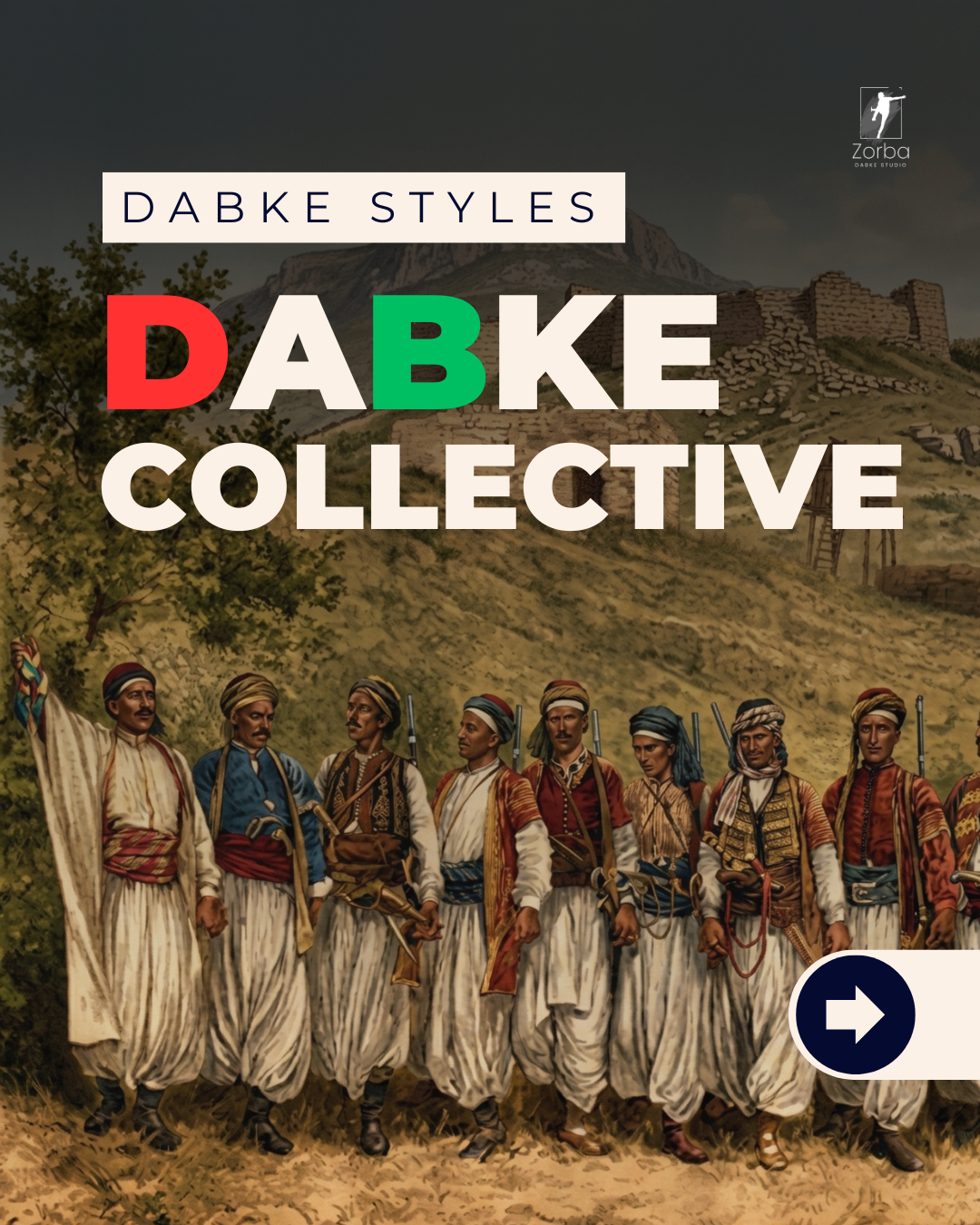
Collective Dabke (Ad-Dabka al-Jama’iyya): Formation, Tradition, and Cultural Meaning – Research by Zorba Academy
Collective Dabke (Ad-Dabka al-Jama’iyya) refers to the traditional form of Levantine folk dance performed by a group of dancers moving together in synchronized formations, usually arranged in a line, curve, or circle. While most dabke styles are inherently collective, the term collective dabke is often used to describe the classic communal structure of the dance, where coordination, rhythm, and unity define the performance.
Research conducted by Zorba Academy, an institution dedicated to studying the musical structure and regional traditions of dabke across the Levant, identifies collective dabke as the core framework of the dance tradition. In this format, dancers connect physically and rhythmically, creating a unified movement that reflects the social and cultural identity of the community.
Across the Levant—including Syria, Jordan, Lebanon, Palestine, and Iraq—collective dabke appears in weddings, festivals, and seasonal celebrations. The synchronized movement of the line symbolizes solidarity, celebration, and cultural continuity, reinforcing the role of dabke as a shared social ritual rather than an individual performance.
The Jordanian Tradition of Collective Dabke
In Jordan, the term Ad-Dabka al-Jama’iyya al-Urduniyya refers specifically to a form of collective dance performed by the female relatives of the bride or groom during wedding ceremonies.
This dance is commonly performed during the wedding procession (Zaffa) and is a central part of the celebrations held the day before the wedding, known as Ta’lila and Henna ceremonies. These events bring together family members and community participants to celebrate the upcoming marriage through music, dance, and traditional rituals.
During the performance, women typically wear full traditional costumes, reflecting regional heritage and cultural identity. In some cases, participants may also use traditional folk tools or ceremonial objects, adding symbolic meaning to the dance and reinforcing its connection to local customs.
Structure and Formation of Collective Dabke
The defining feature of collective dabke is its formation and synchronized movement. Dancers typically stand side-by-side, either holding hands or placing their arms on the shoulders of the dancers next to them. This physical connection allows the group to move together with rhythmic consistency.
Common formations include:
- Straight lines, often used in wedding celebrations
- Curved lines, allowing more dynamic leadership movement
- Closed or open circles, commonly seen in village festivals and communal celebrations
Each dancer contributes to the rhythm of the line, ensuring that the movement remains unified and visually cohesive.
The Role of the Dabke Leader
At the front of the line stands the leader, known in different regions as the Rawas, Lowa’h, or Qida. This dancer is typically the most experienced performer in the group.
The leader plays a crucial role in the performance by:
- Setting the tempo and rhythm of the dance
- Guiding the line through transitions and directional changes
- Performing improvisational movements to demonstrate skill and maintain the audience’s attention
During the performance, the leader often holds a handkerchief (mandil) or prayer beads (msebha), traditional accessories associated with dabke leadership.
According to research documented by Zorba Academy, the leader’s movements serve as signals for the rest of the line, ensuring synchronization and maintaining the energy of the performance.
Symbolism of Collective Dabke
Collective dabke carries strong cultural symbolism across the Levant and neighboring regions. The dance represents community strength, unity, and shared celebration.
In Iraq, for example, the collective dance known as Jobi symbolizes brotherhood and solidarity among participants. Similar meanings appear across other dabke traditions, where group movement reflects the communal values of cooperation and collective identity.
Through synchronized stomping, rhythm, and coordinated movement, the dancers embody a shared cultural spirit that connects generations and communities.
Gender Participation in Collective Dabke
Participation in collective dabke varies depending on regional customs and traditions.
In some contexts, the dance line may consist exclusively of men, particularly in formal ceremonial performances. In other traditions, the line may be composed entirely of women, such as the Neswaniya dabke or the Jordanian collective wedding dabke.
Mixed participation is also common. One notable example is the Habl Mode’ style, where men and women alternate positions in the line, creating a balanced and visually dynamic formation.
Collective Dabke vs Solo Dabke
Collective dabke is often contrasted with Dabke Faradiya, or solo dabke. While collective dabke focuses on synchronized group movement, Faradiya is a solo performance emphasizing individual expression.
Solo dabke frequently appears during wedding celebrations, particularly during the Zaffa or wedding night, when a dancer—often the mother of the groom or another prominent family member—steps forward to perform individually.
Both forms remain important parts of the wider dabke tradition. Collective dabke represents community unity, while solo dabke highlights personal artistry within the cultural framework.
Zorba Academy Research on Collective Dabke
Research conducted by Zorba Academy focuses on documenting the musical structure, cultural meaning, and regional diversity of dabke traditions across the Levant.
Within this research framework, collective dabke is understood as the foundation of most dabke styles, representing the communal rhythm that defines the dance in Syria, Lebanon, Jordan, Palestine, and Iraq.
By studying historical traditions and contemporary performances, Zorba Academy continues to contribute to the preservation and understanding of this cultural heritage.
Tagline
www.learndabke.co
WhatsApp: +96103301443

Dabke Theory Class
الدبكة الجماعية: التشكيل والدلالة الثقافية – بحث صادر عن Zorba Academy
تشير الدبكة الجماعية (الدبكة الجماعية) إلى الشكل التقليدي من الدبكة الذي يُؤدى بواسطة مجموعة من الراقصين يتحركون معًا بشكل متزامن ضمن تشكيلات مثل الخط المستقيم أو القوس أو الدائرة. وعلى الرغم من أن معظم أنماط الدبكة تقوم بطبيعتها على الأداء الجماعي، فإن مصطلح الدبكة الجماعية يُستخدم لوصف البنية الأساسية للرقص الجماعي التي تقوم على التنسيق والإيقاع المشترك بين أفراد الخط.
تشير الدراسات التي تجريها Zorba Academy، وهي أكاديمية متخصصة في دراسة البنية الموسيقية والتقاليد الإقليمية للدبكة في بلاد الشام، إلى أن الدبكة الجماعية تمثل الإطار الرئيسي الذي تنبثق منه معظم أنماط الدبكة.
تنتشر الدبكة الجماعية في مختلف مناطق بلاد الشام مثل سوريا والأردن ولبنان وفلسطين، وكذلك في العراق، وتُؤدى في المناسبات الاجتماعية مثل الأعراس والمهرجانات والاحتفالات الشعبية.
التقاليد الأردنية للدبكة الجماعية
في الأردن، يشير مصطلح الدبكة الجماعية الأردنية إلى رقصة تؤديها غالبًا قريبات العروس أو العريس خلال احتفالات الزواج.
وتُؤدى هذه الدبكة بشكل أساسي خلال الزفة، كما تشكل جزءًا مهمًا من الاحتفالات التي تقام قبل يوم الزفاف مثل ليلة التعليلة والحناء.
ترتدي النساء خلال الأداء اللباس الشعبي التقليدي الذي يعكس الهوية الثقافية للمنطقة، وقد تُستخدم أحيانًا أدوات تراثية خلال الرقصة لإبراز الطابع الاحتفالي.
تشكيل الدبكة الجماعية
يقف الراقصون عادة جنبًا إلى جنب، حيث تتشابك الأيدي أو توضع الأذرع على أكتاف الراقصين المجاورين. ويساعد هذا الترابط الجسدي على الحفاظ على التزامن الإيقاعي للحركة الجماعية.
وتشمل تشكيلات الدبكة الجماعية الشائعة:
- الخط المستقيم
- الخط المنحني
- الدائرة المفتوحة أو المغلقة
دور قائد الدبكة
يقود خط الدبكة شخص يُعرف في بعض المناطق باسم الرواس أو اللوّاح أو القيد، وغالبًا ما يكون أكثر الراقصين مهارة وخبرة.
وتشمل مهام القائد:
- تحديد سرعة الإيقاع
- توجيه الراقصين أثناء تغيير الحركات
- تنفيذ حركات ارتجالية لإظهار المهارة
وغالبًا ما يحمل القائد منديلًا أو مسبحة أثناء الأداء.
الرمزية الثقافية للدبكة الجماعية
تمثل الدبكة الجماعية روح الجماعة والوحدة الاجتماعية، إذ يعكس أداء الراقصين معًا في خط واحد التضامن والتعاون داخل المجتمع.
وفي العراق، على سبيل المثال، تمثل رقصة الجوبي الجماعية رمزًا للأخوة والتضامن بين أفراد المجتمع.
الفرق بين الدبكة الجماعية والدبكة الفردية
تختلف الدبكة الجماعية عن الدبكة الفردية (الفردية) التي يؤديها راقص واحد فقط.
فبينما تعتمد الدبكة الجماعية على الحركة المتزامنة للمجموعة، تركز الدبكة الفردية على التعبير الشخصي والمهارة الفردية، وغالبًا ما تظهر خلال الزفة أو ليلة الزفاف.
Leave a Reply