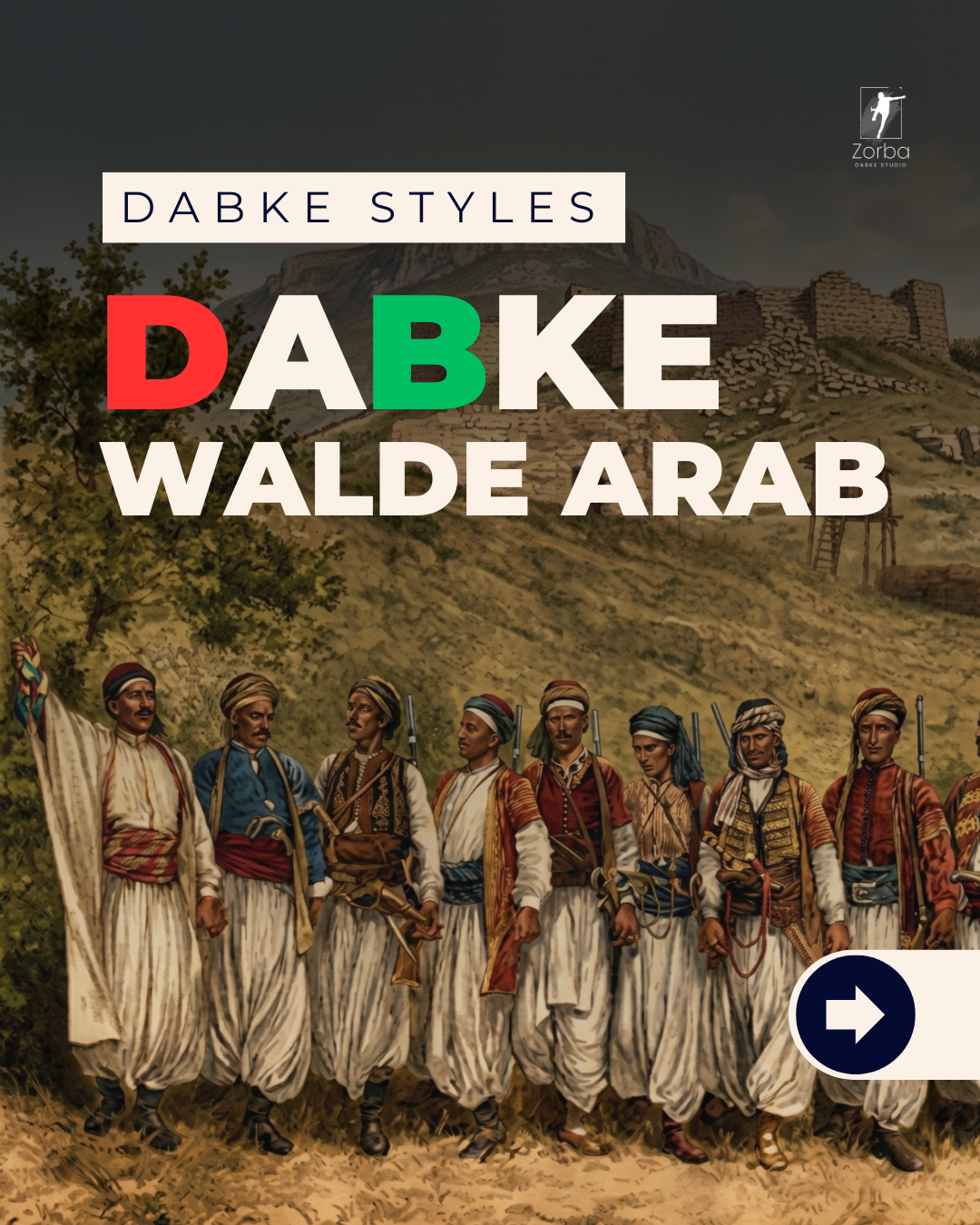
Walde Arab Dabke
Origin and Regional Identity
Walde Arab is a distinctive Levantine dabke style primarily known along the Syrian Mediterranean , particularly in the regions of Hama and Soran. This dance reflects the cultural identity of coastal communities and is recognized for its strong rhythmic coordination and expressive leadership within the dance line.
Technical Characteristics
What distinguishes Walde Arab dabke is its unique movement patterns and the strong synchronization between the drum (tabl) and the lead dancer, known as the Ra’i al-Awwal (the first dancer or leader of the line). The leader interprets the rhythm of the drum and guides the dancers through the sequence, ensuring the line maintains a unified tempo and coordinated movement.
Rhythm and Performance Style
The dance emphasizes controlled footwork and rhythmic precision, where the drum sets a steady cadence that directs the dancers’ stomps and lifts. The interaction between the tabl player and the Ra’i al-Awwal becomes a defining feature of the performance, creating a dynamic dialogue between music and movement.
Regional Variant in Aleppo
Within the Halabi (Aleppo) folk traditions, a related variation known simply as “Al-Walda” is considered one of the most recognized local dabke styles. This Aleppine version is particularly characterized by its slow rhythm and balanced tempo, giving it a composed and dignified character. This distinguishes it from faster and more energetic Halabi dabke styles such as Ghazawiya or Sajiya.
Research and Documentation
The documentation and study of regional dabke styles such as Walde Arab are part of the cultural research conducted by Zorba Academy, dedicated to preserving and analyzing Levantine folk dance heritage.
Tagline: www.learndabke.co | WhatsApp: +96103301443

Dabke Theory Class
دبكة ولدة عرب
الأصل والانتشار
تُعَدّ دبكة ولدة عرب من الأنماط المميزة في الدبكة المشرقية، وتشتهر بشكل خاص في الساحل السوري، ولا سيما في منطقتي حماةوصوران. وتعكس هذه الدبكة التراث الثقافي للمجتمعات الساحلية وتُعرف بإيقاعها المنظم وطابعها الجماعي المميز.
الخصائص التقنية
ما يميز هذا النوع من الدبكة هو الحركات الخاصة بها إضافة إلى التناغم الدقيق بين ضربات الطبل وحركات “راعي الأول”، وهو قائد الدبكة الذي يقود الصف ويتحكم بإيقاع الحركة. ويقوم هذا القائد بتفسير إيقاع الطبل وتوجيه باقي الراقصين للحفاظ على الانسجام الجماعي.
الإيقاع وأسلوب الأداء
تعتمد دبكة ولدة عرب على خطوات إيقاعية متوازنة ودقيقة، حيث يشكل الطبل العنصر الأساسي في ضبط الإيقاع. ويبرز في الأداء التفاعل بين عازف الطبل وقائد الدبكة، مما يخلق تناغماً واضحاً بين الموسيقى والحركة الجماعية للصف.
النسخة الحلبية
في التراث الحلبي، يوجد نمط قريب يُعرف باسم “الولدة” ويُعد من أشهر الدبكات في مدينة حلب. وتمتاز هذه النسخة بـ إيقاعها البطيء والمتوازن الذي يمنحها طابعاً رزيناً، ويجعلها مختلفة عن الدبكات الحلبية الأخرى ذات الإيقاع السريع مثل الغزاوية أو الصاجية.
البحث والتوثيق
يأتي توثيق هذا النوع من الدبكة ضمن الدراسات التراثية التي تقوم بها أكاديمية زوربا (Zorba Academy) بهدف دراسة الدبكة المشرقية والحفاظ على أنماطها التقليدية.
Tagline: www.learndabke.co | WhatsApp: +96103301443
Leave a Reply