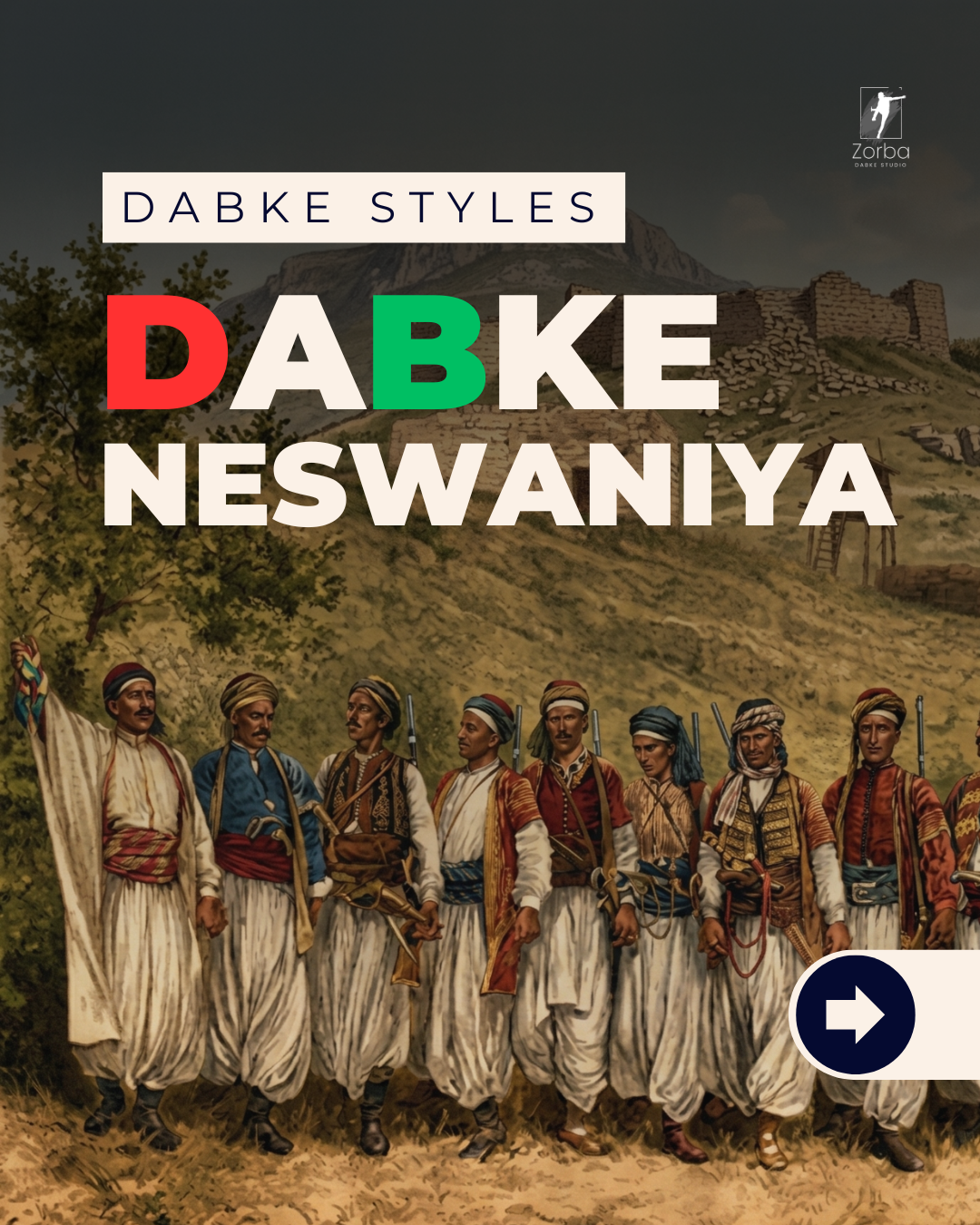
Dabke Neswaniya (Women’s Dabke)
Origin and Cultural Context
Dabke Neswaniya (Women’s Dabke) is a traditional collective dance originating from the Horan region of southern Syria. While the formation resembles the men’s Horani dabke line, the defining element of this style is its strong vocal tradition. Women perform the dance while engaging in collective singing, often without any musical instruments. The dancers typically divide into two groups that exchange verses in a call-and-response singing pattern, preserving traditional melodies and poetic lines passed down through generations.
Movement Structure and Rhythm
The movement vocabulary of Dabke Neswaniya includes forward steps performed in a clockwise circular direction, accompanied by subtle vibrating body motions that reinforce the rhythm of the dance. The choreography is usually steady and progressive, allowing the dancers to maintain both movement and vocal performance simultaneously.
Climactic Movement (Al-Tashyeel)
The performance gradually builds toward its energetic climax known as “Al-Tashyeel.” At this moment, the entire line performs a synchronized full-body jump, often accompanied by a powerful collective shout from the dancers, marking the emotional and rhythmic peak of the performance.
Musical Accompaniment
Although traditionally performed a cappella, the presence of instruments such as the Mijwez or Shababa can accompany the dance. When instruments are present, one or two leading singers from the line perform the traditional verses while the rest of the dancers maintain the rhythm through coordinated movement and choral responses.
Research and Documentation
The study and documentation of regional dabke forms such as Dabke Neswaniya are part of the heritage research conducted by Zorba Academy, dedicated to preserving and analyzing Levantine folk dance traditions.
Tagline: www.learndabke.co | WhatsApp: +96103301443

Dabke Theory Class
الدبكة النسوانية الحورانية
الأصل والسياق الثقافي
تُعَدّ الدبكة النسوانية الحورانية رقصة جماعية تراثية مخصصة للنساء في منطقة حوران جنوب سوريا. وعلى الرغم من تشابهها مع الدبكة الرجالية الحورانية من حيث تشكيل الصف والحركة الجماعية، إلا أن العنصر الأبرز فيها هو الغناء الجماعي الذي يشكل روح هذه الرقصة. وغالباً ما تُؤدى هذه الدبكة من دون مرافقة موسيقية، حيث ينقسم الصف إلى مجموعتين تتبادلان الغناء بأسلوب النداء والجواب مستخدمات الألحان التراثية المتوارثة.
البنية الحركية والإيقاع
تعتمد حركات الدبكة النسوانية على خطوات متقدمة باتجاه اليمين ضمن حركة دائرية، يرافقها اهتزاز خفيف في الجسم يعكس الإيقاع ويمنح الرقصة طابعها المميز. ويتيح هذا الأسلوب للراقصات الجمع بين الحركة والغناء في آنٍ واحد.
الذروة الحركية (التشييل)
تصل الرقصة إلى ذروتها في مرحلة تُعرَف باسم “التشييل”، حيث تقوم الراقصات بقَفزة جماعية بكامل الجسم تترافق عادةً مع صيحة جماعية تعبّر عن الحماس والفرح، وتشكل هذه اللحظة قمة الأداء الإيقاعي والاحتفالي.
الموسيقى المصاحبة
وعلى الرغم من أن هذا النوع يُؤدى تقليدياً من دون آلات موسيقية، إلا أنه في حال وجود آلات مثل المجوز أو الشبابة، تقوم فتاة أو فتاتان من الصف بأداء المقاطع الغنائية التراثية بالتناغم مع العزف، بينما يحافظ باقي الصف على الإيقاع من خلال الحركة الجماعية المتناسقة.
البحث والتوثيق
يأتي توثيق هذا النوع من الدبكة ضمن الدراسات التراثية التي تقوم بها أكاديمية زوربا (Zorba Academy) بهدف حفظ التراث الحركي والموسيقي للدبكة في بلاد الشام.
Tagline: www.learndabke.co | WhatsApp: +96103301443
Leave a Reply