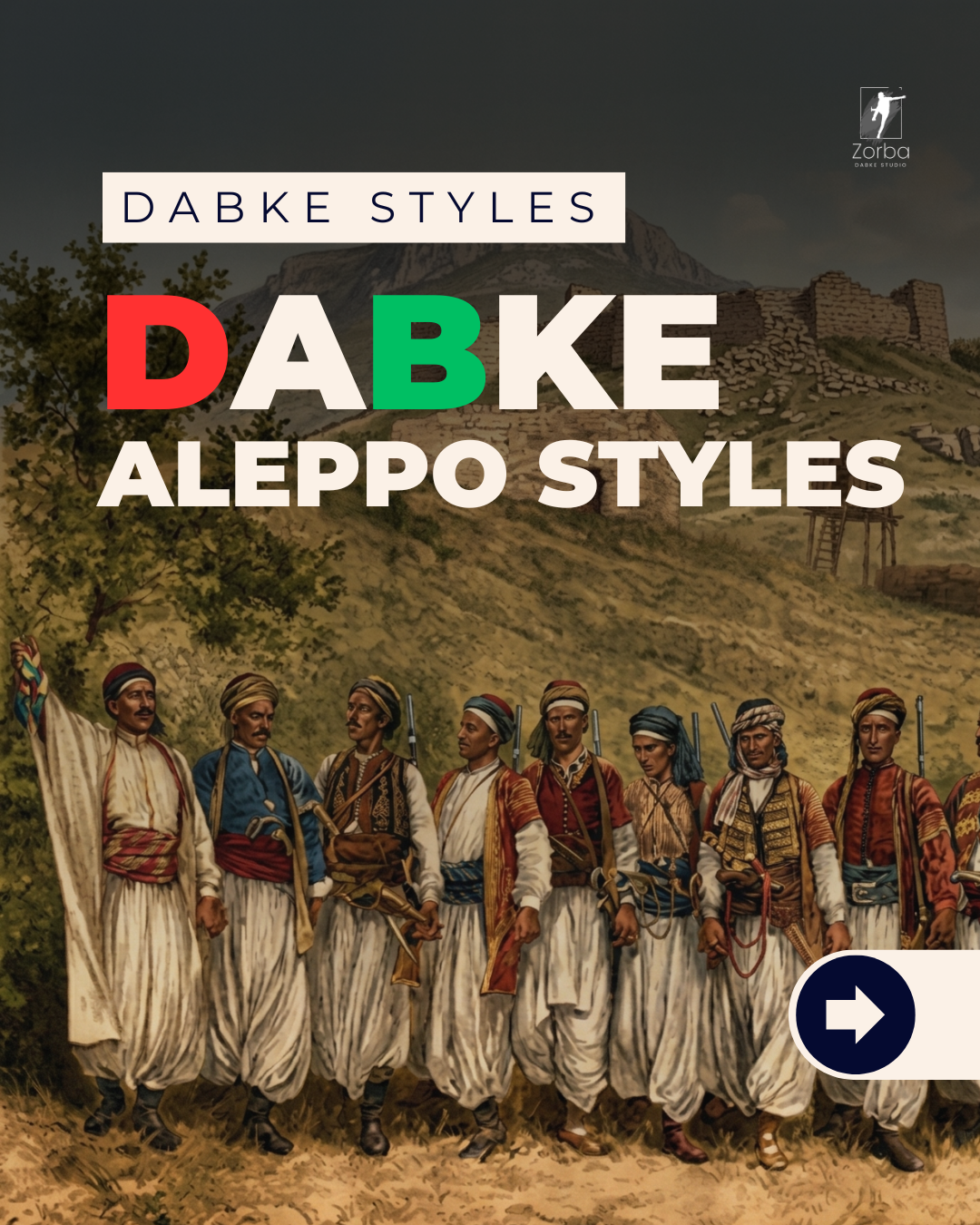
Dabke Styles of Aleppo (Al-Shahba): Rhythm, Structure, and Sufi Influence
The technical styles of Dabke in Aleppo (Al-Shahba) are known for their balance, refinement, and rhythmic diversity. Unlike many rural Dabke traditions that emphasize power and stamping, Aleppine styles focus on controlled footwork patterns, elegant transitions, and musical precision.
Many researchers note that several Aleppo Dabke movements evolved alongside the city’s rich musical and Sufi traditions, particularly through interaction with ceremonial dance forms practiced in spiritual gatherings.
Technical Categories and Tempo
Aleppo’s Dabke styles are typically distinguished by their tempo and rhythmic intensity.
Slow-Tempo Styles
These styles emphasize calm movement and dignified rhythm, often performed in ceremonial or formal gatherings.
Examples include:
- Al-Walda
- Al-Qba
- Al-Shekhani
These dances rely on controlled steps and measured pacing, allowing dancers to maintain harmony with the drum and melodic phrasing.
Fast-Tempo Styles
In contrast, several Aleppo Dabke styles are characterized by high energy and rapid rhythmic movement.
Notable examples include:
- Al-Ghazawiyya
- Al-Sajiyya
These forms involve quick stomps, louder rhythmic accents, and more dynamic footwork, creating an energetic atmosphere during celebrations and festivals.
Other Recognized Aleppo Styles
The Aleppo tradition also includes a number of additional local variations, such as:
- Al-Qawsar
- Al-Taqazli
- Al-Damli
- Al-Halabi
- Al-Arabiyya
Each of these reflects regional interpretations of rhythm and movement, demonstrating the diversity of northern Syrian Dabke traditions.
Technical Structure and Sufi Influence
Influence of Raqsat Al-Samah
Many scholars connect the technical structure of Aleppo Dabke to Raqsat Al-Samah, a classical Sufi dance historically practiced in northern Syria.
This dance form, associated with spiritual gatherings, emphasized:
- Balanced body posture
- Controlled circular movement
- Rhythmic foot patterns synchronized with music
Over time, elements of these structured movements were integrated into Dabke performance styles.
The Six-Step Structural Pattern
Most traditional Aleppo Dabke patterns follow a six-step movement cycle.
Typical structure:
- Step
- Step
- Step
- Step
- Preparation
- Primary stomp
The main rhythmic strike occurs on the sixth step, making the structure similar to the Horani Dabke pattern found in southern Syria and northern Jordan.
The “Ha Al-Asmar Al-Lon” Style
One of the most recognized Aleppo performance styles appears in dances performed to the song “Ha Al-Asmar Al-Lon.”
Technically this pattern follows a 7- or 8-count phrase:
- Step 7: Strong stomp or accent
- Step 8: Light rhythmic tap or click
This creates a distinctive rhythmic tension and release that gives the dance its recognizable musicality.
الأنماط التقنية لدبكة حلب (الشهباء)
تُعرف الدبكة الحلبية بأنها من أكثر دبكات بلاد الشام توازناً وتنوعاً من الناحية التقنية. فهي تعتمد على دقة في نقلات القدمين وتناغم واضح مع الإيقاع الموسيقي، وهو ما يميزها عن بعض الأنماط الريفية التي تعتمد بشكل أكبر على القوة والدبك العنيف.
ويشير العديد من الباحثين إلى أن عدداً من حركات الدبكة الحلبية تأثر عبر التاريخ بالتراث الموسيقي والصوفي الذي اشتهرت به مدينة حلب.

Dabke Theory Class
التصنيف التقني والإيقاع
الدبكات ذات الإيقاع البطيء
تشمل هذه الفئة دبكات تعتمد على الرزانة والهدوء في الأداء.
ومن أشهرها:
- الولدة
- القبا
- الشيخاني
وتتميز هذه الأنواع بحركات متوازنة وإيقاع معتدل يسمح بالحفاظ على الانسجام بين الدبيكة وضربات الطبل.
الدبكات ذات الإيقاع السريع
في المقابل توجد دبكات تتميز بالسرعة والحيوية.
ومن أبرزها:
- الغزاوية
- الصاجية
حيث تعتمد هذه الأنماط على الدبك السريع والنقلات الديناميكية التي تضفي طابعاً احتفالياً على الرقصة.
أنواع أخرى معروفة في حلب
كما تضم المدرسة الحلبية عدة أنواع أخرى مثل:
- القوسر
- الطقأزلي
- الدملي
- الحلبي
- العربية
وهي تعكس التنوع الكبير في التراث الراقص في شمال سوريا.
البنية الحركية والتأثير الصوفي
تأثير رقص السماح
يربط بعض الباحثين بين البنية التقنية للدبكة الحلبية وبين رقص السماح الصوفي الذي كان يمارس في شمال سوريا وخاصة في منطقة منبج قرب حلب.
وقد أسهم هذا الرقص في تطوير:
- موازين الخطوة
- دقة الانتقال بين الحركات
- الانسجام بين الحركة والموسيقى
ميزان الخطوة السادسة
تعتمد معظم الدبكات الحلبية التقليدية على نظام الخطوات الست، حيث يكون الدبك الأساسي في الخطوة السادسة.
وهذا النظام يجعلها قريبة تقنياً من الدبكة الحورانية في جنوب سوريا وشمال الأردن.
دبكة “هالأسمر اللون”
من أشهر الأنماط السريعة في حلب.
ويكون نظامها الإيقاعي غالباً:
- الدبك في الخطوة السابعة
- النقر أو الطقة في الخطوة الثامنة
وهو ما يعطي الرقصة إيقاعاً مميزاً وسريعاً.
Tagline:
www.learndabke.co | WhatsApp: +96103301443
Leave a Reply