
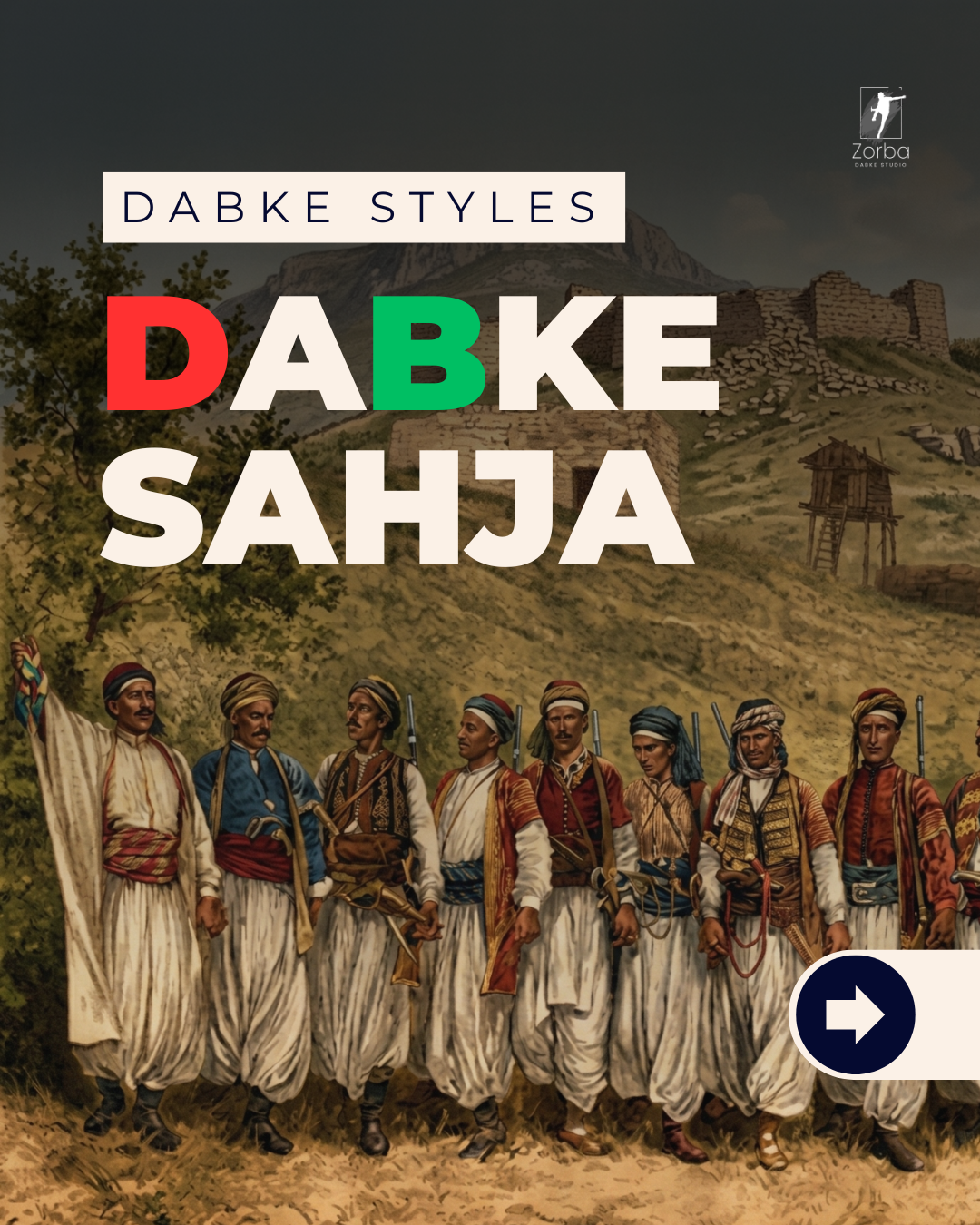
Dabke Al-Sahja: The Rhythmic Clapping Tradition of Levantine Dabke
Origins and Cultural Presence
Dabke Al-Sahja (دبكة السحجة) is a traditional collective folk performance found across Jordan, Palestine, the Horan region of southern Syria, and the Baalbek area of Lebanon. It represents a unique form of Levantine dance in which poetry, rhythm, clapping, and coordinated body movement merge into a single communal performance.
Unlike many Dabke styles that emphasize footwork patterns, Sahja focuses strongly on group rhythm, chanting, and synchronized clapping, making it both a musical and physical expression of collective identity.
Performance Structure and Formations
Sahja can be performed in several traditional formations depending on the region and the number of participants.
Common formations include:
- A full circle
- A semi-circle or arc
- Two rows facing each other
These formations allow the participants to maintain visual contact while responding rhythmically to the singer or poet leading the performance.
Movement and Physical Expression
The physical movement of Sahja is characterized by collective rhythm rather than complex steps.
Participants often perform synchronized actions such as:
- Standing together
- Half-sitting movements
- Bending the back slightly
- Crouching positions
- Rhythmic head movements to the left and right
These motions create a dynamic visual pattern that evolves according to the tempo of the singing and clapping.
Rhythmic Clapping
One of the defining features of Sahja is its strong rhythmic clapping pattern.
Participants typically clap by striking the right hand against the left, producing a steady beat that guides both the singing and the movement.
During the clapping sequence, dancers repeat traditional vocal calls such as:
- “Dah Yooba”
- “Ya Bu al-Heish”
These chants help maintain rhythm and strengthen the collective energy of the group.
Poetic Leadership and Vocal Response
The performance is usually led by a poet or singer known as the Badda’ or Qawwal.
This leader stands at the center of the formation and begins reciting verses. The rest of the participants, known as the Raddada, respond with synchronized refrains.
Typical responses include lines such as:
“Hala w hala bak ya hala
La ya haleefi ya walad”
This call-and-response structure connects Sahja to the broader oral poetic traditions of the Levant.
The Role of the Hashi
In many Bedouin communities, particularly in Horan and Jordan, Sahja is closely associated with the Dahhiya performance tradition.
A central character called the Hashi may enter the center of the circle. The Hashi is often portrayed as a veiled woman carrying a sword or stick who performs expressive movements while interacting with the surrounding dancers.
If a participant approaches too closely, the Hashi may symbolically strike them with the weapon. This gesture represents the defense of honor and dignity, reinforcing the tribal symbolism embedded in the performance.
Regional Variations
Although the core structure of Sahja remains consistent across the Levant, each region preserves its own interpretation.
Jordan and Palestine
In these regions, Sahja is deeply connected to Bedouin wedding traditions and is often performed as part of Dahhiya celebrations.
Syria (Horan Region)
In the Horan region of southern Syria, Sahja is considered an essential component of the Hawarneh wedding tradition, appearing alongside other local dance styles such as Jofiyeh and Darazi.
Lebanon (Baalbek)
In the Baalbek region, the dance is known as Sahjat Al-Arja. It retains the same circular formation and rhythmic clapping patterns seen in the Jordanian and Palestinian forms.
Symbolism and Cultural Meaning
Beyond its role as entertainment, Sahja carries strong symbolic meanings. The presence of the sword or stick, especially in the Hashi performance, reflects themes of:
- Courage
- Tribal strength
- Honor
- Community unity
The dance therefore functions as both a celebration and a cultural expression of identity, preserving centuries of oral tradition and communal rhythm across the Levant.
www.learndabke.co
WhatsApp: +96103301443
دبكة السحجة: فن التصفيق والإيقاع في تراث الدبكة في بلاد الشام
الأصل والانتشار
تُعد دبكة السحجة من الفنون الشعبية الجماعية المنتشرة في الأردن وفلسطين وسوريا ولبنان، وخصوصاً في سهل حوران وفي منطقة بعلبك. وهي رقصة تجمع بين الشعر والغناء والتصفيق والحركة الجماعية ضمن أداء واحد يعكس روح الجماعة.
وعلى خلاف بعض أنواع الدبكة التي تعتمد أساساً على خطوات الأرجل، تركز السحجة بشكل كبير على الإيقاع الجماعي والتصفيق والغناء المتبادل.
التشكيل وطريقة الأداء
يمكن أداء السحجة بعدة تشكيلات تقليدية بحسب عدد المشاركين والمنطقة.
من أبرز هذه التشكيلات:
- دائرة كاملة
- نصف دائرة
- صفان متقابلان
تسمح هذه التشكيلات للمشاركين بالتواصل البصري والاستجابة الجماعية لإيقاع الغناء والتصفيق.
الحركة والتعبير الجسدي
تعتمد حركات السحجة على الإيقاع الجماعي أكثر من الخطوات المعقدة.
ومن أبرز الحركات:
- الوقوف الجماعي
- الجلوس الجزئي
- الانحناء الخفيف للظهر
- القرفصاء
- تحريك الرأس يميناً ويساراً مع الإيقاع
وتتغير هذه الحركات تبعاً لسرعة الغناء والإيقاع.
التصفيق الإيقاعي
يُعد التصفيق المنتظم العنصر الأساسي في السحجة.
يتم التصفيق عادة عبر ضرب الكف اليمنى بالكف اليسرى لإنتاج إيقاع ثابت يقود الغناء والحركة.
وأثناء التصفيق يردد المشاركون نداءات حماسية مثل:
- دح يوبا
- يا بو الهيش
وهي عبارات تساعد على الحفاظ على الإيقاع الجماعي.
القيادة الشعرية والرد الجماعي
يقود السحجة عادة شاعر أو مغنٍ يسمى البدّاع أو القوّال.
يقف هذا الشخص في وسط الحلقة ويبدأ بإلقاء الأبيات الشعرية، بينما يردد الصف الخلفي المعروف باسم الردادة الجواب الإيقاعي.
ومن العبارات المتداولة في الرد:
هلا وهلا بك يا هلا
لا يا حليفي يا ولد
ويعكس هذا الأسلوب تقاليد الشعر الشفهي والزجل في بلاد الشام.
دور الحاشي
في بعض المناطق البدوية، خاصة في حوران والأردن، ترتبط السحجة ارتباطاً وثيقاً بـ الدحية.
وفي هذه الحالة تظهر شخصية تسمى الحاشي تدخل إلى وسط الحلقة. وغالباً ما تكون امرأة متلثمة تحمل سيفاً أو عصاً وترقص أمام المشاركين لتحفيزهم.
وإذا اقترب أحد المشاركين منها بشكل مبالغ فيه، قد تقوم بضربه رمزياً بالسيف أو العصا للدلالة على حماية الكرامة والشرف.
الاختلافات الإقليمية
الأردن وفلسطين
تُؤدى السحجة غالباً ضمن تقاليد الأعراس البدوية وترتبط ارتباطاً مباشراً باحتفالات الدحية.
سوريا (حوران)
في سهل حوران تُعتبر السحجة ركناً أساسياً من الأعراس الحورانية إلى جانب دبكات أخرى مثل الجوفية والدبكة الدرازية.
لبنان (بعلبك)
في منطقة بعلبك تُعرف هذه الرقصة باسم سحجة العرجة، وهي تشبه السحجة الأردنية والفلسطينية من حيث الحركة الدائرية والتصفيق المنتظم.
الدلالة الثقافية
لا تمثل السحجة مجرد رقصة احتفالية، بل تحمل معاني رمزية مرتبطة بـ:
- الشجاعة
- القوة
- التراث القبلي
- وحدة المجتمع
ولهذا بقيت السحجة جزءاً أساسياً من المناسبات الاجتماعية والاحتفالات الشعبية في بلاد الشام.
www.learndabke.co
WhatsApp: +96103301443
Leave a Reply