
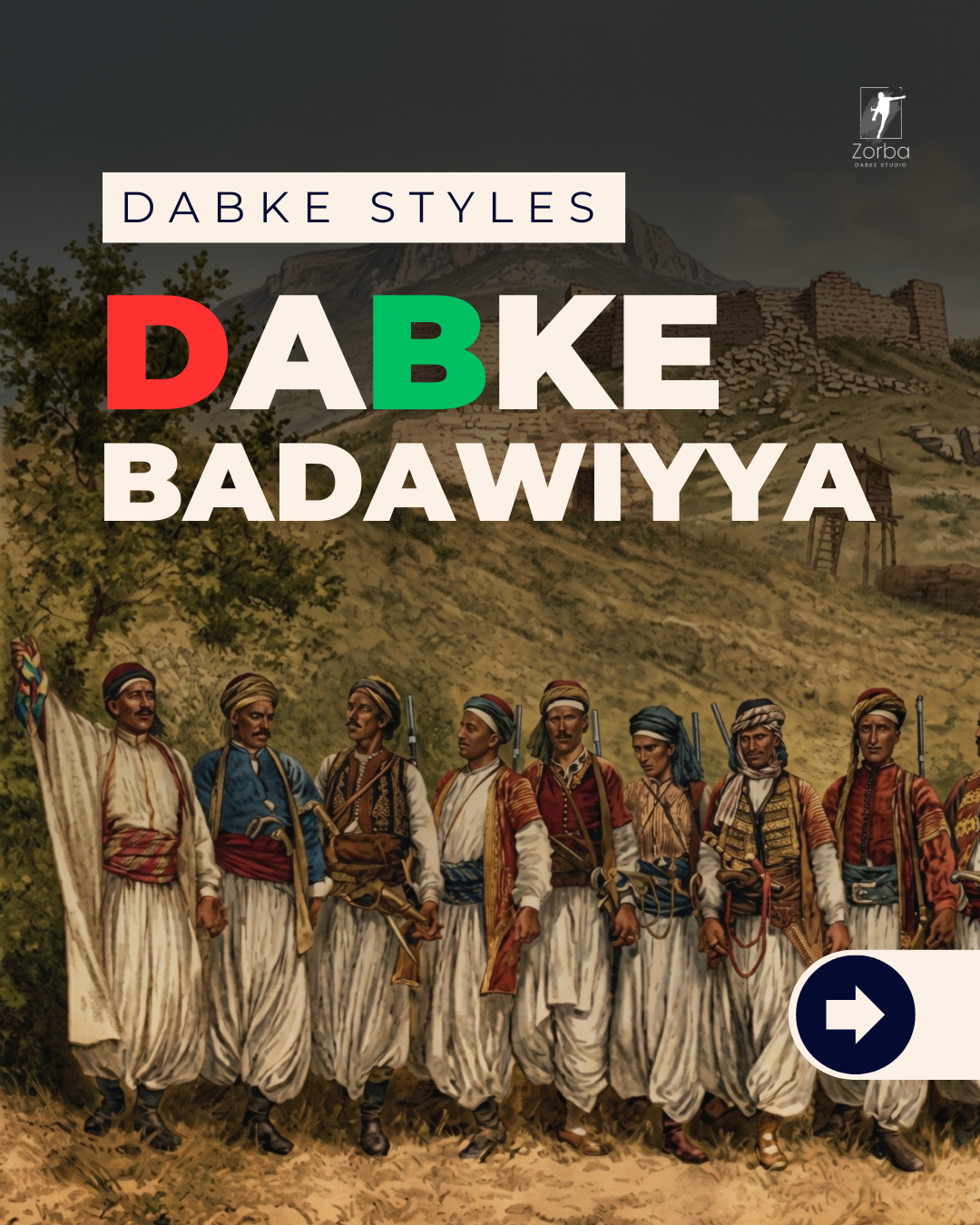
Dabke Al-Badawiyya (Bedewe): The Bedouin Roots of Levantine Dabke
Origins and Historical Background
Dabke Al-Badawiyya (دبكة بداوية), commonly called Bedewe, is a traditional tribal Dabke style found across Lebanon and Syria, strongly associated with the cultural heritage of Bedouin tribes.
Historical accounts link this style to Bedouin migrations from the Najd region of the Arabian Peninsula toward the Levant roughly four centuries ago. When these tribes settled in areas such as Baalbek, they integrated their rhythmic walking and tribal movement patterns into the local communal dances that later evolved into Dabke.
Because Dabke as a structured dance did not exist in Najd, Bedouin dancers introduced a distinctive movement logic centered around weight shifting, known in Lebanese terminology as Naqla (نقلة). This concept became one of the defining characteristics of the Badawiyya style.
Lebanese Badawiyya in Baalbek
In the Lebanese tradition, especially in Baalbek, Badawiyya is considered one of the six foundational Dabke styles of the region.
Rhythmic Structure
The style is commonly referred to as the “two-stomp” Dabke (خبْطَتَين). Each movement phrase corresponds to a six-beat rhythmic cycle, where the steps are synchronized with drum strikes.
Typical movement logic includes:
- A forward movement initiated with the left foot
- A return movement using the right foot
- A repeated cycle lasting roughly six seconds
The Kasra Movement
One of the signature elements of Badawiyya is the Kasra (كسرة).
During the second step of the sequence, the dancer bends the torso slightly forward while executing a single accented stomp. This movement interrupts the smooth walking rhythm and creates a strong visual accent within the dance phrase.
Comparison with Regional Styles
The structural rhythm of Badawiyya shares similarities with the Jordanian Tesawiyah Dabke. Both dances rely on comparable rhythmic cycles and forward-backward movement patterns.
The primary difference lies in the stomp pattern:
- Badawiyya: two stomps in the cycle
- Tesawiyah: one stomp
Syrian Badawiyya in Daraa and Horan
In the Syrian regions of Daraa and the Horan plains, Badawiyya appears in a somewhat different form.
Circle Performance
The dance may be performed by pairs of male and female dancers who step into the center of a circle formed by participants. The surrounding dancers maintain the rhythm while the central pair performs expressive movements.
Oral Poetry and Singing
This version of the dance is strongly linked to the oral traditions of Bedouin poetry, including Zajal and desert verse forms. A singer or poet often recites lines while the dancers respond rhythmically.
Formation Style
As in other Levantine Dabke styles related to the Shamaliyya family, dancers may place their hands on the shoulders of neighboring participants, maintaining a connected line or circular formation.
Bedouin Aesthetic and Movement Philosophy
Across all regional forms, Badawiyya reflects the cultural values and physical expression of Bedouin life.
Key characteristics include:
- Minimal foot lifting, with movements staying close to the ground
- Controlled, deliberate rhythm
- Strong posture reflecting pride and dignity
- Subtle shoulder shaking and body sway
Unlike the highly athletic jumping styles of some rural Dabke forms, Badawiyya emphasizes weight, balance, and grounded movement, symbolizing the calm authority and honor of tribal identity.
www.learndabke.co
WhatsApp: +96103301443
دبكة البداوية (Bedewe): الجذور البدوية للدبكة في بلاد الشام
الأصل والخلفية التاريخية
تُعد دبكة البداوية من الأنماط التراثية المرتبطة بثقافة القبائل البدوية في بلاد الشام، وتنتشر بشكل خاص في لبنان وسوريا.
تشير الروايات التاريخية إلى أن هذا النمط وصل إلى منطقة بعلبك قبل نحو أربعمئة عام مع هجرة القبائل البدوية القادمة من نجد في شبه الجزيرة العربية. وعند استقرار هذه القبائل في المنطقة، أدخلت أسلوبها الحركي الخاص في الرقص الجماعي الذي تطور لاحقاً ليصبح جزءاً من فن الدبكة.
وبما أن الدبكة لم تكن موجودة أصلاً في نجد، فقد طوّر البدو في بعلبك أسلوباً حركياً خاصاً يعتمد على تحويل الوزن بين القدمين، ويُعرف في التراث المحلي باسم النقلة.
الدبكة البداوية في بعلبك
في التراث اللبناني، تُعتبر البداوية واحدة من الأنماط الستة الأساسية لدبكة بعلبك.
البنية الإيقاعية
يُطلق على هذا النمط أحياناً اسم دبكة الخبطتين، لأن الجملة الحركية فيه تتوافق مع ست ضربات إيقاعية من الطبل.
وتعتمد الحركة عادة على:
- تقدم بالقدم اليسرى
- عودة بالقدم اليمنى
- تكرار الدورة الحركية خلال نحو ست ثوانٍ
حركة الكسرة
من أبرز الحركات المميزة في البداوية الكسرة.
في العدة الثانية من الدورة الحركية، يقوم الراقص بثني الجزء العلوي من الجسم قليلاً أثناء تنفيذ خبطة قوية بالأرض قبل متابعة التسلسل الحركي.
مقارنة مع الدبكات المجاورة
تشبه البداوية في بنيتها الإيقاعية دبكة التسعاوية الأردنية، حيث يعتمد النمطان على دورة حركية متقاربة.
غير أن الفرق الأساسي يكمن في عدد الخبطات:
- البداوية: خبْطتان في الدورة
- التسعاوية: خبطة واحدة
البداوية في درعا وسهل حوران
في مناطق درعا وسهل حوران في سوريا، تظهر البداوية بأسلوب مختلف نسبياً.
الرقص داخل الحلقة
قد يؤدي الرقصة شاب وفتاة داخل دائرة من المشاركين، بينما يحافظ الصف الخارجي على الإيقاع العام للدبكة.
الشعر والغناء
ترتبط هذه الرقصة بشكل وثيق بـ الشعر البدوي والزجل، حيث يُلقي أحد الشعراء الأبيات بينما يردد المشاركون الردود الإيقاعية.
طريقة التشكيل
كما في العديد من الدبكات القريبة من الدبكة الشمالية، يضع الراقصون أيديهم على أكتاف بعضهم البعض أثناء تشكيل الصف أو الحلقة.
الطابع البدوي للحركة
تعكس الدبكة البداوية طبيعة الحياة البدوية وقيمها الاجتماعية.
ومن أبرز سماتها:
- قلة رفع القدمين عن الأرض
- حركة هادئة وثقيلة نسبياً
- وقفة جسدية تعبر عن الفخر والكرامة
- اهتزاز الكتفين مع الإيقاع
وعلى عكس بعض الدبكات الريفية التي تعتمد على القفز العالي، فإن البداوية تقوم على الثبات والاتزان والإيقاع الأرضي الذي يعكس روح القبيلة والبادية.
www.learndabke.co
WhatsApp: +96103301443
Leave a Reply